Browse

Log in / Register
 Share

Last updated May 9, 2026.
Rivian (NASDAQ: RIVN) has spent the past year trying to convince Wall Street it’s not the next Lucid (NASDAQ: LCID). The stock chart hasn’t been cooperating. After opening the summer around $20 on July 6, 2025, shares slid to just above $15 by early fall. As of this writing, RIVN is still stuck near that level — roughly 25% of the company’s market value gone in about three months, with none of it recovered.
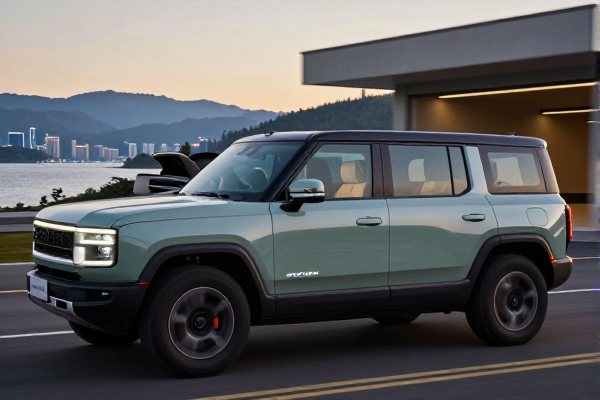
The frustrating part is that Rivian had the right setup. The cheaper R2 SUV finally arrived last year. Reviews were mostly positive. Orders were healthy, at least at first. This was supposed to be the launch that turned R2 hype into real revenue and real shareholder confidence. Instead, investors are left with a stock that looks like a less dramatic copy of Lucid’s chart. And in the U.S. EV market, Lucid is the cautionary tale, not the benchmark.
Let’s not oversimplify the R2’s outlook. The vehicle has genuine strengths, but it’s entering a market that punishes small mistakes.
R2 runs right into Tesla’s Model Y
The first issue is product positioning. America’s best-selling EV is the Tesla Model Y. That’s not a niche competitor; it’s the market’s gravitational center. The R2, despite the strong reviews, has to convince buyers it’s clearly the better car. Good press doesn’t automatically beat brand familiarity and charging-network access. Tesla has a massive service footprint and years of buyer trust. Rivian is still catching up.
The FSD gap is a bigger problem than most analysts want to admit
There’s also the software question. Tesla’s Full Self-Driving (Supervised) remains the industry standard. Motor Trend has called it “the best advanced driver assistance system on the market.” Rivian’s Autonomy+ is usually ranked behind it. That matters more now than it did five years ago: software is part of the purchase decision. If the R2 doesn’t feel as smart as a Model Y, the price differential gets harder to justify.
Rivian’s launch price made things worse
Rivian also made a questionable decision on R2 pricing. The marketing said “$44,990 base price.” But the launch model on sale at first was closer to $58,000. That’s a big gap, and it creates a bad impression. Customers were asked to wait months to see whether the cheaper version was actually worth it. For a brand that needs to be liked, it was an unforced error. The strategy may eventually help margins, but it hurt the launch narrative.
A less-noticed threat: Tesla can cut prices, Rivian can’t
The angle that doesn’t get enough attention is Tesla’s ability to flex. Tesla has margin room and can discount the Model Y at will. Rivian doesn’t have that kind of financial firepower. If Tesla decides to defend its share while Rivian tries to ramp the R2, the new SUV could get squeezed from above and below. Rivian may have to choose between margins and volume — at the exact moment it needs both.
Red ink and production math are still ugly
The financials don’t offer much comfort. In its most recent reported quarter, Rivian produced and delivered just over 12,000 vehicles and lost $833 million. Even if R2 deliveries grow sharply, the fixed costs and platform investments mean the breakeven point is well above current volume. You don’t need to be an accountant to see the company is still in cash-burn mode. The story is future profitability, not profitability today.
U.S. EV demand is still stuck
It’s not just Rivian’s problem. U.S. EV sales in the first half of last year fell an estimated 20% to 25% year over year. The late-September expiration of the $7,500 federal tax credit removed another incentive. Cox Automotive data suggests even $4-a-gallon gas hasn’t pushed consumers back into EV showrooms in meaningful numbers. Many drivers are simply keeping their gas cars. A weak EV market makes every ambitious launch harder — and R2 doesn’t get a pass.
Where RIVN goes from here
There is little reason to expect RIVN to break out before its Q3 2026 earnings update. If the third-quarter numbers show real R2 momentum and improved cost discipline, the stock might finally find support. If not, it’s hard to imagine the share price doing much more than drifting sideways for the rest of the year. For now, patience is the only play — and even that feels like a risky bet.