Browse

Log in / Register
 Share


Oct 29 — Rivian’s chief executive said Thursday that the electric-vehicle maker is still on course to collect a $250 million payment from Uber before the end of the year. RJ Scaringe told investors the company is “very confident” it will meet the autonomy-related milestone tied to that tranche of Uber’s investment, and he pushed back against concerns that demand for the upcoming R2 SUV has weakened.
The comments came during an investor call that focused as much on financial discipline as on product momentum. Rivian has been managing costs more aggressively this year, and the Uber payment is viewed as a meaningful buffer while the company prepares for its next stage of growth.
Uber’s investment was never structured as a simple cash injection. The ride-hailing platform committed funds in stages, with each tranche tied to milestones that reflect deeper commercial and technical integration between the two companies. The next hurdle is linked to autonomous-vehicle readiness — a central piece of Uber’s long-term strategy for lowering driver costs and scaling driverless operations.
Scaringe did not offer new technical details on Thursday, but he made clear that Rivian’s internal development timeline remains intact. That is important for two reasons. First, it signals that Rivian’s engineering team has avoided the kind of schedule slippage that has hurt other EV startups. Second, it suggests Uber sees real value in Rivian’s software and hardware stack, not just in the vehicles themselves.
For Uber, the payoff is access to a differentiated EV lineup that can be integrated into its ride-hail network. For Rivian, the investment is a validation that its technology roadmap is credible beyond the consumer market.
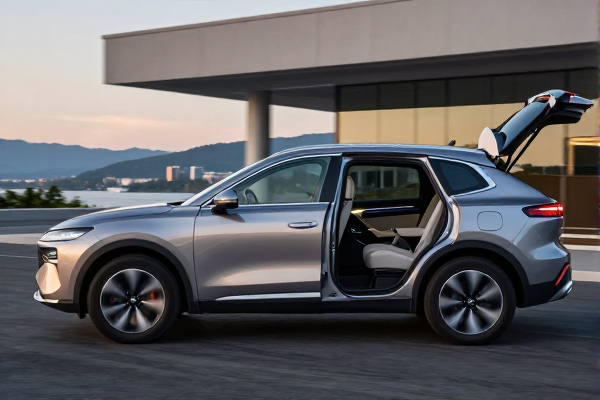
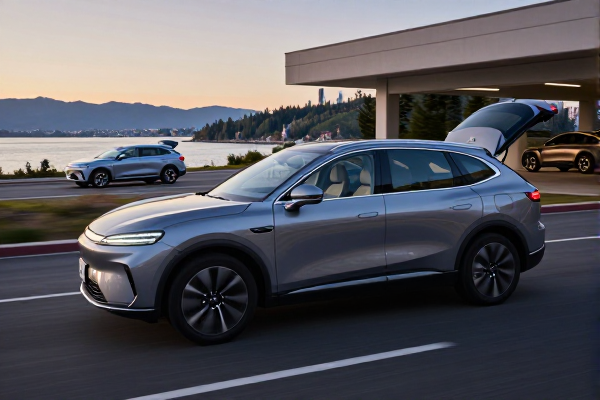
The R2 is widely seen as the make-or-break product for Rivian. It is a smaller, more affordable SUV than the company’s flagship R1S and R1T, and it is expected to open up a much larger slice of the mainstream market. Early reservations for the R2 were strong from day one, and Scaringe’s latest comments suggest that momentum has not faded.
That is a notable signal at a time when many EV buyers are delaying purchases or shifting back to hybrids. The broader industry has been hit with high interest rates, shrinking tax-credit excitement, and rising competition from Chinese automakers in export markets. Against that backdrop, Rivian’s refusal to trim its demand outlook stands out.
The CEO did not release a new reservation number on Thursday, but his wording was unambiguous. R2 demand, he said, remains strong — a phrase investors have learned to parse carefully since most EV companies avoid praising demand unless the data supports it.
The R2 launch is still expected to begin production in the first half of 2026 at Rivian’s plant in Normal, Illinois. That facility is already being retooled for the new model line, and the company has said it will prioritize a smooth production ramp over fast volume growth.
The $250 million from Uber is not a transformative sum on its own. But it arrives at a moment when investor confidence in Rivian is heavily tied to execution. The company has burned through significant cash during its expansion, and it has been working to narrow losses while maintaining its spending discipline.
Scaringe’s confidence on the Uber tranche effectively removes one layer of uncertainty. It also supports the broader narrative that Rivian can attract strategic capital without having to issue more shares at depressed valuations.
Rivian has already taken steps to protect its balance sheet. It has shortened production schedules, reduced inventory levels, and leaned on partnerships to share the cost of next-generation technology. The Uber payment, combined with the company’s previously announced collaboration with Volkswagen, gives management more breathing room as it prepares to scale the R2.
The timing matters too. This is roughly the point in the product cycle where a weaker order book would force management to reconsider launch plans. Instead, Scaringe chose to highlight demand strength, suggesting that the internal reservation funnel is healthy enough to support the planned production cadence.
The next few months will be pivotal. Rivian has to prove that it can keep its development timeline on track, convert R2 reservations into deliveries, and continue improving its gross margin performance. The Uber milestone is one piece of that puzzle, but it is also a useful early test of whether Rivian can satisfy outside partners who have their own aggressive deadlines.
If the $250 million tranche is unlocked by year-end, it will likely be seen as a sign that Rivian is doing more than just talking about progress. If it slips, the delay could raise fresh questions about the company’s autonomy schedule and the health of its relationship with Uber.
For now, though, the message from the corner office is clear: Rivian sees itself on schedule, and it sees the R2 as a product that buyers still want. That combination is precisely what the EV maker needed as it heads into one of the most important launch windows in its history.
With Scaringe’s latest remarks, Rivian has drawn a clear line for the next few months: meet the technical milestone, collect the funding, and keep the R2 reservation pipeline full. The coming earnings report will give investors a chance to see whether the company can back that optimism with numbers.