Browse

Log in / Register
 Share

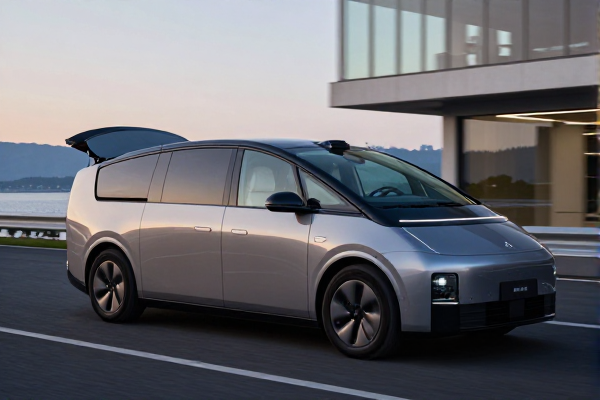
Bengaluru, September 14, 2026 — At electronica India 2026, Renesas Electronics leaned hard into a message that is reshaping the global auto industry: the next-generation EV is less a collection of mechanical parts and more a platform of software, sensors and centralized compute. From its booth at the Bangalore International Exhibition Centre (BIEC), the chipmaker showcased its latest 3nm multi-domain automotive SoC, edge AI capabilities, EV charging technologies and intelligent mobility tools, offering a clear picture of how vehicle architectures are being rethought around silicon.
The easiest way to understand the software-defined vehicle (SDV) shift is to look at what it is replacing. For the past two decades, automakers added a dedicated electronic control unit (ECU) for nearly every feature — one for power windows, another for cruise control, another for infotainment. A modern premium car can easily carry 100 or more such units, each running its own isolated software stack. That approach worked when vehicles were purely mechanical machines, but it has become a bottleneck for EVs, which need rapid OTA updates, complex battery management and continuous feature enhancements.
SDV architecture flips the model. Instead of dozens of discrete chips scattered through the car, processing is consolidated into a few high-performance domain controllers or a single central compute platform. Automakers can then change vehicle behavior through software long after the car leaves the factory. Industry observers increasingly describe this as the difference between selling hardware and selling a service; the car becomes a platform that improves over time.
That is also why the auto industry's attention is shifting from mechanical suppliers to semiconductor vendors. The value pool is moving toward chips, software stacks and AI models, and companies that control those layers will define the next generation of mobility.
Renesas used the Bengaluru event to position its R-Car Gen 5 platform as a foundational piece of this transition. The 3nm multi-domain automotive SoC is designed to handle several previously separate domains at once — ADAS, digital cockpits, connected vehicle functions and personalized in-car interfaces such as voice assistants.
Rather than a single-purpose chip, the platform is built for consolidation. The idea is that one SoC can run safety-critical driving functions alongside entertainment and connectivity workloads, while still leaving headroom for over-the-air software updates and new AI features. Renesas executives described the platform as an architecture that allows automakers to standardize on one compute foundation across multiple vehicle models, which helps cut development cost and complexity.
The competitive landscape makes this move easy to understand. Nvidia is pushing its Drive Thor centralized platform, and Qualcomm has been expanding its Snapdragon Digital Chassis portfolio. But Renesas brings a different mix to the table: deep experience in automotive-grade silicon, long product lifecycle commitments that automakers require, and a software approach that tries to meet developers where they already work. In a market where safety certification and supply continuity matter as much as raw performance, that combination is more relevant than peak TOPS numbers.
Alongside the SoC announcement, Renesas devoted significant space to edge intelligence — the practice of running AI inference inside the vehicle rather than relying on a cloud connection. The company demonstrated AI vision, assisted and autonomous driving support, and embedded intelligence applications that operate using the vehicle's own sensors and systems.
The advantages are practical, not theoretical. A car making a split-second decision about braking or lane keeping cannot afford the round-trip latency of sending data to a remote server. Even in well-connected cities, cloud-based inference adds unpredictable delays and consumes bandwidth that could be used elsewhere. Edge AI also keeps sensitive data closer to the vehicle, which matters for privacy and for regulatory compliance in markets with strict data localization rules.
That said, edge AI does not mean the cloud disappears. The more accurate framing is a division of labor: the cloud trains the models, and the vehicle executes inference locally. Renesas' showcase reflected that hybrid view, with local processing handling the tasks that need immediate response while connectivity remains available for map updates, software patches and fleet analytics. As EV architectures move toward software-defined systems, the SoC becomes not just a compute engine but the decision-making center of the vehicle.
One thing that gets less attention in SDV discussions is that a software-defined car still needs to manage high-voltage energy flows. Renesas also used electronica India 2026 to highlight EV charging and intelligent mobility solutions, linking the compute side of the car with the power side.
This is a strategic point for Renesas. Through its recent acquisition of Transphorm, the company strengthened its position in silicon carbide (SiC) and gallium nitride (GaN) power semiconductors, which are critical for efficient traction inverters and faster onboard charging. Combining those power devices with the R-Car Gen 5 compute platform lets Renesas offer a more complete bill of materials for EV makers — from the central brain down to the power stage.
Charging infrastructure itself is becoming software-defined as well. Modern chargers need to communicate with the vehicle, handle authentication and billing, manage dynamic load balancing and support remote diagnostics. These are compute problems as much as power problems, which means the line between automotive semiconductors and charging equipment is blurring. Renesas' push across both fronts reflects that reality.
For automakers, the SDV transition changes the engineering question from "which components do we buy?" to "which architecture do we build on?" The choice of a central compute platform is increasingly a strategic decision that affects vehicle cost, development speed, and the ability to generate recurring revenue through software services. That is why semiconductor companies are racing to lock in design wins not just for the SoC, but for the surrounding ecosystem of power ICs, sensors and software tools.
There is also a wider mobility angle. If vehicles are platforms, then traffic management, fleet operations and public transport integration can all be improved through the same connected intelligence. Renesas' intelligent mobility demonstrations point toward a future where cars are nodes in a larger data network — exchanging safety information, updating traffic predictions and coordinating charging schedules.
None of this happens overnight. The automotive industry moves on six- to eight-year product cycles, and many of the vehicles designed around today's central compute platforms will not hit the road until the early 2030s. But the direction is clear: the next-generation EV will be defined less by horsepower and battery size, and more by how much of its behavior can be upgraded through software. Edge AI, centralized computing and the power electronics behind them are the physical foundation for that future, and Renesas' presence at electronica India 2026 confirms the semiconductor industry intends to lead it.