Browse

Log in / Register
 Share

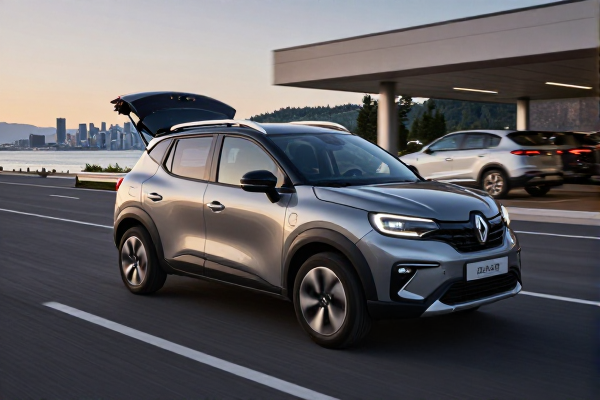
April 9, 2025 – The Renault Triber has always been a clever packaging exercise: a sub-four-meter seven-seater that defies its size. But since its 2019 launch, one complaint has persisted: the engine feels underpowered under load. The 1.0-liter naturally aspirated engine (71bhp, 96Nm) works fine with two passengers, but fill all seven seats plus luggage, and it struggles on inclines or highway overtakes.
Now, Renault is finally addressing that. A turbocharged 1.0-liter three-cylinder engine (99bhp, 160Nm) is coming to the Triber, paired with a five-speed manual or CVT automatic. The torque jump from 96Nm to 160Nm promises to make the car significantly more comfortable when fully loaded. But why did it take so long?
The answer isn’t that Renault ignored buyers. It’s that the original CMF-A platform, which prioritized cabin space and clever three-row seating, left almost no room for a larger or more powerful engine. The engine bay was packaged so tightly that deformation clearance between the engine and bonnet became a safety concern. Adding a turbocharger, intercooler, and related hardware would have required fundamental structural changes.
Renault’s engineers faced a choice: compromise the Triber’s core selling point (its interior space) or delay the turbo version until the platform could be redesigned. They chose the latter.
Enter the Renault Group Entry Platform (RGEP), an evolution of CMF-A. This new architecture relaxes the packaging constraints around the engine bay while maintaining the same exterior dimensions and interior layouts. It allows the addition of the 1.0-liter turbo engine without sacrificing the Triber’s seven-seat capability or the clever “EasyFix” removable third row.
RGEP also gives Renault more flexibility for future powertrains. That’s critical because the Triber’s delay wasn’t just about turbocharging—it was about making the car ready for a broader range of markets and use cases.
One of the most promising possibilities is a factory-fitted CNG variant. Unlike most aftermarket conversions that eat into luggage space, Renault is expected to position dual CNG cylinders under the boot floor. This would preserve the Triber’s full cargo capacity—a rare feature in the CNG segment.
There’s even speculation that the CNG version could use the turbo engine itself, combining more power with lower running costs. If that happens, the Triber would become one of the most versatile budget family cars on the market.
For years, the Triber’s only real weakness was the engine. The new turbo powertrain should eliminate that. The 160Nm torque peak arrives early, making the car feel responsive even before the turbo spools. Combined with the CVT option, it should be much easier to drive in stop-and-go traffic and on highways.
But the real test is calibration. Will Renault tune the engine for linear power delivery or for fuel efficiency? Will the CVT mimic a stepped gearbox or drone under load? The answers will determine whether the Triber finally becomes the “complete” package buyers have been waiting for.
The RGEP platform isn’t just about the Triber. It’s the foundation for Renault’s next-generation entry-level vehicles in emerging markets. This architecture is designed to accept multiple fuel types (petrol, turbo-petrol, CNG, and possibly even mild hybrid) without major re-engineering.
That’s important because it gives Renault a competitive edge. Rivals like the Suzuki Ertiga and the upcoming Toyota Rumion have also offered CNG options, but often with compromises on space or power. The Triber’s turbo + CNG combination could be unique.
The Triber is not sold in the US, where seven-seat families typically buy larger SUVs like the Toyota Highlander or Honda Pilot. But RGEP’s design philosophy—packing maximum utility into a small footprint—is increasingly relevant as global fuel economy regulations tighten. American automakers could learn from how Renault optimized a platform for both power and space without upsizing the vehicle.
The turbo Triber arrives late, but the delay was justified. Renault didn’t just slap a turbocharger on the old engine bay; it re-engineered the platform to make the car better in the long run. With more power, a potential CNG option, and no loss of interior space, the Triber could finally become the budget seven-seater that buyers have always wanted. The proof will be in the driving experience and pricing—but for now, the wait seems worth it.