Browse

Log in / Register
 Share
Share

January 2, 2025 – After years of testing and a development saga that included a last-minute motor swap, Land Rover has finally confirmed the final specs of the first-ever Range Rover Electric. The luxury SUV promises to be as silent and refined as a flagship EV, yet capable of wading through water deep enough to submerge the battery pack. Pre-orders are now open in the U.S., with deliveries expected later this year.
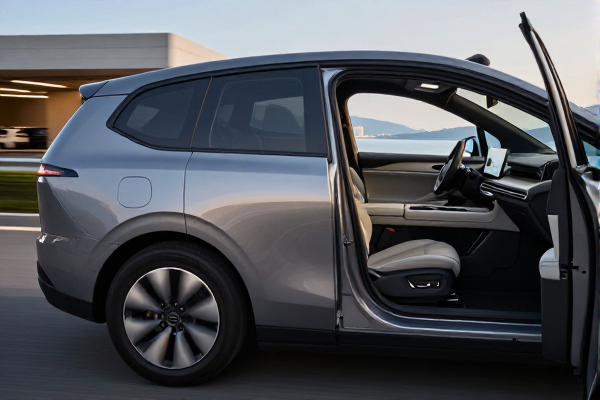
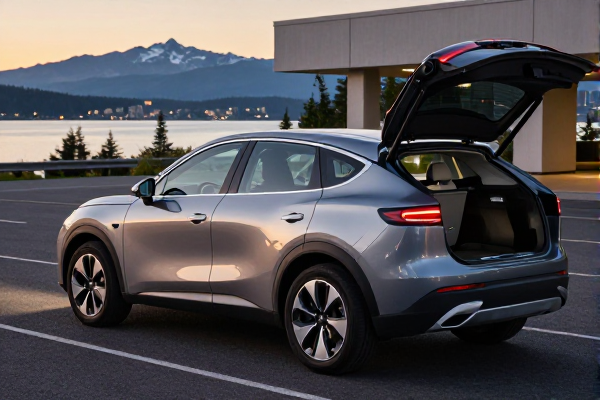
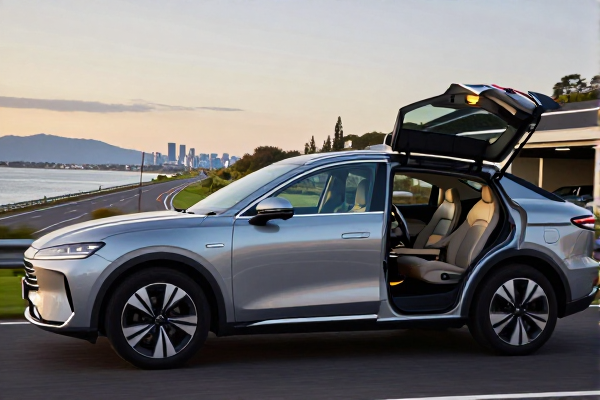
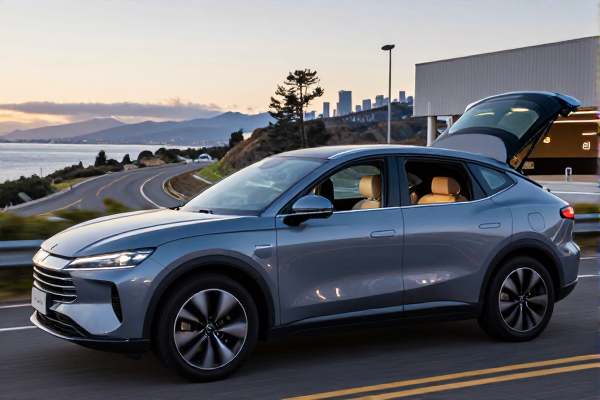
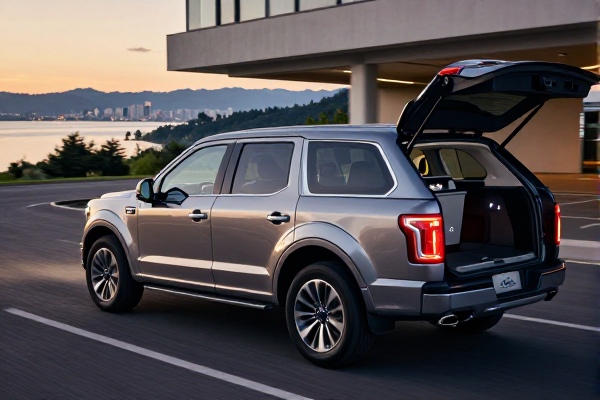
The Range Rover Electric looks nearly identical to its combustion siblings—a deliberate choice. The grille is closed but visually mimics the classic design, while underbody aero tweaks and specially shaped wheels add about 15 km of highway range. There are no exhaust pipes, but those were hidden on the gasoline version anyway. The message is clear: this is a Range Rover first, an EV second.
Powertrain and performance
The electric system delivers a combined 550 hp and 0-100 km/h in 4.5 seconds. But that’s not the whole story. Each motor (front and rear) is rated at 326 hp individually, meaning the system is actually power-limited by the battery’s output. This headroom allows for aggressive torque vectoring without compromising efficiency.
The 118.5 kWh battery pack uses a cell-to-pack structure, which improves energy density but makes module-level repairs impossible—the entire pack must be unbolted for specialist service. JLR’s AI analytics constantly monitor each cell’s health and can push over-the-air tweaks to voltage and thermal management. The cells are wrapped in aerogel, a NASA-developed foam that isolates fire and allows for thermal expansion.
Charging and range
The 800V architecture supports up to 350 kW DC fast charging, enabling a 10-80% top-up in 22 minutes. That’s not the fastest in class, but the pack is huge. Split-pack charging also allows the car to use older 150 kW 400V chargers, though slower. Onboard AC charging accepts 22 kW three-phase. Two charge ports are located on the rear quarter panels—one AC-only, the other AC+DC combo.
WLTP range is rated at 600 km, which translates to roughly 480 km in real-world conditions. That’s comparable to the V8’s tank range, and the Electric is quicker off the line.
Off-road capability
Despite the battery pack lowering the floor, ground clearance drops by only 18 mm. Wading depth remains at 900 mm, which means the entire battery, motors, and electronics are fully submerged at that point. The suspension can extend an additional 60 mm from normal max ride height if it senses the car is close to floating.
The lower center of gravity eliminates the need for active anti-roll bars, saving weight and complexity. Four-wheel steering is retained. Two-chamber air suspension on each corner adjusts spring rate by isolating one chamber, helping control pitch under braking and firming up in dynamic mode.
Why not four motors?
JLR engineers considered quad motors but rejected them. Four motors would hurt efficiency, and the “tank turn” gimmick is useless in ruts or on slopes—the car would just slide sideways. The twin-motor setup with torque vectoring is more practical.
The motor development drama
The road to production was not smooth. JLR originally planned a front induction motor and a rear permanent-magnet motor. But desert testing revealed that the front induction motor would overheat and lose power when climbing sand dunes in extreme heat. The solution: use a duplicate of the rear PM motor at the front as well. This caused a year-long delay because the packaging, calibration, and supply chain all had to be redone.
The rotors use 0.2 mm laminations (industry standard is 0.3 mm), which improve flux efficiency. Channels in the laminate stack, shaped like snowflakes, carry cooling oil whose flow rate varies by drive mode. Silicon-carbide inverters on each axle enable faster switching, making traction control smoother and more subtle.
Cabin and cargo
Interior space is identical to the combustion Range Rover, with no frunk under the hood. Instead, that space houses a large thermal management system that moves heat between the battery, motors, electronics, and cabin. The cargo area is unchanged. The battery pack depth eats 18 mm of ground clearance but doesn’t affect passenger space.
Noise refinement
Engineers faced a new challenge: EV silence exposes tire and wind noise, plus an audible hum from the high-voltage cables (like the sound of grid transformers). Hundreds of microphones were used to identify noise paths, and sound deadening was applied. Mid-spec Meridian systems include noise cancellation via headrest speakers. A synthetic F-minor chord sound can be switched on, varying with throttle and speed.
At the top of the audio range, 21 electrostatic panel speakers replace traditional coil cones. They are lighter, use less power, and deliver clarity and spaciousness that is, in the reviewer’s experience, unmatched.
Pricing and market positioning
U.S. pricing hasn’t been officially announced, but UK pricing starts at £154,070 (Autobiography spec) and goes up to around £210,000 for top trims. That puts it in the same league as the Mercedes EQS SUV, BMW iX, and the higher-end Tesla Model X Plaid. However, no other luxury EV offers this level of off-road capability combined with a 900 mm wading depth.
Exclusive insight: Pre-order data
According to JLR sources, pre-orders in the U.S. have already exceeded expectations for the first year of production, with the Autobiography trim accounting for over 40% of reservations. The company expects to manufacture the Electric on the same Solihull line as combustion and PHEV models, allowing flexible production scaling.
Conclusion
The Range Rover Electric is not a revolutionary design—it intentionally looks like a Range Rover. But under the skin, it represents a massive engineering effort to deliver the silence, refinement, and off-road capability that the badge promises. The 800V architecture, 600 km range, and 550 hp make it competitive on paper, but the real test will be on the trail and in the driveway. If it delivers on the wading depth and noise cancellation, it could be the most complete luxury EV on the market.