Browse

Log in / Register
 Share

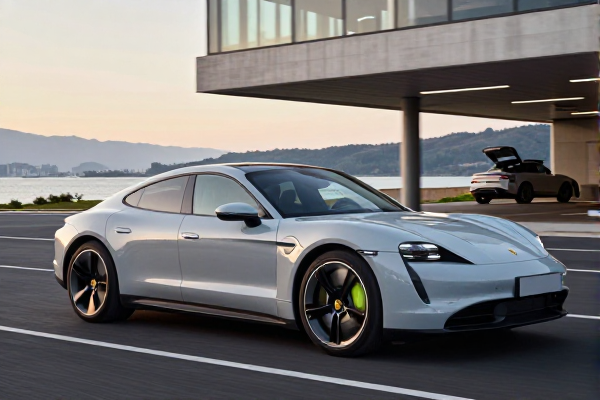
Porsche is reportedly closing in on a production flat-eight engine, and the halo model it's destined for carries a codename with real history: S1. German business daily Handelsblatt reports, via Motor1, that the flat-eight hypercar is looking increasingly likely—which would give Porsche its first production car with more than six horizontally opposed cylinders. The story broke Monday, September 21, 2026, and it's already fueling heated debate among enthusiasts. Today's briefing also covers a major Stellantis recall, a leaked Grand Cherokee engine document, fresh U.S. EV sales data, and a roundup of weekend racing winners.
The idea of a flat-eight Porsche isn't new. In the late 1960s, company engineers developed air-cooled flat-eight engines for the 908 racing prototypes, and the legendary 917 used a flat-12. But no production Porsche has ever been powered by more than six cylinders in a boxer layout. The 911's flat-six and the 718's flat-four have defined the road-car range for decades.
According to the Handelsblatt report, the upcoming hypercar—internally codenamed "S1"—could change that. Porsche reportedly floated a flat-eight project at the start of this decade, using a Cayman-based test mule, but that program was ultimately shelved. Now the same idea appears to be back, and with more momentum.
The S1 name has appeared before in Porsche lore. More than 25 years ago, ahead of the Carrera GT's market debut, a report referenced a future halo model called S1 with V8 power. The Carrera GT famously arrived instead with a naturally aspirated V10 derived from a Le Mans racing program. History doesn't always repeat, but it often rhymes.
Building a flat-eight for the road isn't just about adding two cylinders to a 911 engine. Crankcase design, balance shafts, exhaust routing, and packaging all become more complex when the engine gets wider. The 908-era flat-eight was a pure race motor, never intended for emissions certification or street refinement. Modernizing that architecture for a hypercar—likely with hybrid assist—would be a serious engineering exercise, which is part of why Stuttgart has stuck with six cylinders for so long.
As with any speculative report, details remain thin. Output, drivetrain layout, and electrification have not been confirmed. But if the S1 does reach production, it would become Porsche's new flagship, succeeding the Carrera GT and 918 Spyder as the ultimate expression of the brand's engineering ambition.
Stellantis is recalling just under 100,000 Wagoneer, Grand Wagoneer, and long-wheelbase variants from model years 2022 through 2026. According to NHTSA documents, the roof-rack crossbars may not have been properly secured, posing a potential road hazard if they separate while driving.
Not every vehicle in that production window is affected—only those fitted with roof racks. Owners whose SUVs are included will need to visit a dealer, where technicians will inspect and replace the mounting bolts as necessary. The repair is free of charge. Anyone unsure whether their vehicle is part of the recall can check the NHTSA website using their VIN.
Jeep appears to be preparing a major powertrain upgrade for the Grand Cherokee. A leaked internal document cited by Mopar Insiders suggests the 2028 model could gain the twin-turbo 3.0-liter Hurricane inline-six currently found under the hood of the Grand Wagoneer.
In this application, the report estimates 420 horsepower and a towing capacity increase of roughly 1,200 pounds over the current model. Adding the Hurricane would give the Grand Cherokee a serious performance advantage over most mid-size SUV rivals, many of which still rely on naturally aspirated V6s. Jeep hasn't confirmed the plan, so treat this one as a strong rumor until official details arrive.
New data from Mobility Global paints a sobering picture for the American EV market. Sales of fully electric vehicles plunged 31% in July 2026 compared with the same month a year earlier, and EVs' share of the overall new-car market slid from 8.9% to 6.2%.
The timing lines up with a key policy shift: the federal EV tax credit expired in September 2025. Without that incentive, many cost-conscious shoppers have returned to hybrids or conventional gas engines. Automakers have tried to counter the downturn with aggressive price cuts, but the data suggests demand remains soft. Hybrids, in particular, have become the pragmatic middle ground for buyers who want electrification without range anxiety, and several automakers have leaned into that demand with plug-in offerings. Analysts will be watching the second half of 2026 for any sign of recovery as new models and infrastructure improvements come online.
Porsche is also in the middle of a turbulent period within the Volkswagen Group's broader restructuring. Reuters reported this week that an additional 4,100 jobs could be on the chopping block, on top of the 9,000 positions Porsche already committed to cutting back in July.
CEO Michael Leiters was quick to push back, denying the claim in an internal memo to staff. Whether that denial holds remains to be seen—the automaker is wrestling with slowing EV demand and the enormous cost of transitioning its lineup to battery power. Keep an eye on Stuttgart for more clarity in the coming weeks.
In a sign of where sports cars may be heading, the European Patent Office has published a Porsche application for a virtual manual transmission. The concept isn't unlike what Ferrari already offers with the 12Cilindri—a system that simulates gear changes and clutch action in a vehicle that has no physical gearbox.
For Porsche, which has long championed the analog driving experience even as it embraces electrification, such a system could be a way to preserve engagement in future EVs or hybrids. Whether it appears in the S1 hypercar, an electric 911 successor, or neither is anyone's guess at this point.
Volvo Cars has found its next leader. The Swedish automaker announced that Klaus Zellmer, the former CEO of Skoda, will take over as chief executive and president no later than October 1, 2027. He succeeds Hakan Samuelsson, who stepped into the role after the board replaced Jim Rowan in 2025.
Zellmer's résumé includes senior stints at Volkswagen Group of America and Skoda, giving him deep experience in both volume brands and mature Western markets. He'll take charge as Volvo works to complete its electric transition while facing mounting competition from Chinese automakers, including its own parent, Geely.
The race weekend packed plenty of action. At Bristol Motor Speedway, Sheldon Creed took the NASCAR O'Reilly Auto Parts Series win for Haas Factory Team, while Joey Logano added another Cup Series trophy for Team Penske. Over in Austria, Pedro Acosta delivered a commanding ride to win the MotoGP Austrian Grand Prix for Red Bull KTM Factory Racing. And at Indianapolis, BMW M Team WRT's Dries Vanthoor and Sheldon van der Linde claimed victory in the IMSA SportsCar Championship round.
That's all for today's auto news briefing. If you have a tip or feedback, reach out to tips@thedrive.com.