Browse

Log in / Register
 Share

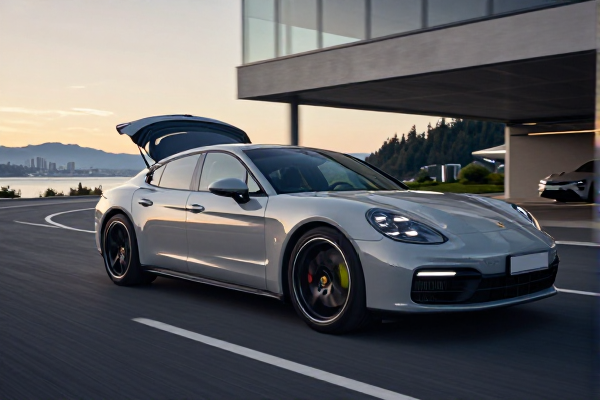
As of March 10, 2025, Porsche has officially committed to building the electric versions of the 718 Boxster and Cayman, according to CEO Michael Leiters. The decision comes after months of speculation that the two-seaters might be scrapped due to lackluster enthusiast interest and mounting cost pressures. Leiters, who joined from McLaren earlier this year, now faces the challenge of realigning Porsche’s EV investments without killing off its most iconic sports car DNA.
Leiters told Frankfurter Allgemeine that Porsche “came to the conclusion that we will build the model – because it is the best economic solution and will become a fantastic car.” This statement contradicts earlier reports that the project was on ice. According to insiders, the decision hinged on a hard-nosed commercial analysis: the electric 718 makes financial sense when evaluated on its own, not just as a group synergy play.
The CEO pushed back against claims that Porsche is only building the EV to supply Audi with components for its next-generation TT successor. “I initially look at each project exclusively from Porsche’s perspective: Does it make economic sense or not? Only after that do potential synergies within the group play a role,” Leiters said.
While the electric 718 is confirmed, Porsche has dramatically scaled back its original all-EV ambitions for the model line. The company now plans to offer combustion-engine variants across the range, not just in flagship GT models. The naturally-aspirated six-cylinder units from the Cayman GT4 and 718 Spyder RS will likely remain, and lower-tier ICE versions are being reverse-engineered into the new platform.
This dual-pronged approach is a direct response to market reality: enthusiasts have shown little appetite for a fully electric sports car at Porsche’s price point. By keeping the petrol versions alive, Porsche can hedge against slow EV adoption while still meeting regulatory requirements in key markets like Europe and California.
In a separate passage, Leiters floated the idea of a new flagship sports car positioned above the 911. He described it as one of several “future opportunities” for the U.S. market, without confirming any program. The hint aligns with Porsche’s long-standing ambition to create a halo car – possibly a successor to the Carrera GT or the 918 Spyder, or an entirely new hypercar leveraging hybrid technology.
Industry observers note that such a model would help Porsche compete with the Ferrari SF90 Stradale and Lamborghini Revuelto, while also serving as a technology showcase for future electrification. The Mission X concept, shown two years ago, may hint at the design direction.
Contrary to rumors that the Taycan could be axed to reduce complexity, Leiters confirmed the electric sedan is staying. “We have no plans to discontinue the Taycan in the short term,” he said, adding that Porsche is already cutting model variants to lower engineering and production costs. The Taycan’s heavy investment means Porsche will watch demand closely before making any drastic moves.
Leiters’ strategy is becoming clearer: stop the bleeding from over-investment in EVs (which cost Porsche €1.8 billion in profit last year), use a flexible platform strategy to keep both ICE and EV options alive, and leave the door open for a true flagship to revive the brand’s halo. The electric 718 may not be the game-changer originally envisioned, but it ensures Porsche has a foothold in the zero-emission sports car segment without abandoning its core customers.
For now, the 718 family – both electric and combustion – will continue to be built in Stuttgart, with the first EV deliveries expected in 2026. The flagship above the 911, if approved, would likely arrive later this decade.