Browse

Log in / Register
 Share

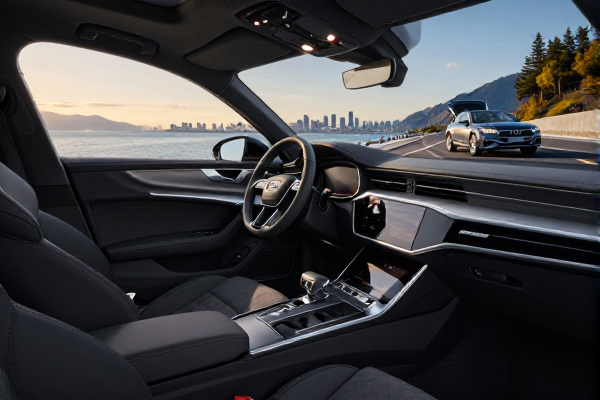
June 18, 2025 — Guinness World Records has certified a new distance benchmark for production electric cars: 831 miles on a single charge, set by Polish rally driver Bartosz Ostałowski at the wheel of an Audi A6 E-Tron.
The Polish arm of the brand, Audi Polska, organized the attempt on public roads and confirmed the certification in a statement this week. The car was a stock European-spec A6 E-Tron with the standard battery pack and factory wheels — no aero add-ons, no stripped interior, no solar panels on the roofline. Ostałowski simply drove it until it stopped, which took the better part of two days.
Ostałowski is an established endurance specialist in Central European motorsport circles. He has spent years competing in long-distance rally events and sets little store by official range figures. This time, the WLTP number for the car was roughly 466 miles. The GPS-verified total was 831 miles — 1,337 km — about 78 percent above the European certification figure and well over double what most US-market drivers will realistically see.
That last point deserves emphasis, because it frames everything that follows.
The route wound through central and southern Poland, mixing sections of national road with small-town stop-and-go traffic. Average speed was low — crew members described stretches where the needle barely touched 45 mph. Mild temperatures, light wind, and warm asphalt all worked in the car's favor.
Under those conditions, the A6 E-Tron's 0.21 drag coefficient starts to work overtime. At 40–50 mph, aerodynamic resistance is a minor annoyance rather than a constant tax, and the battery's thermal management barely breaks a sweat. Ostałowski kept the climate control off for long stretches, relying on the heat pump only when absolutely necessary.
The official energy-consumption figure for the full run has not been released, but working backward from the usable battery capacity of 94.9 kWh, the arithmetic lands near 8.7 miles per kWh. That number looks almost comical next to most EPA ratings posted today, and it owes as much to technique as to engineering. Every lift off the accelerator became a recuperation event. Every descent was a chance to harvest energy instead of burning it through the friction brakes.
Guinness World Records is strict about long-distance driving claims. The category covers production-model EVs traveling on a single charge with no external energy input, which is why concept-car feats like the Mercedes EQXX's 747-mile research run sit outside the record book.
For this attempt, Guinness required tamper-proof seals on the charge port, two independent GPS loggers tracking every mile, continuous video of the driving windows, and independent witnesses at the start and finish. Ostałowski's driving log was audited, and the car's onboard energy-management telemetry was handed over as supplementary evidence.
The finish was a quiet stretch of road in southern Poland, where the car rolled to a stop at walking pace before the crew was allowed to touch the charging cables. By any measure, it was a legitimate and painstakingly documented run.
The uncomfortable truth is that the record says almost nothing about what a buyer will experience in daily use. EPA testing — the standard Americans actually see — punishes exactly the kind of driving that made 831 miles possible. It includes sustained high-speed highway segments, aggressive accelerations, and cold-weather conditioning cycles.
The US-market A6 E-Tron, which began reaching dealer lots in late spring, carries an EPA rating near 350 miles in its most efficient single-motor form. Early independent reviews have landed close to that number at legal highway speeds.
"This is a ceiling test, not a floor test," said a Michigan-based EV engineering consultant who has evaluated prototype versions of the platform. "Told honestly, the record proves the hardware is efficient and the recovery software can be coached. Take the same car onto I-95 at 75 mph with the AC on, and you'll be looking at the EPA figure, full stop."
AAA's own real-world EV range studies have said the same thing for years: city-style driving tends to beat the sticker, and sustained 70-plus-mph travel tends to undercut it.
The previous Guinness-certified distance for a production EV on a single charge was set in 2022, when a Hyundai Ioniq 6 covered 614 km — about 382 miles — during a test in Germany. That mark stood for more than two years. The A6 E-Tron's 1,337 km more than doubles it.
The leap is unusual. Range records usually move forward in small increments because battery chemistry and aerodynamics advance slowly. The Audi run skipped several steps by relying on driver stamina and disciplined energy management. That is exactly what Guinness records are for: rewarding the outlier effort, not representing the normal one.
Lucid remains the efficiency reference in US showrooms, with EPA numbers north of 400 miles for the Air, but Lucid has never attempted a certified single-charge marathon on public roads. Tesla, similarly, has let owner hypermiling communities chase long-range bragging rights without seeking an official Guinness title.
Timing matters. Audi is rolling out the A6 E-Tron across North America this summer, positioned directly against the BMW i5 and Mercedes EQE. The brand has spent the past two years trying to shift public perception of the PPE platform — the premium electric architecture it co-developed with Porsche — from "solid but not spectacular" to genuinely class-leading.
The Guinness certificate gives Audi's marketing team a concrete, independent talking point that no rival can currently claim. The company is also preparing a sleeker Sportback body, which it positions as the most efficient version of the model line. Given that the record was already set on the more upright sedan body, the Sportback could push past 900 miles in an identical test — should anyone try.
There is a software angle, too. Audi has been delivering over-the-air updates that refine recuperation logic in real-world conditions, and Ostałowski said he used the car's efficiency-coaching prompts throughout the run. A car that can be coaxed to 831 miles in June could in theory be coaxed further after the next OTA update lands.
The record does not change the official yardstick. EPA figures, not Guinness certificates, govern what appears on window stickers and in lease advertisements. What the record does is give shoppers a conversation point: the A6 E-Tron's hardware has shown it can be remarkably efficient when conditions align.
US pricing for the A6 E-Tron starts near $67,000 before destination in rear-drive trim, putting it in direct contention with the i5 and EQE. Buyers interested in the range-friendly setup should watch for the Sportback arrival later this year, which should carry the same battery in an even slipperier body.
Ostałowski drove in rotation with short breaks for food and rest while support crew monitored tire pressures and battery temperatures. He described the run as "meditation with a steering wheel" in a video released after the finish. The car, he said, never warned him, never throttled down, and never surprised him.
Audi plans to display the car with its Guinness certificate at the brand's museum in Ingolstadt later this year. In the passenger seat, incidentally, will be a small trophy — proof that the world's longest EV range record, at least for now, belongs to a Polish rally driver with an unusually patient right foot.