Browse

Log in / Register
 Share
Share

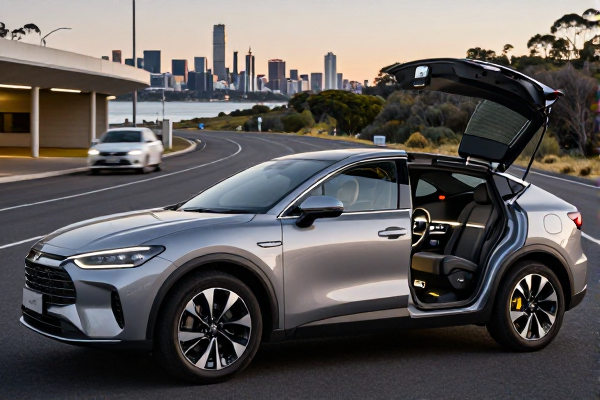
In a decisive move with significant implications for the electric vehicle sector, Swedish automaker Polestar has confirmed it will cease marketing and selling new vehicles in the United States starting with the 2027 model year. The company's path was blocked by the U.S. Department of Commerce, which denied it a crucial authorization under newly implemented regulations designed to safeguard national security in the age of connected cars. This development, announced on July 18, 2024, marks a pivotal moment where geopolitical and trade policies directly reshape the automotive marketplace, forcing a major player to recalibrate its global strategy.
The core of the issue lies in the Biden administration's "Connected Vehicle Rule," a regulatory framework that restricts vehicles containing software or hardware from what it terms "foreign entities of concern." While not naming countries explicitly, the rule is widely understood to target technological links to China, citing data security and espionage risks. For Polestar, which is owned by China's Geely Holding Group, this created an insurmountable barrier. Despite assembling its Polestar 3 SUV in South Carolina and manufacturing the Polestar 4 in South Korea, the company's ultimate ownership structure proved fatal to its U.S. regulatory approval.
This ruling exposes the deepening fissures in global automotive trade, where supply chains and corporate ownership are becoming as strategically important as the vehicles themselves. The Department of Commerce's decision highlights a clear policy direction: to sever or severely limit the digital and operational pathways between the U.S. automotive ecosystem and Chinese-linked companies, even those with significant Western operations and branding like Polestar. It is a more targeted and technologically sophisticated extension of earlier tariffs, focusing on the data and connectivity that define modern cars.
Polestar's response frames the exit not as a defeat but as a strategic realignment. The company emphasizes that its business is already heavily concentrated in Europe, which accounted for a staggering 94% of its retail sales outside the U.S. in Q1 2024. CEO Michael Lohscheller stated the industry is now entering a phase defined by "regional dynamics," a tacit acknowledgment of the balkanization of global markets. Consequently, Polestar will double down on Europe as its primary growth engine, with plans to manufacture its upcoming Polestar 7 model there, while also expanding in Southeast Asia, Eastern Europe, Latin America, and Canada.
The contrast with Volvo, Polestar's stablemate under the Geely umbrella, is stark and instructive. Volvo Cars recently secured the necessary authorization to continue selling connected vehicles in the U.S. This divergence likely stems from Volvo's longer-established, more independent operational history, deeper integration of its U.S. manufacturing footprint, and potentially a more favorable assessment of its data-handling protocols. The twin outcomes for Geely's brands demonstrate that regulatory scrutiny is nuanced, evaluating each corporate entity on a detailed case-by-case basis rather than applying a blanket ban.
For American consumers and the EV market, the immediate impact will be limited but symbolic. Polestar will continue to sell its existing inventory of Polestar 3 and Polestar 4 models and has committed to maintaining full service and support for existing owners. However, the absence of new models post-2026 removes a distinctive design- and performance-oriented competitor from the landscape, potentially consolidating market share among domestic and allied-nation automakers. It also signals to other brands with Chinese ties that the U.S. market may become progressively inaccessible without a fundamental restructuring of ownership or technology sourcing.
The long-term strategic implications are profound. This move by the U.S. government effectively weaponizes market access, using regulatory policy to incentivize a decoupling of automotive technology from geopolitical adversaries. It pushes global manufacturers toward a "choose your side" dynamic, forcing them to establish parallel supply chains and product strategies for aligned versus non-aligned economic blocs. For Polestar, the pivot away from the world's second-largest EV market is a substantial setback, compelling it to prove that growth in other regions can compensate for the lost opportunity in America.
Industry analysts point out that this ruling may accelerate investment in U.S.-based EV manufacturing by companies seeking to avoid similar fates, but it also risks insulating the American market from competitive innovation. The policy walks a fine line between securing national interests and fostering protectionism. As the automotive industry's transformation becomes inextricably linked with national security and data sovereignty, the story of Polestar's exit may be the first of several similar chapters, redefining competition in the electric era not just by horsepower and range, but by passports and firewalls.