Browse

Log in / Register
 Share

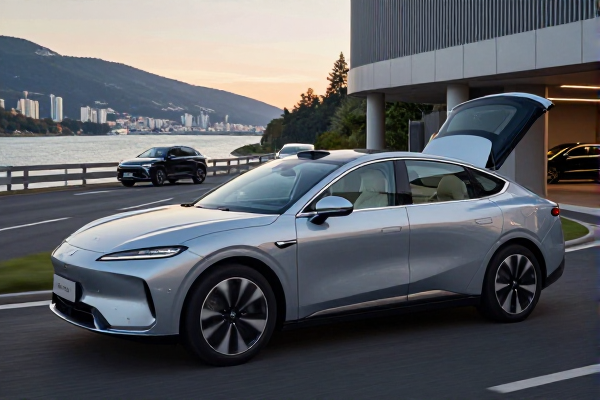
Paris, May 9, 2026 — The Paris auto show opens Monday with European and Chinese carmakers staging one of the most crowded product launches in recent memory: up to 60 new models are expected to appear across the opening press day. The timing is deliberate. Days ago, the European Union announced a tariff-reduction deal with China, suddenly exposing both sides to deeper price competition in Europe’s electric-vehicle market.
Why Paris is no longer a style showcase
Paris is not the biggest sales showroom in Europe, but it is the most symbolic. Legacy European groups will try to prove they can still define the electric age. Chinese groups that have emerged from a bruising price war at home will try to repeat their winning formula on European soil. The result is a product blitz that spans nearly every segment: compact city EVs, plug-in hybrids, electric vans, and a dozen near-production concepts.
According to preliminary schedules from organizers, the floor plan at Porte de Versailles will host as many as 60 reveals between Monday’s press day and the opening for the public. That is a sharp jump from recent years, when many manufacturers skipped the event to cut costs. This year, skipping is not an option.
The tariff deal resets the rules
The EU-China agreement announced days before the show is the backdrop for nearly every pricing decision. The framework is expected to lower anti-subsidy duties on Chinese-built EVs and include a price-floor mechanism to prevent dumping. For European carmakers, it removes a protective wall. For Chinese brands, it clears a barrier that had made export prices unpredictable and complicated dealer contracts.
The political timing matters, too. The deal shows that Brussels and Beijing are willing to avoid a full-blown trade war over cars. But it also signals that the EU expects affordability to come from competition, not from tariffs. Car companies have read that signal, and the Paris show is their first chance to respond.
Chinese brands: from imports to insiders
From Beijing’s perspective, Paris is the first real test of post-tariff pricing. Chinese automakers have spent years building European certification expertise, charging partnerships, and service logistics. They have solved the hardest parts of entering the market. Now they need to convince buyers that a Chinese EV is a durable purchase, not just a cheaper one.
The next phase of their strategy is local production. BYD is building a factory in Hungary. Chery is assembling vehicles in Spain. Leapmotor, in which Stellantis holds a majority stake, is producing small EVs at Stellantis’s Tychy plant in Poland. This blurs the old map: a Chinese-designed car can be built in Europe with European labor, while a European legacy car may run on Chinese-made batteries.
That shift makes tariffs less central over time. If Chinese brands can source enough components locally, the trade deal becomes a starting point rather than a permanent advantage. It also forces European politicians to rethink protectionism: the “Chinese threat” is no longer only about imports; it is about who controls the next generation of automotive jobs and technology.
Europe’s counterplay: cost, not cavalry
European automakers are responding with a strategy that can be summed up in one word: cost. Renault is preparing the Twingo E-Tech, a small EV aimed at a price below €20,000. Stellantis will use Paris to push Leapmotor as an affordable bridge between its historical European marques and the new wave of Chinese competition. Volkswagen, which has lost momentum in the small-EV segment, is expected to emphasize a model architecture designed to lower production costs rather than increase performance.
The influence of Chinese manufacturing methods is everywhere. European product planners are re-examining LFP batteries, giga-casting, and modular platforms that reduce assembly complexity. In supplier meetings before the show, the phrase “co-pricing” has replaced “platform strategy” as the main topic — a sign that Chinese prices now set the ceiling for European sticker prices.
Dealers brace for margin pressure
Dealers are also watching this show closely. New-vehicle margins in Europe are already thin, and high inventory has forced brands into pre-registration practices that hurt future resale values. A product blitz with too many similar EVs will not help.
Dealer associations are asking automakers for regional pricing flexibility and better marketing support. Several are expected to use the Paris show to negotiate year-end incentives directly with factory executives. For many dealers, the real question is not which car wins the best design award, but which brand can clear its aging stock without destroying the price structure for the new models.
What a product blitz means for prices
The immediate risk is more supply than demand. Dealer lots across Europe already hold higher inventories of EVs than many want to admit. If Paris generates a wave of enthusiastic reviews but weak orders, the second half of 2026 could bring factory shutdowns and discounting.
Transport & Environment, which tracks European EV adoption, has argued that battery-electric cars need to reach around €20,000 to win over mainstream buyers. Only a handful of models on sale today are close. Chinese brands are closer, but they are also learning that a cheap price alone is not enough. European buyers expect warranty coverage, fast service, and a strong resale value. Several Chinese manufacturers are addressing this by signing local battery-repair deals and offering extended warranties.
Five things to watch
Sub-€20,000 EV commitments. If European brands announce small EVs at the magic price, it will confirm that the Paris show marks a turning point. If they avoid the number, the “affordable EV” promise remains marketing.
Local production announcements. Chinese brands will try to shift the conversation from “imports” to “jobs.” Any new plant or assembly deal announced at the show will be framed as investment, not invasion.
Hybrid surprises. Pure EV demand has cooled among some fleet buyers, so plug-in hybrids and range-extended models may receive more floor space than expected. That could test the EU’s zero-emission-only timeline.
Tariff language. Listen for how executives talk about China. The tone has shifted from angry confrontation to careful competition, but the trade truce is fragile and could be reversed after political pressure.
Order books, not applause. The real winner at any modern auto show is the brand with the strongest retail reservations. Concepts can steal headlines, but automakers battling for market share need production slots filled, not social media shares.
Bottom line
The Paris auto show has become an economic war room. The brands that leave with clear pricing, credible delivery dates, and strong order banks will shape the European market for the rest of the decade. Those that treat the show as a traditional pageant will fall behind quickly.
Neither side enters Monday with a home-field advantage. European brands have history, dealer networks, and brand loyalty; Chinese brands have cost control, battery scale, and a willingness to move fast. The tariff truce creates a rare moment of open competition. What happens in Paris over the next two weeks will be watched far beyond the exhibition halls — in Brussels, Beijing, and every showroom where buyers are looking for an EV that makes financial sense.