Browse

Log in / Register
 Share
Share
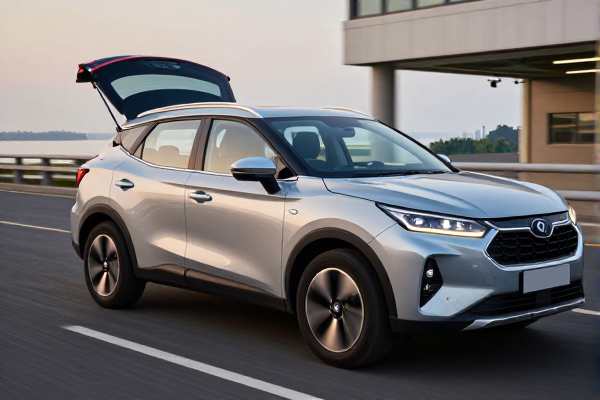
Islamabad, May 23, 2024 – Pakistan's efforts to overhaul its automotive sector have hit a significant roadblock. The government has opted to extend the existing auto policy for another year after negotiations with the International Monetary Fund (IMF) and the Tariff Policy Board failed to produce a consensus on a new regulatory framework. This delay prolongs uncertainty for manufacturers and stalls critical reforms aimed at improving vehicle quality and boosting exports.
High-level talks, led by Prime Minister Shehbaz Sharif, have exposed deep frustrations within the administration over the slow pace of industrial policy execution. A key point of contention with the IMF centers on the previous policy's perceived failures. Government sources, speaking on condition of anonymity, reveal that incentives granted to local manufacturers under the old policy failed to achieve their primary goal: creating an export-worthy vehicle industry. Many domestically produced cars still fall short of international safety and quality benchmarks, confining them to the local market. More troubling are allegations that some automakers received export-promotion subsidies without actually shipping any vehicles abroad, raising questions about accountability and oversight.
The proposed new policy draft, which remains in limbo, represents a strategic pivot. Its core objectives are to attract fresh investment, generate employment, and finally align Pakistan's auto manufacturing with global standards. A central pillar involves mandating 62 United Nations-recognized safety standards for both imported and locally assembled vehicles. Companies failing to comply would face financial penalties, a measure intended to force a long-overdue upgrade in production quality. The draft also includes substantial provisions to accelerate the adoption of electric vehicles (EVs), plug-in hybrids, and hybrids, acknowledging the global shift towards sustainable transport.
However, the path forward is mired in bureaucratic discord. A recent, tense session of the National Assembly's subcommittee on Industries and Production highlighted a damaging lack of coordination. A jurisdictional dispute erupted between the Ministry of Industries and Production and the Ministry of Science and Technology over which body holds the authority to set standards for four-wheel vehicles. Officials from the science ministry publicly criticized the proposed manufacturing regulations as poorly formulated, while committee members lamented the “regrettable” inter-ministerial conflict and the unexplained absence of senior officials from the meeting.
The subcommittee's focus then turned to the chaotic state of Pakistan's nascent electric two- and three-wheeler market, uncovering systemic gaps. Despite the Engineering Development Board (EDB) issuing licenses to 101 companies to manufacture such vehicles, critical infrastructure is missing. Shockingly, not a single public EV charging station is operational nationwide, even though 116 companies hold licenses to build them. Safety concerns are mounting, with reports of EV batteries being assembled in residential areas—a practice the subcommittee warned poses severe fire risks—and some bikes in Khyber Pakhtunkhwa operating without certification from the standards authority.
Value-Added Analysis: A Supply Chain Bottleneck Revealed A critical, underreported insight from the proceedings points to a major vulnerability in Pakistan's EV ambition: an almost complete dependence on imported batteries. Representatives from the EV Manufacturers Association disclosed that locally produced batteries meet a mere 5% of domestic demand, with the remaining 95% sourced from abroad. This reliance not only escalates costs, making subsidies less effective, but also exposes the sector to global supply chain disruptions and currency volatility. The battery constitutes between 36% to 60% of the total cost of an average EV bike, highlighting how this import dependency threatens the economic viability of the entire promotion scheme.
The government's subsidy program, while substantial, may be addressing the symptom rather than the disease. A commitment of 100 billion rupees (approximately $360 million) in consumer subsidies until 2030, offering up to 80,000 rupees per vehicle, is designed to stimulate demand. Yet, without parallel, aggressive investment in local battery cell manufacturing and raw material processing, Pakistan risks creating a subsidized market that primarily benefits foreign battery suppliers. EDB CEO Hammad Ali Mansoor's note on lithium battery warranties and lifespan underscores the technology's longevity but does not solve the foundational issue of local production.
The subcommittee has issued directives to resolve the impasse, tasking provincial authorities and federal ministries with jointly implementing EV bike regulations and demanding the EDB to formalize these rules promptly. They have also summoned officials from the energy and provincial governments to the next meeting. The overarching message is clear: Pakistan's automotive policy, whether for traditional or electric vehicles, is trapped between ambitious goals and fragmented execution. The one-year extension of the old policy is not a solution but a pause, during which inter-ministerial turf wars must end and a coherent, investor-friendly strategy must emerge to prevent the industry from falling further behind regional competitors.