Browse

Log in / Register
 Share
Share
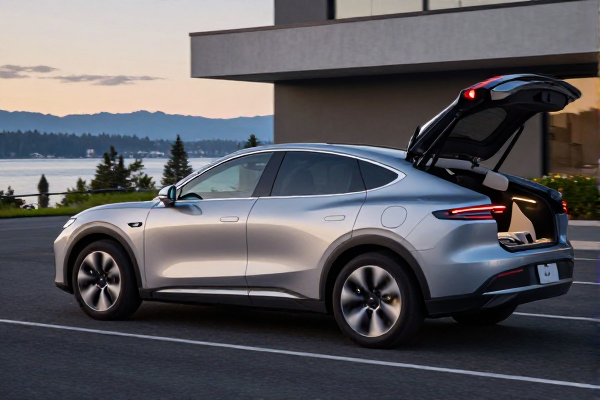
Oregon’s electric vehicle (EV) rebate program will reopen for new applications on August 25, 2025, but with smaller payouts designed to keep the fund from drying up within months, according to state regulators.
The Oregon Department of Environmental Quality (DEQ) confirmed the changes today, July 24, 2025. Under the revised rules adopted earlier this year, the standard rebate for a new battery electric vehicle (BEV) is now $2,000, down from $2,500 in the past cycle. Plug-in hybrid electric vehicles (PHEVs) qualify for $1,500, and zero-emission motorcycles for $375.
Why the cutback? The program has been a victim of its own success: it ran out of money three years in a row. DEQ’s Oregon Clean Vehicle Rebate coordinator Erica Timm explained that reducing per-vehicle amounts allows more Oregonians to participate. The agency also introduced a lifetime cap — individuals can receive a maximum of two rebates total — to stretch the $8.5 million available in 2025. Of that pool, $3.1 million is reserved for income-qualified Charge Ahead rebates.
Income-based rebates remain substantial. For households earning between $51,000 and $251,000, the Charge Ahead rebate offers $7,500 for a new BEV and $5,000 for a new PHEV. Used-vehicle rebates under this tier are $4,000 (or 30% of the purchase price, whichever is less) for BEVs and $2,500 for PHEVs. Applicants can pre-qualify online now to see if their income meets the threshold.
Portland-area EV dealer Mark Chen told local media that the smaller rebates still make a difference. “Many first-time EV buyers I talk to are price-sensitive,” he said. “Even $2,000 off can tip the scale, especially when combined with federal credits.” Chen noted that interest has shifted toward used EVs as new-car prices remain high.
Application window and waiting list. Consumers who buy or lease a qualifying vehicle six months before the program closes have until the deadline to apply. DEQ expects the current funding to last through November 4, 2025. If funds are exhausted before then, approved applicants will be placed on a waiting list and paid when new money arrives in the next cycle. Timm said that rebates approved but unpaid from the 2024 waiting list have already been deducted from this year’s allocation.
Broader impact. Since the Oregon Clean Vehicle program launched in 2018, DEQ has issued more than 42,400 rebates totaling nearly $139 million. As of June 2025, over 137,000 zero-emission vehicles are registered in the state. Transportation still accounts for 35% of Oregon’s greenhouse gas emissions, making the rebate program a key tool in the state’s climate strategy.
The program receives at least $12 million annually — or 45% of the Vehicle Privilege Tax revenue, whichever is larger — but demand has consistently outpaced supply. A $31 million federal grant helped keep Charge Ahead rebates afloat last year, but that infusion is now fully spent.
Expert perspective. Sarah Green, an energy policy analyst at the nonprofit Oregon Clean Energy, praised the DEQ for prioritizing longer program availability over higher per-vehicle payouts. “A smaller rebate that lasts all year is more useful to shoppers than a big one that disappears in weeks,” she said. “It gives consumers time to plan, compare models, and secure financing.”
For detailed eligibility and the list of approved vehicles, Oregonians can visit the DEQ’s Clean Vehicle Rebate page. Pre-application for the Charge Ahead tier is open now; standard rebates will be available on a first-come, first-served basis starting August 25.