Browse

Log in / Register
 Share

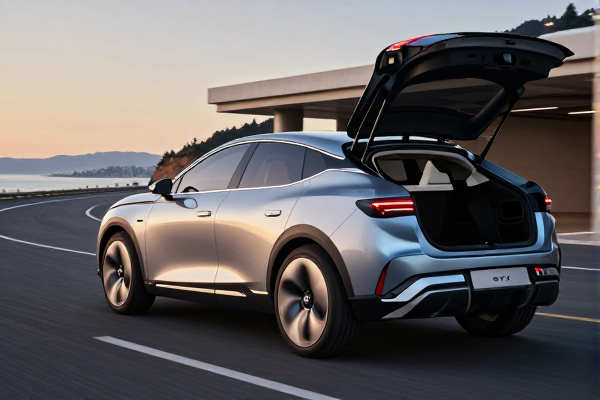
Rüsselsheim, Germany — May 7, 2026 — Opel has confirmed a name for its next concept car: the Opel Sports Tourer eXperimental Concept, or STX Concept for short. The German automaker will show it in public for the first time at the 2026 Paris Motor Show, where it will share the spotlight with a Formula E race car and a production hot hatch that are already expanding the brand’s performance lineup.
The "ST" in STX is not a random pairing. Opel has used the Sports Tourer label on its estate models for years, most recently on the Astra Sports Tourer. Adding the "X" signals that this is a design study meant to move beyond the current range and hint at what the next wave of Opel models could look like.
The concept is expected to place heavy emphasis on aerodynamics. Opel CEO Florian Huettl put it directly: the car represents “our vision of the future of an aero-efficient estate — a body style that Opel played a pioneering role in establishing in Europe.” He also said the show car will reveal the company’s next-generation design language, including elements that should eventually reach production vehicles.
That link between concept and production is worth noting. Concept cars often exist only as styling exercises, but Opel’s wording suggests the STX Concept is more than a design-school project. The name ties it to a model tradition that still lives in the Astra Sports Tourer, which is a strong hint that this study could preview future estate styling.
Opel has a longer station-wagon history than most people realize. In 1953, the Olympia Rekord Caravan helped introduce the estate body style to a European market that was still rebuilding around family motoring. That kind of practicality quickly became a core part of Opel’s identity.
The tradition continues today in the Astra Sports Tourer. It keeps the classic wagon formula: a car-like roofline, a large rear load area, and everyday usability. With up to 1,634 liters of cargo space in the latest generation, it can handle family duty or light commercial work. It also wears the illuminated Blitz emblem inside Opel’s signature Vizor face, so it doesn’t look like a purely functional vehicle.
The STX Concept appears to be pushing that idea further. Instead of chasing the tall-SUV silhouette that dominates so many markets, Opel is leaning into the aerodynamic benefits of a lower, more streamlined estate shape. That choice could pay off on an electric platform, where drag has a direct effect on range.
The STX Concept will be one of the main draws on the Opel stand at Hall 4, Stand A42, but it won’t be alone. The brand is also bringing the Opel GSE 27FE, its race car for the 2026-27 ABB FIA Formula E World Championship. This is Opel’s entry into Formula E’s Gen4 era, a technical shift that raises the stakes considerably.
The Gen4 car uses permanent all-wheel drive and produces more than 800 hp. It can also recover up to 700 kW of energy under braking, which is a huge jump from the previous generation and should make racing both faster and more strategic. Mitch Evans, a record winner in Formula E, and rookie Théo Pourchaire will drive for the Opel GSE team. The team says preparations are on schedule and building momentum ahead of the new season.
For Opel, Formula E is not an off-the-shelf sponsorship. The company has been developing its GSE performance sub-brand at Rüsselsheim, and the race program feeds directly into the engineering story it wants to tell on production models.
The road-going side of that story is the new Corsa GSE, which will also be displayed in Paris. It is the latest hot hatch from Opel and currently the fastest production car the company builds. The technical package includes 207 kW, which works out to 281 hp, and 345 newton-meters of torque. That is enough for a 0-100 km/h sprint in 5.5 seconds.
The Corsa GSE shares its powertrain with the Mokka GSE and the Mokka GSE Rally. That connection to motorsport is not just branding; the rally version is built alongside the road car, and lessons learned on special stages are meant to feed back into the series-produced model. It is a small but meaningful sign of how Opel wants to position performance and electrification under the same roof.
The brand’s Paris presentation is set for Monday, October 12, at 11:40 a.m. CEST. Opel CEO Florian Huettl will be joined by Vice President Marketing Rebecca Reinermann and Vice President Design Mark Adams. The event is expected to give an international audience a closer look at the STX Concept and the company’s broader product strategy.
More technical details about the concept are still under wraps. Opel says additional information will be released closer to the opening of the Paris show, so the next few months should bring more clues about the car’s powertrain, interior design, and level of production readiness.
For North American readers, Opel is best known as a European brand from an earlier era of General Motors. It hasn’t been sold in the U.S. market in decades, and there is no sign that this concept is heading across the Atlantic. But the STX Concept is still worth watching because it makes a broader argument about car design.
Station wagons have largely vanished from U.S. showrooms, pushed aside by crossovers and SUVs. Yet a wagon has natural advantages that remain relevant today, especially in an electric era: a lower body creates less aerodynamic drag, and a long roof provides useful cargo space without forcing drivers into a tall, heavy vehicle. The STX Concept suggests at least one major European brand still sees potential in that formula.
It also reinforces Opel’s commitment to keeping estate models alive. The Astra Sports Tourer is already a practical choice for European buyers, and the STX Concept could be a signal that future Opel estates will remain part of the lineup even as the company moves toward a fully electric portfolio. Exact production plans are not confirmed, but the naming and the timing point in a clear direction.
For reference, the Corsa GSE has combined WLTP energy consumption of 16.0-17.0 kWh/100 km with 0 g/km CO2 emissions and a CO2 label of A. The Mokka GSE records combined WLTP energy consumption of 18.5 kWh/100 km, also with 0 g/km CO2 emissions and a CO2 label of A. As with all official figures, real-world results depend on driving style and other non-technical factors.