Browse

Log in / Register
 Share

April 8, 2025 – The OLED display industry is entering a new phase of expansion, driven by capacity additions targeting the IT and automotive segments. With penetration rates still in the single digits for laptops, monitors, and vehicle panels, the runway for growth is substantial. Industry sources point to multiple production lines ramping up in 2025, including recent investments from Samsung Display and LG Display, as well as Chinese panel makers. This capacity, combined with technological breakthroughs such as phosphorescent blue emissive materials and novel pixel architectures like OLEDX, is setting the stage for broader adoption and improved performance.
One of the key growth drivers is the low current penetration of OLED in IT devices. While smartphones have largely converted to OLED, the laptop and monitor markets remain dominated by LCD. According to a recent analysis by Omdia, OLED penetration in notebook PCs stood at just under 4% in 2024, and is expected to climb to around 10% by 2027. The expansion of Gen 6 and Gen 8.6 OLED fabs, specifically designed for larger substrates, will enable more cost-efficient production of IT-sized panels. Samsung Display’s new 8.6-generation line in Asan, South Korea, is on track to begin mass production for tablets and laptops in the second half of 2025, while Chinese manufacturers like BOE and Visionox are also bringing IT-focused lines online. This new capacity directly addresses the price premium that has historically limited OLED adoption outside premium devices.
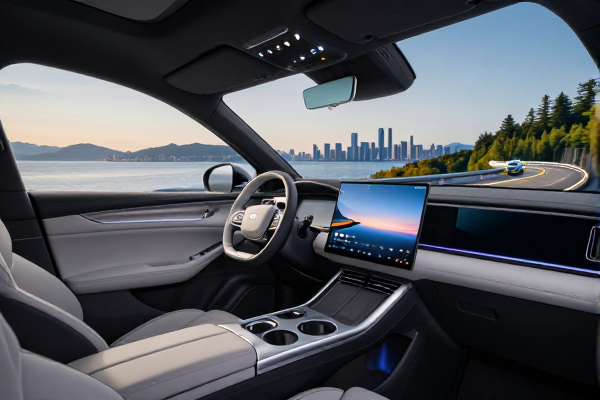
In the automotive sector, OLED is also gaining traction, albeit from a low base. Dashboard clusters, center information displays, and rear-seat entertainment screens are increasingly turning to OLED for its superior contrast, wide viewing angles, and design flexibility. LG Display has been a dominant supplier for automotive OLED, and its new P10 plant in Paju is expected to dedicate a portion of its output to large-area automotive panels. Meanwhile, Samsung Display has recently secured design wins with several German and Japanese automakers for 2026 model-year vehicles. The automotive OLED market is projected to grow at a compound annual rate exceeding 20% over the next five years, according to DSCC, with total revenues potentially reaching $3.5 billion by 2028. The key challenge remains durability and meeting automotive reliability standards, but recent improvements in encapsulation and driving schemes have narrowed the gap with LCD.
From a technological standpoint, the development of phosphorescent blue emitters represents a major leap forward. Traditional OLED panels use fluorescent blue, which is less efficient and has shorter lifespan than red and green phosphorescent materials. Researchers at a consortium involving the University of St Andrews and multiple display makers have achieved significant progress in stable phosphorescent blue materials, with several patents filed in 2024 and early 2025. This breakthrough could reduce power consumption by up to 20-25% and extend panel lifespan, making OLED more viable for automotive and IT applications where long-term reliability is critical. Additionally, the OLEDX architecture—an evolution of tandem OLED stacking—allows for higher brightness and better color accuracy without increasing power draw. Both Samsung and LG have hinted at incorporating OLEDX into upcoming premium monitor and laptop lines, further differentiating OLED from mini-LED LCD competition.
Financially, OLED manufacturers continue to report robust profitability. LG Display, after years of losses in its large-area LCD business, has seen its OLED division maintain gross margins above 25%, driven by premium TV and monitor sales. Samsung Display’s Q4 2024 earnings revealed an operating profit margin of 18% for the OLED business, supported by strong smartphone and tablet panel shipments. The companies are maintaining a balanced approach to capital allocation: while investing heavily in new IT and automotive capacity, they are also returning cash to shareholders through dividends and buybacks. For example, Samsung Display announced a 1.2 trillion won share repurchase program in early 2025, signaling confidence in sustained cash flow. This financial discipline reduces risk and provides a buffer against cyclical downturns, which is an important consideration for long-term investors.
The competitive landscape is shifting as well. Chinese panel makers are aggressively expanding OLED capacity with government support, focusing on both rigid and flexible OLEDs for mid-range smartphones and entry-level IT devices. BOE’s B20 plant in Chengdu, which began pilot production in late 2024, is targeting 30,000 substrates per month by year-end 2025. While Chinese makers currently lag behind Korean leaders in high-end automotive and large-area IT quality, they are improving rapidly. This is likely to put downward pressure on pricing, which could paradoxically accelerate adoption by making OLED more affordable. The companies best positioned to weather price competition are those with strong intellectual property, close customer relationships, and the ability to produce premium differentiated panels.
Looking ahead, the convergence of new capacity, lower costs, advanced materials, and proven financial models suggests that the OLED industry is at an inflection point. The IT and automotive markets together represent an addressable area of roughly 600 million unit shipments annually by 2028, according to industry estimates. If even a quarter of that shifts to OLED, the additional capacity coming online could be fully absorbed. The key risks include macroeconomic slowdowns affecting consumer demand, potential trade tensions that could disrupt supply chains, and competition from advanced LCD technologies like mini-LED. However, with low starting penetration and clear technological advantages—especially in color, thinness, and power efficiency—OLED’s trajectory appears firmly upward. Investors and industry watchers will be closely watching the ramp-up of new fabs and the commercial debut of phosphorescent blue OLEDs in the coming quarters, as these will be critical milestones for the sector.