Browse

Log in / Register
 Share

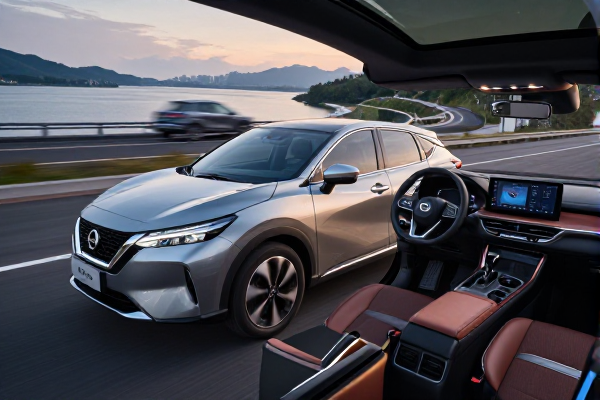
March 15, 2025 – Nissan Motor Co. and Honda Motor Co. have officially announced a strategic collaboration to develop next-generation software-defined vehicle (SDV) electronics. The partnership marks a significant shift from traditional hardware-centric vehicle design toward a software-first architecture, where features like driving assistance, infotainment, and over-the-air updates are controlled by code rather than physical components.
By pooling their resources, the two Japanese automakers expect to cut development costs by up to 30% and shorten time-to-market for new features by nearly half. The initiative is a direct response to the accelerating race toward electric and autonomous vehicles, where software flexibility and rapid iteration are becoming key competitive advantages.
The core of the collaboration focuses on standardizing electronic control units (ECUs), in-vehicle operating systems, and communication protocols. Instead of each company developing proprietary platforms, Nissan and Honda aim to create a shared architecture that can be scaled across multiple vehicle models. This approach not only reduces redundancy but also enables faster integration of third-party software and services.
Industry analysts note that this move aligns with the broader trend of "software-defined everything" in the automotive sector. "The days when a car's value was determined by its engine and chassis are fading," said Dr. Emily Tanaka, a senior analyst at Tokyo-based AutoTech Research. "Now, the real differentiator is how quickly and safely a car can update its software. Nissan and Honda's collaboration is a pragmatic step to stay relevant."
The partnership also positions Nissan and Honda to better compete with Toyota, which has already formed alliances with Subaru and Waymo (Alphabet's self-driving unit) for SDV and autonomous driving development. Additionally, American and Chinese tech companies like Tesla, Xpeng, and Huawei are aggressively pushing software-defined vehicle platforms.
"Japanese automakers have historically been strong in hardware quality but lagged in software agility," explained automotive consultant Yuki Fujimoto. "This joint venture could help them catch up by sharing R&D costs and pooling talent. The key will be execution – ensuring that the two corporate cultures can align on a common software roadmap."
The companies have set a target to unveil their first shared SDV platform by late 2026, with production vehicles featuring the new electronics expected by 2027. In the near term, they plan to co-develop a cloud-based vehicle management system that will allow drivers to remotely monitor battery health, schedule maintenance, and receive personalized over-the-air feature upgrades.
For consumers, the benefits may include more affordable advanced safety features, smoother infotainment experiences, and longer vehicle lifespans thanks to software updates that keep older cars current. "We want to democratize smart car technology, not just put it in luxury models," said a Nissan spokesperson in a press briefing.
What sets this announcement apart from previous OEM collaborations is the explicit focus on electronic architecture standardization rather than just vehicle platforms. According to sources close to the project, Nissan and Honda are also in early talks to jointly develop a dedicated AI chip for in-vehicle inferencing, aiming to reduce reliance on external suppliers like Qualcomm and Nvidia.
Furthermore, the partnership could pave the way for a shared battery management system and a unified charging infrastructure, potentially accelerating the adoption of electric vehicles in markets where range anxiety remains a concern.
Despite the ambitious goals, challenges remain. Integrating two distinct corporate cultures, aligning on software development methodologies, and navigating intellectual property sharing are non-trivial tasks. Both companies have previously struggled with software delays – Nissan's ProPILOT system faced criticism for slow updates, while Honda's infotainment systems have been rated below average in consumer satisfaction surveys.
Additionally, the rise of China's domestic EV brands, which are already highly advanced in software-defined vehicle technology, adds pressure. BYD and NIO, for example, offer over-the-air updates and advanced driver-assistance systems as standard features at competitive prices.
The Nissan-Honda partnership is a pragmatic and necessary move in the rapidly evolving automotive landscape. By combining forces on software-defined vehicle electronics, the two Japanese giants aim to reduce costs, accelerate innovation, and reclaim competitiveness. If successful, this collaboration could become a blueprint for other traditional automakers seeking to survive the software-driven transformation of the car industry.
As the smart car race intensifies, the partnership between Nissan and Honda will be closely watched by competitors, investors, and consumers alike. The next two years will be crucial in determining whether this alliance can deliver on its promises and shape the future of mobility.