Browse

Log in / Register
 Share
Share
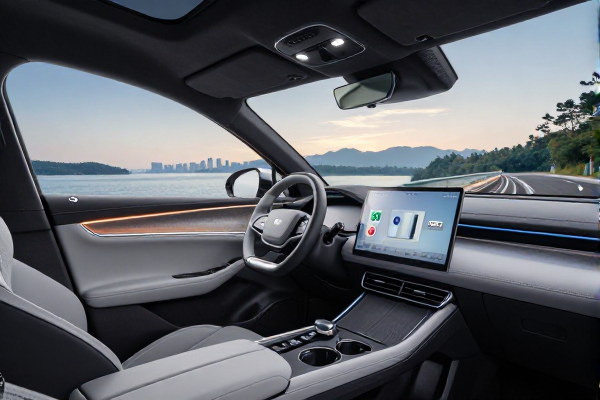
April 10, 2025 – The Chinese government has quietly introduced a sweeping set of rules governing how its automakers compete in foreign markets, a move that could fundamentally alter the calculus for brands like BYD, Chery, and Geely as they eye expansion into the United States. While the immediate impact will be felt in markets like Australia and Europe, the long-term implications for the US – currently shielded by a 100% tariff on Chinese EVs – are profound.
Why China is cracking down on its own car exporters
For years, Chinese automakers have relied on aggressive pricing to gain a foothold overseas. In an oversaturated domestic market, where profit margins are razor-thin, brands saw export as a lifeline. But the strategy backfired. The European Union slapped hefty tariffs on Chinese EVs starting in 2024, citing concerns that state subsidies allowed Chinese firms to undercut local manufacturers by thousands of dollars. Similar accusations have been leveled in other regions.
The new rules, reportedly issued by China’s Ministry of Commerce and the National Development and Reform Commission, aim to prevent the very behavior that triggered those trade disputes. According to industry sources who reviewed the guidelines, the government now explicitly prohibits:
The guidelines are designed to “ensure Chinese brands are not pushed out of export markets by tariffs and other penalties,” according to a government-affiliated think tank analyst who spoke on condition of anonymity.
What this means for the US – a market locked out, but watching closely
Currently, Chinese EVs are effectively barred from the US. The Biden administration’s 100% tariff on Chinese-made EVs, enacted in 2024, has made it nearly impossible for BYD, NIO, or others to sell here at competitive prices. However, the landscape could shift. BYD has been exploring factory locations in Mexico, which would allow it to export to the US under the USMCA trade agreement with lower tariffs. Chery and Geely are also rumored to be considering manufacturing bases in Southeast Asia or Eastern Europe.
The new rules could be a double-edged sword for US consumers. On one hand, if Chinese brands follow the guidelines, they may avoid the kind of price-cutting that triggered the current tariff regime. This could make the US more willing to negotiate lower tariffs, opening the door to cheaper EVs. On the other hand, the rules explicitly discourage aggressive discounting, meaning if Chinese EVs do enter the US market, they may not be as cheap as some Americans hope.
“The new rules are a signal that China wants to be seen as a responsible player,” said Dr. Emily Tran, an automotive trade analyst at the Peterson Institute. “If they can demonstrate that they’re not dumping cars, it gives US policymakers a reason to consider reducing tariffs in exchange for market access. But it’s a long shot.”
The Australian example – a preview of US possibilities
Australia, which has no domestic car industry, has become a testing ground for Chinese brands. Since 2023, BYD, Chery, and GWM have flooded the market with affordable EVs and gas cars, often undercutting Toyota and Hyundai by 20–30%. The new rules have already sparked debate there. Chery’s Australian boss, Lucas Harris, recently dismissed claims that his brand’s pricing was subsidized, calling it “sustainable” and challenging critics to provide evidence.
But the new rules could push prices upward. In Australia, Chinese cars are currently among the cheapest on the market. If brands are forced to avoid price wars, those savings may shrink. The same dynamic would apply in the US, should Chinese brands ever gain access.
What’s next for American car buyers?
For now, the most immediate US impact is indirect. The new rules could shape the behavior of Chinese brands that are already selling in the US through imports of non-EV models (like the BYD e6 electric van, which is sold in limited quantities via third-party dealers). More importantly, they set a precedent for how China’s automakers will behave if and when they open US factories.
Industry insiders note that the rules also address corruption and data privacy – issues that US regulators have flagged as concerns. “If Chinese companies can prove they follow local laws, including anti-corruption and data protection, it removes a key objection from US lawmakers,” said a former US trade official.
However, geopolitical tensions remain high. The US has accused China of overcapacity in EVs and is considering even higher tariffs on Chinese components. The new rules may be seen as a bargaining chip, but they are unlikely to trigger an immediate policy shift.
Conclusion: Wait and see
The new Chinese export rules are a significant step toward regulating the international behavior of the country’s automakers. They aim to prevent the kind of cutthroat competition that has sparked trade wars, and they force brands to focus on profitability rather than market share at any cost. For the US, the rules could eventually pave the way for a more open market – but only if both sides are willing to meet in the middle.
Until then, American consumers will continue to pay a premium for EVs, while Chinese brands sharpen their pencils in other regions, carefully avoiding the missteps that have kept them out of the world’s second-largest car market.