Browse

Log in / Register
 Share


June 19, 2025 – A new bipartisan bill in the US House of Representatives aims to tighten the screws on Chinese involvement in the American auto industry, escalating a political push that already has some major automakers staring at a potential ban.
The Automotive National and Economic Security Act of 2026, introduced by Rep. Diana Harshbarger (R-Tenn.) and Rep. Debbie Dingell (D-Mich.), would order the US Secretary of Commerce to conduct a comprehensive study of national and economic security threats posed by “foreign adversaries,” with China explicitly named as the primary target. The bill’s language mirrors a growing bipartisan consensus in Washington that Chinese investments in US automakers, joint ventures, and technology partnerships pose a systemic risk.
What the study would cover
The Commerce Department, under the proposed legislation, would be required to dig deep into three major areas:
The study would also assess how all these business ties affect US national security, economic competitiveness, and intellectual property protection. In effect, the bill would create a formal risk assessment roadmap that could later be used to impose restrictions or outright bans on automakers with deep Chinese links.
Why this matters now
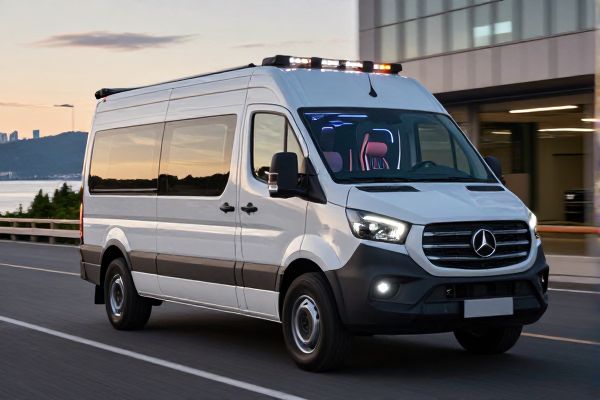
The bill comes at a time when the US government is already tightening rules on connected vehicles. The Senate’s Connected Vehicle Security Act of 2026, introduced in April by Sens. Elissa Slotkin (D-Mich.) and Bernie Moreno (R-Ohio), would set a 15% cap on Chinese ownership for automakers that sell connected vehicles in the US. That cap is a direct threat to Mercedes-Benz, which has about 20% of its ownership tied to Chinese entities—specifically, state-owned BAIC Motor and Geely Chairman Li Shufu.
Mercedes-Benz has argued that neither shareholder holds more than 10%, has board representation, or exerts meaningful operational control. But the proposed 15% threshold would effectively block the German automaker from selling connected cars in the US unless it restructures its ownership. The Senate bill still awaits a vote on the floor, and must pass both chambers before reaching the president.
The new House bill, while not imposing a direct cap, would provide the data and justification for future restrictions. It signals that lawmakers are not just targeting individual companies but building a case for broader action against Chinese influence across the entire auto supply chain.
A growing playbook
“China has a playbook, and we've watched them run it on critical minerals, shipbuilding, and batteries,” said Rep. Harshbarger in a statement. “Now they're setting their sights on the global automotive market, building out their industrial base with state subsidies and flooding markets with artificially cheap products to undercut American manufacturers.”
Rep. Dingell, a longtime auto industry advocate from Michigan, added that the bill is about protecting American jobs and national security. “We cannot afford to let foreign adversaries hollow out the backbone of our manufacturing economy,” she said.
Value-add: What’s next for the industry
The bill is still in its early stages, but it reflects a growing willingness in Congress to use trade and security measures to curb Chinese influence. Industry observers note that the study, if authorized, could take 12–18 months to complete, but the findings could then be used to justify everything from tariffs to investment bans.
For US dealers and automakers, the uncertainty is already starting to bite. Several major manufacturers—including Ford and General Motors—are watching the legislation closely, as they also have joint ventures in China. However, those ventures are typically structured as minority stakes in the US parent’s China operations, not the other way around. The new bill is focused on foreign ownership of US automakers, so the risk is highest for companies like Mercedes-Benz, Volvo (owned by Geely), and any brand with significant Chinese equity.
One expert, speaking on condition of anonymity, told Automotive News that the bill could also affect future investments in EV battery plants. “If a Chinese battery maker wants to set up a plant in the US with a joint venture, this study would flag it as a potential security risk. That could chill investment,” the source said.
Meanwhile, the Chinese government has pushed back, calling the proposed legislation “discriminatory” and warning of retaliation. In a briefing last week, a spokesperson for China’s Ministry of Commerce said that “politicizing normal business cooperation will only harm the global auto industry and disrupt supply chains.”
The bigger picture
The House bill and the Senate connected vehicle bill are part of a broader wave of China-related security measures. The US has already banned Chinese-owned companies from buying certain US tech firms, restricted exports of advanced chips, and imposed tariffs on Chinese EVs. The auto industry is now squarely in the crosshairs, with lawmakers on both sides of the aisle arguing that the stakes are too high to leave to the market.
For consumers, the impact may not be immediate. But if the bill becomes law and leads to restrictions, it could limit the brands available at US dealerships, especially in the luxury and EV segments. Dealers representing Mercedes-Benz, for example, could face a choice: either the brand restructures its ownership, or it loses access to the US market.
The Automotive National and Economic Security Act of 2026 has been referred to the House Committee on Energy and Commerce. No hearing date has been set yet, but sources say bipartisan support is strong, and the bill could move quickly through committee.
Key takeaway
The US is moving toward a more aggressive stance on Chinese auto ties, and this bill is the latest evidence. Whether it becomes law or not, the message is clear: any automaker with deep Chinese ownership or partnerships should expect heightened scrutiny and potential barriers to doing business in America.