Browse

Log in / Register
 Share

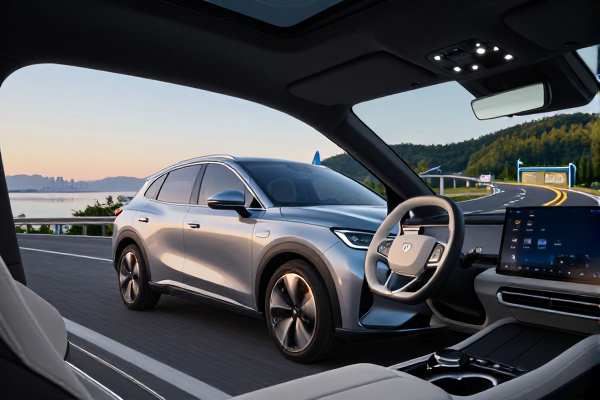
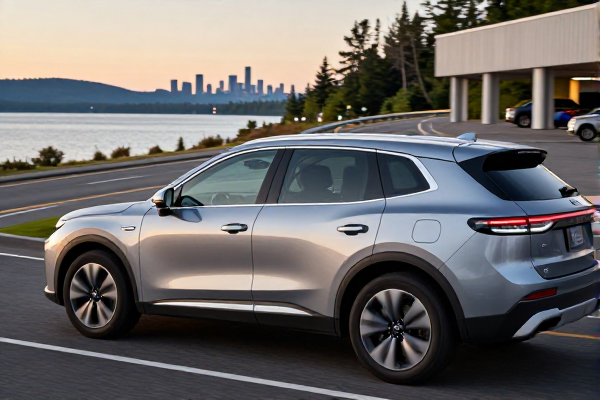
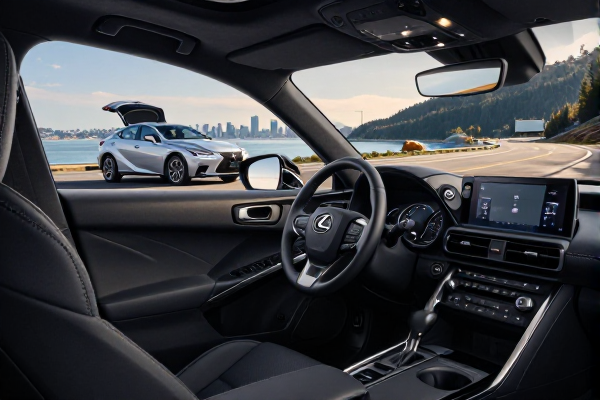
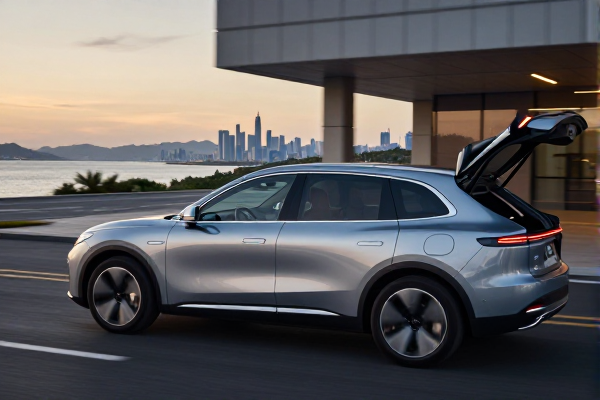
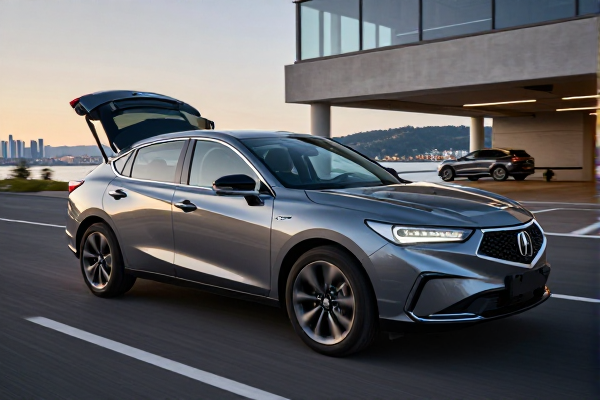
On September 10, 2025, the China Association of Automobile Manufacturers (CAAM) reported that new energy vehicle (NEV) sales accounted for 60.6% of total new car sales in August — a historic high. This milestone underscores the accelerating electrification of China's auto market, with monthly NEV production and sales reaching 1.653 million and 1.643 million units respectively, up 18.9% and 17.8% year-over-year.
Separately, the U.S. Department of Justice (DOJ) is investigating Nvidia for potential antitrust violations tied to its 2024 deal with AI chip startup Groq, according to two people familiar with the matter. The probe focuses on whether Nvidia tried to sidestep regulatory scrutiny when it acquired a non-exclusive license to Groq's chip technology and hired several executives, including founder Jonathan Ross, in a $1.7 billion transaction.
OEM Spotlight: Li Auto, Leapmotor, and VW-JSW
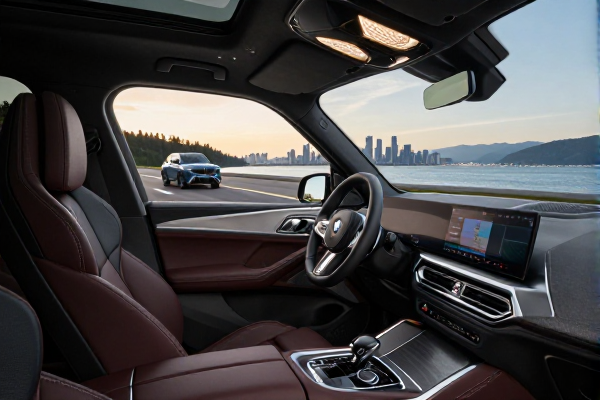
Li Auto CEO Li Xiang announced via Weibo that the eagerly awaited Li i9 will officially launch on September 16. Li described the vehicle as "the culmination of 11 years of proprietary technology and product thinking — a perfect score," saying its arrival signals that Li Auto has cleared three major hurdles: mastering both extended-range and pure electric powertrains, developing core technologies in-house, and staying true to the brand's identity. The i9 is positioned to compete directly with premium SUVs in the 300,000–500,000 yuan segment.
Leapmotor also plans a major technology showcase on September 16, where it will unveil over five new technologies, including a "world model" intelligent driving system that ranks in the industry's first tier, a new mobile space architecture, and advancements in the three-electric domain. The company's ABCD series models are expected to feature this world-model smart driving across the lineup, priced from 60,000 to 300,000 yuan. Management had earlier disclosed that the assisted driving product coming in September represents a significant leap over its existing offerings.
On the global stage, Volkswagen Group and India's JSW Group signed a non-binding memorandum of understanding to explore a strategic alliance in the Indian passenger vehicle market. Skoda Auto Volkswagen India confirmed the signing, noting that both sides will discuss key principles for a partnership aimed at expanding their product lineup, deepening localization, and enhancing manufacturing and R&D capabilities.
Supply Chain & Component Makers: Aptiv, TINYCHIP, Seyond, Baolong, New Vision
Aptiv announced that its new-generation smart front-view camera integrated machine — developed specifically for Chinese automakers expanding overseas — has entered mass production and delivery for a leading Chinese NEV maker's latest model destined for the European Union. The product, built by Aptiv's China team using local automotive-grade SoC chips and the Wind River Helix RTOS, integrates global visual perception technologies. This marks a key milestone for Aptiv's localization strategy in China.
TINYCHIP officially released the TSP007, an automotive-grade capacitive anti-pinch dedicated chip designed for smart vehicle opening and closing scenarios such as electric doors, front trunks, tailgates, and windows. It offers a single-chip capacitive active anti-pinch solution, bolstering overall passive safety and representing another significant breakthrough for domestic anti-pinch sensing chips.
Seyond and CORNEX signed a strategic cooperation agreement to collaborate on high-level intelligent driving solutions. Cooperative models will feature Seyond LiDAR as the primary forward-facing lidar.
Shanghai Baolong Automotive Corporation secured a project nomination for robot rotary joint encoders from a leading new-energy vehicle startup brand, with mass production scheduled for December 2026. This follows a previous nomination for robot camera modules, expanding Baolong's footprint in embodied intelligent visual perception and joint position sensing.
New Vision announced it has entered the global supply system of a leading German automaker for the first time, winning a HUD project nomination for a model targeting the global market, with mass production set to begin in 2028.
Industrial Economy & Policy: Unitree Stock Plunge, EU Tariff Proposal
Unitree's stock price continued to slide on September 10, falling below the 500 yuan mark for the first time to close at 500.49 yuan, with a market cap of 202.4 billion yuan. It's a cumulative drop of over 54% from the opening high of 1,100 yuan per share on its August 19 debut, erasing more than 240 billion yuan in market value. The decline reflects investor concerns about the humanoid robotics sector's near-term profitability.
Roberto Vavassori, head of Italy's automotive parts association Anfia, called on the European Union to impose an 80% tariff on Chinese-made cars and parts exceeding a certain import quota. He argued that Chinese car imports could enjoy zero tariffs if kept within 8% of Europe's annual new car registrations; anything beyond that would face the 80% levy. Vavassori said the policy should cover both complete vehicles and components, as parts account for approximately 80% of a car's total value.
Personnel & Tech Update: Harman, OpenAI-Samsung
Harman International announced the appointment of Dr. Thomas Irawan as Chief Operating Officer of its Automotive Division, effective immediately. Based in Germany, Irawan will report directly to Christian Sobottka, President and CEO of the Automotive Division, overseeing global operations including R&D, project management, supply chain, and manufacturing.
Meanwhile, OpenAI is deepening its partnership with Samsung Electronics, expanding cooperation in semiconductors and enterprise AI services. Harrison Kim, general manager of OpenAI Korea, stated at a press conference in Seoul: "One of the most significant and recognized areas of progress in our collaboration with Samsung Electronics is the joint development and production of our next-generation chips." No further details were disclosed.
Exclusive Insight: Industry Analyst Weighs In
"The 60.6% NEV share in China is a symbolic threshold — it shows that electrification is no longer a niche trend but the mainstream in the world's largest auto market," said Dr. Li Wei, an automotive analyst at Shanghai-based consultancy AutoForesight. "However, as competition intensifies, OEMs are under pressure to differentiate through smart driving and in-house tech, as seen with Li Auto and Leapmotor." On Nvidia's DOJ probe, he added: "Any regulatory action against Nvidia could ripple across the entire AI chip ecosystem, potentially affecting automakers that rely on Nvidia's DRIVE platform for autonomous driving."
Looking Ahead
With the i9 launch, Leapmotor's tech day, and the EU tariff debate, the next two weeks will be pivotal for both China's NEV