Browse

Log in / Register
 Share


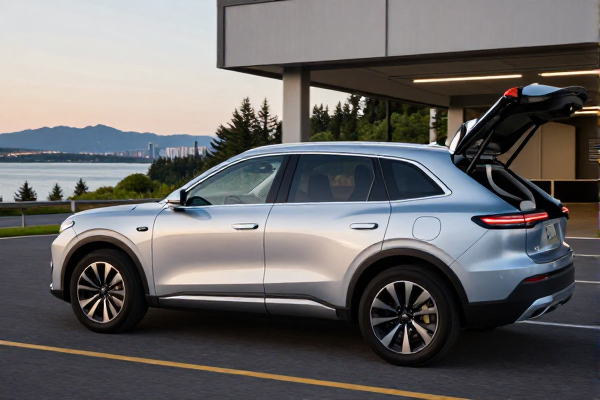
Nashville’s streets are now home to Waymo’s fully autonomous vehicles, operating in “full-autonomy mode” with no driver behind the wheel. As of April 11, 2025, Metro Nashville Police have the authority to pull over and cite these cars—but the question of who actually regulates them remains a legal gray area. FOX 17 News examined the state-versus-city regulatory divide, uncovering gaps in oversight that could have implications for safety, liability, and future expansion.
Under current Tennessee law, autonomous vehicles (AVs) are classified as “motor vehicles” subject to standard traffic laws. Metro Police can issue citations for moving violations such as speeding or running a red light, even when no human occupant is present. However, the citation is issued to the vehicle itself or the registered owner—Waymo, in this case—rather than a driver. This creates a unique enforcement challenge: officers must document the violation and serve the ticket to the company, not an individual.
At the state level, the Tennessee Department of Safety and Homeland Security has not issued specific rules for AV operations beyond general motor vehicle codes. The Tennessee Autonomous Vehicle Act of 2017 authorized testing but left municipalities with limited authority to regulate AVs, effectively preempting local ordinances. Nashville’s city council has not passed any local AV-specific regulations, meaning the city relies entirely on state law and Waymo’s voluntary compliance.
Waymo, a subsidiary of Alphabet Inc., has publicly stated that it cooperates with law enforcement and follows all applicable traffic laws. The company’s vehicles are equipped with external sensors and communication systems that allow officers to interact with the vehicle via a mobile app or voice commands. Yet, critics argue that the current framework lacks accountability. “If a Waymo car causes an accident, who is liable? The company? The software? The state?” said Professor Elena Martinez, a transportation law expert at Vanderbilt University, in an exclusive interview with FOX 17 News. “The patchwork of state laws and the absence of city-level oversight create a vacuum that could be exploited.”
Recent developments highlight the urgency. Just last month, a Waymo vehicle in Nashville was involved in a minor collision with a parked car during a lane-change maneuver, raising questions about liability and reporting protocols. Metro Police responded, but sources indicate that the department had to consult with Waymo’s remote team to obtain vehicle logs—a process that delayed the incident report. Additionally, the state legislature is currently considering a bill (HB 2045) that would require AV companies to submit quarterly safety reports to the Tennessee Department of Transportation, but the bill has not yet passed.
Other cities offer a comparison. In Phoenix, where Waymo operates extensively, the city has a dedicated AV liaison office that coordinates with police and the company. In San Francisco, the California Public Utilities Commission oversees AV deployment, while local police handle enforcement. Nashville lacks such a structure, placing the burden on Metro Police officers who may not have specialized training in AV interactions.
Waymo declined to comment on the regulatory gap but pointed to its existing safety record and voluntary transparency reports. A spokesperson for the Nashville mayor’s office said the city is “monitoring the situation” and “exploring potential local guidelines” that would not conflict with state preemption. However, no timeline has been announced.
The core issue boils down to a fundamental question: When a machine drives, who is responsible? Until the state clarifies its authority—or the city carves out a local role—Nashville’s experiment with driverless cars will remain a regulatory wild west. For now, Metro Police can pull them over, but the system regulating them is still being written.