Browse

Log in / Register
 Share

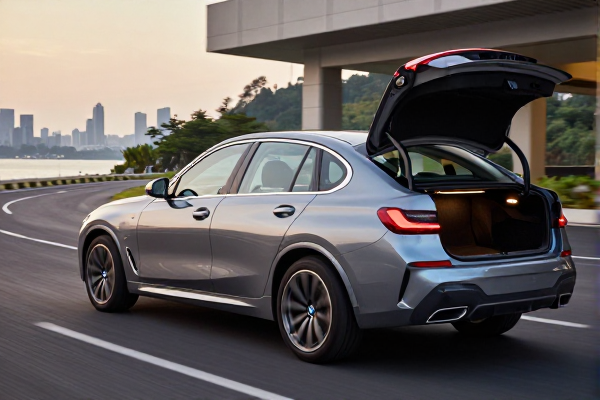
MUMBAI — Police have charged a BMW driver accused of driving her car toward a traffic constable during a confrontation in the western Mumbai neighborhood of Vile Parle West. Juhi Mehta was arrested after the Oct. 30, 2025 incident and released on cash bail, a senior officer said. Investigators are still reviewing CCTV footage from the junction. This report has been updated as of Nov. 15, 2025.
The incident began around 8:15 p.m. local time at Sangeet Mahabharati Junction, near Pratiksha Bungalow on N.S. Road No. 10. Police said a BMW and a Maruti WagonR collided in a minor crash and remained stopped in the middle of the road. With traffic backing up and spectators gathering, Santacruz Traffic Division constable Prashant Gokul Hake stepped in.
Hake told both drivers to pull to the roadside. According to the complaint, the BMW driver did not do so and kept the vehicle moving even after Hake told her to stop. Police said he then asked her to get out. The constable’s account says she responded by asking how much money he wanted.
The police version of events places Hake directly in front of the BMW at a moment when the car allegedly moved forward toward him. The exact distance between the constable and the vehicle, and the speed of the car, have not been disclosed.
The case was registered at Juhu police station after Hake gave his statement. The FIR invokes three provisions of the Bharatiya Nyaya Sanhita, India’s criminal code in force since July 2024:
Mehta was also charged under Section 184 of the Motor Vehicles Act, which relates to dangerous driving.
The combination of charges matters. Section 132 treats the alleged action as an offense against an official performing duties, which often signals to traffic courts that police view the incident as more than a routine road violation. Section 125 covers reckless conduct that could have injured someone, even if no blow was struck. Section 351(2), meanwhile, is tied to Hake’s claim that Mehta threatened to file a false case against him.
A senior Mumbai police officer confirmed that Mehta was arrested and later released on cash bail. Cash bail in India works as a monetary guarantee: the accused deposits a sum with the court as security and must appear when summoned for further proceedings.
Investigators have not asked a court to extend Mehta’s custody, an early sign that police are relying on documentary evidence — mainly CCTV — rather than custodial interrogation. No chargesheet had been filed as of Nov. 15, 2025.
Hake’s complaint says Mehta also claimed she had substantial wealth and influence and threatened to implicate him in a false case. This part of the filing remains an accusation and has not been independently established.
Under the BNS, criminal intimidation normally requires a threat intended to cause fear of injury or harm. Whether Mehta’s alleged remark meets that definition is a legal question that would be resolved by a court after police finish their inquiry. Courts often weigh the words, the surrounding circumstances, and the effect on the officer.
Indian news outlet Mid-Day reported that Mehta is the chief operating officer of a Mumbai-based company that works in creator-led digital media and content commerce. Attempts to reach her for comment were unsuccessful.
The episode highlights a recurring issue on Mumbai roads: minor collisions in busy corridors often trigger confrontations before officers arrive. When police intervene, both motorists and officers can find themselves in volatile situations, particularly when drivers believe they are being pressured to pay money or admit fault. The allegation in Hake’s complaint that Mehta asked how much money he wanted reflects a broader public sensitivity to demands for bribes at accident sites. There is no indication in this report that any money was demanded, and the claim in the complaint is not independently verified.
For U.S. readers, “booked” in the Indian context means that a formal police report, or first information report, has been opened and the suspect has been identified in it. A chargesheet, when filed later, is the document that brings specific accusations to court. Bail at this stage is not a decision on guilt.
Police are examining CCTV footage to reconstruct the sequence: the collision, the argument, Hake standing in front of the car, and the vehicle’s movement. The footage is expected to determine whether the car moved in a deliberate, threatening way or whether the officer’s position caused a dangerous moment. A chargesheet will be filed after that assessment.
Because the case is still under investigation, no plea has been entered. Mehta can contest the FIR before a higher court if the video does not support the allegations, and she retains the right to a full defense at trial.
All individuals named in this article are presumed innocent unless a court decides otherwise. This account is based on the police complaint, officer statements, and the existing report; the charges remain to be tested in court.