Browse

Log in / Register
 Share

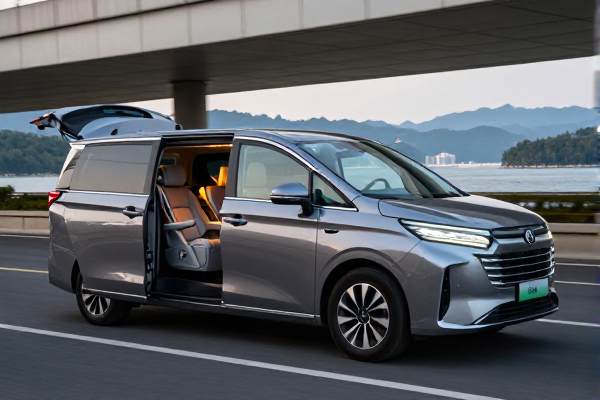
New Delhi, April 26, 2026 — Decarbonising India’s road transport will not be delivered by electric vehicles alone, according to a major assessment by The Energy and Resources Institute (TERI) and the Petroleum and Natural Gas Regulatory Board (PNGRB). The report argues for a segmented, multi-fuel strategy in which battery-electric vehicles, CNG, LNG and cleaner gaseous fuels each take the lead in different vehicle types and operating conditions.
The study, titled Comparative Assessment of Vehicular Fuels in India’s Energy Transition: A Multi-Dimensional Approach, compared petrol, diesel, CNG, electricity and LNG across six vehicle segments: two-wheelers, three-wheelers, private and commercial four-wheelers, light commercial vehicles, and heavy-duty vehicles. Its headline conclusion is direct: no single fuel performs best across all technical, economic, environmental, social and geopolitical dimensions. Pushing every segment toward one technology would therefore be both inefficient and impractical.
Instead of a uniform switch away from conventional fuels, the TERI-PNGRB report recommends a phased transition differentiated by fleet, region and application.
For two-wheelers, battery-electric vehicles are the strongest long-term pathway. Their running economics are particularly favourable because of lower energy and maintenance costs in high-utilisation settings. Three-wheelers, the study predicts, will see a longer coexistence of electric and CNG vehicles. For passenger cars, CNG currently offers the strongest combination of affordability, environmental performance and operational practicality; EVs are expected to become more important as charging infrastructure matures and battery costs fall.
Commercial four-wheelers and light commercial vehicles are likely to electrify fairly quickly, especially in urban and regional use, while CNG remains an important transition fuel. In heavy-duty transport, the study sees CNG holding its ground in regional freight, LNG becoming more relevant for suitable long-haul routes, and battery-electric trucks remaining selective.
Vibha Dhawan, Director General of TERI, underlined the core message: “There is no single silver bullet, a ‘one size fits all’ strategy for India’s mobility transition. Our needs are diverse — from two-wheelers to heavy-duty trucks, from urban mobility to long-haul freight. What works for one segment may not work for another. That is precisely why a multi-fuel strategy is not just an option, but a necessity for India.”
The report’s treatment of refuelling and charging networks is one of its most useful contributions. It warns that electrification speed cannot be judged simply by counting charging points. Because an electric vehicle takes much longer to recharge than a conventional vehicle takes to refuel, its effective service capacity — the amount of mobility a vehicle can deliver in a day — is lower. Infrastructure planning must therefore account for accessibility, dwell time and utilisation patterns.
That insight changes how Indian cities look on a map. Delhi has the strongest CNG infrastructure position among the ten locations assessed, and both Delhi and Bengaluru score relatively well on EV infrastructure. Mumbai, despite its dense conventional-fuel network, has lower effective EV and CNG capacity when travel and service time are factored in. The gaps are far wider in Lucknow, Guwahati, Dhanbad and Chamba, where effective charging capacity is considerably lower.
The environmental assessment goes beyond tailpipe emissions to examine the full life cycle of fuels, electricity generation, battery manufacturing, vehicle operation and end-of-life impacts. This broader lens produces a less obvious picture.
EVs excel at reducing operational air pollutants, but their lifecycle footprint remains heavily dependent on India’s electricity mix and battery supply chains. Under the current grid mix, CNG generally records the lowest overall environmental burden across most vehicle categories in the study. Diesel performs poorly on both lifecycle emissions and air-pollution indicators.
The regional analysis also feeds into this conclusion. In cities with comparatively cleaner electricity — or in settings where charging loads can be timed to renewable generation — electric vehicles become more attractive. The study does not treat India’s grid as a fixed constraint; instead, it calls for accelerating electricity-sector decarbonisation in parallel with vehicle electrification.
The report also flags a shift in energy-security risk that is often missing from public debate. Battery-electric vehicles reduce India’s direct dependence on imported crude oil and LNG. But they increase exposure to globally concentrated supply chains for lithium, cobalt, nickel, graphite and other critical minerals. A net-zero transport system is not an import-free island — it simply changes the strategic commodities that matter.
This is relevant because India has set an ambitious target of reaching net-zero carbon emissions by 2070. The study is explicitly positioned against that commitment, while insisting that emissions-reduction policy must balance affordability, reliable mobility and energy security. Tarun Kapoor, Advisor to the Prime Minister’s Office, put it directly: “India needs a multi-fuel approach, not a single-fuel solution. Natural gas remains an important transition fuel. Policymaking should rely on better data for effective pollution control decisions and should consider multiple dimensions such as emissions, affordability, availability, and energy security.”
The report’s recommendation to scale up clean gaseous fuels such as compressed biogas also connects to existing policy platforms like India’s SATAT initiative, which is designed to promote biogas as an alternative transport fuel. Expanding biogas production, the report argues, can reduce both urban pollution and dependence on imported natural gas while supporting rural economies.
For heavy trucks, payload is a decisive engineering constraint. The study cites a 55-tonne comparison in which a representative electric truck has a tare weight of roughly 8.8 tonnes, compared with about 7.1 tonnes for an LNG truck. At a common gross vehicle weight, that difference directly reduces the cargo a vehicle can carry. For long-distance freight operators, where every tonne of payload affects revenue, this tension between decarbonisation and productivity is not trivial.
That is why the report does not endorse battery-electric trucks as a default for all long-haul freight. It recommends developing LNG selectively along long-haul corridors where the economics and operating conditions are suitable. Meanwhile, CNG remains a practical choice for regional freight routes, with lower emissions than diesel and a much shorter refuelling time than electric charging.
The TERI-PNGRB study offers a four-part policy prescription. First, accelerate EV adoption in use cases such as last-mile mobility where charging access and operating economics already support it. Second, continue expanding CNG infrastructure and vehicles where it remains economically and environmentally justified. Third, develop LNG as a diesel alternative along targeted long-haul corridors. Fourth, invest in battery recycling, domestic manufacturing and resilient critical-mineral supply chains to reduce the strategic vulnerabilities that electrification creates.
For state governments and city authorities, the study also implies that an effective local climate plan cannot be built around a single fuel. The report’s differentiated scoring across ten locations — Delhi, Mumbai, Mumbai Port, Surat, Ahmedabad, Guwahati, Lucknow, Bengaluru, Dhanbad and Chamba — gives planners a template for deciding which fuels to prioritise in their own context.
The central message is that India’s energy transition needs to be pluralistic. A two-wheeler used for daily errands in Bengaluru, a taxi fleet in Delhi and a steel hauler on the Mumbai–Delhi corridor cannot all be decarbonised with the same fuel and the same infrastructure. The TERI-PNGRB study makes the case for treating vehicle-appropriate, region-appropriate and application-appropriate choices as the real roadmap for Indian mobility.