Browse

Log in / Register
 Share
Share
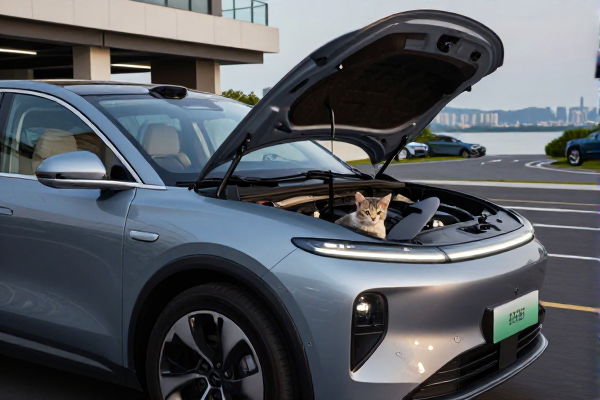
It was a classic car owner's nightmare: a 1972 Chevrolet Nova that suddenly refused to start. But for Thea Warden of Fullerton, California, the breakdown turned into a miraculous reunion with a tiny kitten she had feared was lost forever.
The Disappearance and the Dead Engine
Two days before the car trouble, Warden spotted a small, scruffy kitten wandering alone on a residential street. She stopped her car, got out, and tried to rescue the kitten, but it vanished into the bushes before she could catch it. Despite searching the area for nearly an hour, she assumed the kitten had moved on or found shelter elsewhere.
Then came the morning of April 10, 2025. Warden was about to run an errand when her beloved Nova – a classic muscle car that usually purrs to life – refused to crank. No click, no turnover. After checking the battery and starter, she popped the hood, expecting to see a loose wire or a dead alternator. Instead, she found a pair of glowing eyes staring back at her from the dark recess of the engine bay.
The Unexpected Stowaway
“I couldn’t believe it,” Warden said in a follow-up Instagram post. “The same little kitten I’d been looking for was just sitting there, wedged between the engine block and the wheel well.”
The kitten, estimated to be about four weeks old, had apparently climbed into the engine compartment while the car was parked outside. Warden believes the kitten had been riding there for two days, including a short drive she made the day after the initial sighting. Heat from the engine and the cramped space likely kept the kitten hidden, but the pressure of the cooling fan or a pinched wire may have caused the car’s sudden failure.
Rescue, Bath, and Bottle-Feeding
Warden carefully extricated the tiny feline, which was covered in grease and trembling. She immediately brought it inside, gave it a warm bath with kitten-safe shampoo, and then began bottle-feeding it with a commercial kitten milk replacer. Over the next 24 hours, the kitten’s energy returned, and it began to purr.
A subsequent visit to a local veterinarian confirmed the kitten was underweight but otherwise healthy, with no signs of internal injuries or dehydration. The vet advised that kittens often hide in engine bays for warmth, especially during cooler nights, and that drivers should always check under the hood before starting a car if they suspect a missing pet.
A New Name and a New Life
Warden has since named the kitten “Nova” in honor of the car that brought them together. The little survivor is now eating solid food, using a litter box, and has been officially adopted into the family. In her latest Instagram story, Warden joked that the “cat distribution system” had chosen her, adding that this was a “meant to be” moment.
Expert Perspective: How to Prevent Engine Bay Cat Accidents
Dr. Emily Chen, a veterinarian at the Fullerton Animal Hospital, said that cats and kittens seeking warmth are a common cause of engine compartment stowaways. “They’re attracted to the residual heat after the car has been driven, and they can climb in through gaps in the undercarriage,” she said. “Drivers should bang on the hood or honk the horn before starting the engine, especially in cooler weather or if they know a cat has recently been in the area.”
Warden’s story has since gone viral on social media, with many users sharing their own tales of finding cats in unexpected places. The classic Nova, meanwhile, turned out to have a simple fix: a loose wire that the kitten had accidentally dislodged. After a quick repair, the car now runs as smoothly as ever.
Conclusion
Thea Warden’s unexpected car trouble ended with a heartwarming addition to her family. What started as a frustrating morning became a reminder that sometimes the smallest creatures can cause the biggest changes – and that the “cat distribution system” works in mysterious ways.