Browse

Log in / Register
 Share

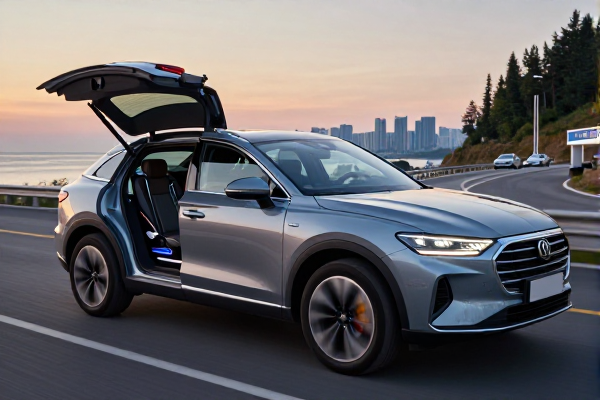
Drivers in Minsk now face a dramatically heavier bill if their vehicle is forcibly towed. Starting Sunday, October 25, the Minsk City Executive Committee’s updated tariff card charges a flat 200 Belarusian rubles for any forced full-loading evacuation onto a tow truck — regardless of whether the car needs a complete lift or only partial securing. The old structure allowed a much cheaper alternative: 105 rubles for full loading and just 65 rubles for partial loading. That distinction has now disappeared.
As of April 26, 2025, the revised rates, first published on the National Legal Internet Portal, remain in force. The same document also increases the cost of an evacuation without transport to an impound lot from 75 to 120 rubles, while a single day of storage at a municipal impound lot has risen from 9 to 16 rubles. For owners who cannot retrieve their vehicle immediately, the storage price hike compounds the initial shock.
The Minsk City Executive Committee sets these tariffs under the country’s procedural execution rules, and the numbers are now locked into the official national legal database. The portal does not publish a detailed rationale for the increase, but the near-doubling of most fees signals a deliberate shift in local policy rather than a simple adjustment for inflation.
The move changes the logic of forced towing. Previously, a driver whose car was only lightly off-balance or needed a simple hook-up could pay a fractional charge. That fairness mechanism has been erased. A car that would have cost 65 rubles to secure partially now costs the same as a fully loaded heavy vehicle — 200 rubles. In practice, this means a 207% increase for partial-loading customers, far steeper than the headline “nearly double” figure.
For vehicle owners, the financial impact comes on top of the underlying fine or violation that led the vehicle to be towed. A typical parking violation fine in Minsk may be modest, but the combined cost of towing and a few days of storage quickly surpasses the fine itself. With storage at 16 rubles per day, three days in an impound lot costs 48 rubles — more than the old daily rate for a week of storage.
Municipal impound lots across Belarus rely on the city budget to cover gaps, and these new tariffs are widely seen as a way to relieve that pressure. Local driver advocacy channels, however, have complained that the flat-rate model punishes drivers with minor towing needs, and some have questioned why partial-loading was eliminated rather than simply rewritten as a lower, more modern figure.
The new policy also alters the behavior of tow truck operators. Because partial loading now earns the same 200 rubles as full loading, companies have no financial incentive to recommend a lighter, quicker tow. For car owners, that means less room to negotiate. Before October 25, a driver could argue that a light sedan did not require a full support frame. Now, the uniform rate makes such an argument pointless.
Regional comparison shows how unusual the Minsk approach is. In many neighboring cities, towing tariffs are set by the kilometer or by vehicle category, with partial loading priced at 30–50% of full loading. The Minsk decision to bundle all evacuations into one bracket is rare, and it appears designed to increase municipal revenue from a stable source: traffic violations that result in towing.
Yet the new tariff is not entirely negative from a transparency standpoint. The old dual-rate system often created bureaucratic gray zones — inspectors and tow drivers could dispute whether a given car was “fully” or “partially” loaded. By applying a single rate, the city removes that classification conflict. The trade-off is that the lower-usage group bears a disproportionate increase.
For drivers who need to retrieve a vehicle from the impound lot, the fee calculation is straightforward: 200 rubles for towing, plus storage starting at 16 rubles per partial day. An additional service — evacuation without delivery to the impound lot — now costs 120 rubles, which still leaves a car at a place chosen by the driver or the officer, not at a designated lot. This could be a useful option for owners who want to avoid daily storage fees, but it is 60% more expensive than before.
Legal experts point out that the Minsk City Executive Committee has not publicly issued a separate justification for the increases. In past rate changes, officials cited rising fuel prices, maintenance costs for tow trucks, and expansion of impound capacities. For this round, the published resolution contains only the new table and its effective date. This lack of explanatory text is itself news, as it breaks with the committee’s prior habit of attaching a short rationale.
From the perspective of the National Legal Internet Portal, the resolution is now an official regulatory act, which means it is binding on all tow companies and impound stations operating within Minsk city boundaries. The territorial scope matters: cars towed inside the city ring are covered by these rates, while suburban or regional evacuations follow separate tariffs set by district authorities, which have not changed in the same package.
Another practical wrinkle: the new flat 200-ruble tow tariff is almost certainly based on the official exchange rate equilibrium, but in Belarus the ruble is not convertible, and in 2025 the average net salary in Minsk is around 2,300 BYN. That places a full towing fee at roughly 8.7% of an average monthly wage — a significant bite for many households. In 2024, that percentage was closer to 4.5%, so the relative burden has roughly doubled in real terms.
Police and traffic control officers in Minsk are not changing their enforcement algorithms. Towing remains mandatory when a vehicle blocks a pedestrian crossing, stops in a no-stopping zone, or obstructs traffic flow. The higher cost therefore acts as a deterrent, but for low-income drivers it may also cause serious financial distress if they cannot pay the impound fee quickly.
The storage fee increase is especially notable because it affects every day a car remains at the lot, not just the first day. At 16 rubles per day, a week of storage costs 112 rubles. Combined with the 200-ruble tow, the total reaches 312 rubles, almost the previous cost of a full tow plus six days of storage. For owner-operators of commercial vehicles, each day in the lot also means lost income.
There are some limited protections. Owners who retrieve their vehicles within the first few hours are often charged storage only for a full day, not hourly fractions, according to the now-in-force rules. The Minsk lot operating hours have not changed; vehicles can typically be released after payment during business hours, and weekends may require pre-payment. Drivers are advised to carry identification, registration papers, and proof of payment acceptance.
The new tariffs are part of a broader administrative cost revaluation that Minsk has been rolling out since late 2024. Similar adjustments have been seen in garbage collection fees and certain parking services, though none as steep as the towing rates. The cumulative effect on household budgets is modest when considered individually, but the towing hike is the sharpest single jump in municipal transport-related charges this year.
For foreign visitors to Minsk, the higher towing fees add another reason to be careful with parking. Rental cars involved in a forced evacuation will usually bill the renter for 200 BYN plus storage, and the car rental agency may charge an administrative penalty on top. Insurance policies rarely cover administrative towing fees, so the driver likely bears them personally.
In summary, the October 25 tariff change translates into one clear message: if your car is towed in Minsk, expect a bill nearly twice as large as before. The flat 200-ruble rate removes the cost gap between partial and full loading, storage is now 78% more expensive per day, and even a tow without a trip to an impound lot costs 120 rubles. The policy, which remains in effect today, represents a significant financial shift for anyone who drives in the Belarusian capital.