Browse

Log in / Register
 Share

Last updated: April 10, 2025
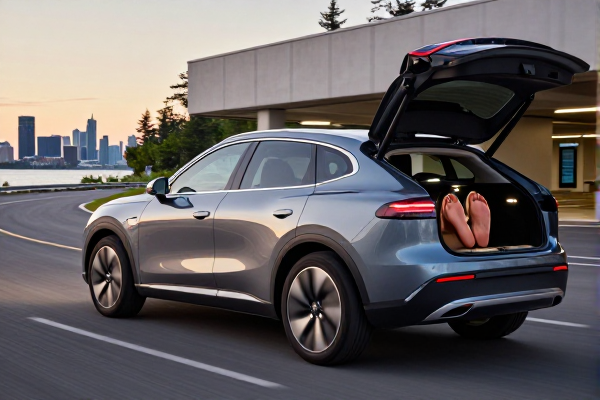
You’re cruising down I-35 on a hot summer day, kicked off your sandals, and now your foot is pressed flat against the gas pedal. Feels good, right? But a nagging thought creeps in: Is this actually legal? For years, a persistent myth has claimed that driving barefoot in Minnesota is a ticketable offense. Let’s clear the air once and for all.
There is no Minnesota state law that explicitly prohibits driving a motor vehicle without shoes. The Minnesota Statutes (Chapter 169 – Traffic Regulations) do not contain any language that makes barefoot driving a standalone violation. The same applies to driving in flip-flops, high heels, or even socks. So, legally speaking, you can drive barefoot on any public road in the Land of 10,000 Lakes.
This fact is consistently confirmed by the Minnesota State Patrol and local police departments. In a 2023 interview, a Minnesota State Patrol spokesperson stated: “Officers do not issue citations for barefoot driving itself. However, if your footwear (or lack thereof) contributes to unsafe operation of the vehicle, we may cite you for careless driving.”
The misconception likely stems from a misinterpretation of vague laws. Some drivers believe that because “barefoot” is not listed as an approved footwear option in driver’s manuals, it must be illegal. In reality, the Minnesota Driver’s Manual (published by the Department of Public Safety) only advises drivers to wear “sensible footwear” that provides good pedal control. It never says barefoot is outlawed.
Another possible origin: old rumors that police can use barefoot driving as a “pretext stop” to search for other violations. While a pretext stop is legally permissible under certain conditions (e.g., if you commit a moving violation), barefoot driving alone is not a valid reason.
Just because it’s legal doesn’t mean it’s smart. Driving barefoot does present real safety concerns:
If you’re involved in an accident while driving barefoot, an insurance adjuster or opposing lawyer might argue that your choice contributed to the crash. While Minnesota is a no-fault insurance state, civil lawsuits for negligence can still arise. Documentation of the accident scene and your footwear (or lack of) could be used against you in a liability dispute.
The same legal principle applies: no ban exists. However, flip-flops and high heels are widely considered more dangerous than bare feet because they can get caught under pedals or slip off. The Minnesota State Patrol advises against wearing them. Some driving schools even recommend keeping a pair of flat-soled shoes in your car for emergency driving.
Police officers are trained to look for any behavior that suggests impaired or distracted driving. If you’re driving barefoot and also weaving, speeding, or braking erratically, the officer will note the condition. But the citation will be for the underlying unsafe driving – not the bare feet.
In 2024, a traffic stop in Hennepin County made local news when a driver was ticketed for “careless driving” after their bare foot slipped off the brake and caused a rear-end collision. The ticket was for the collision, not the lack of shoes.
As of early 2025, no bills have been introduced in the Minnesota Legislature to ban barefoot driving. However, states like California and Ohio have considered such measures in the past (none passed). Minnesota law is unlikely to change unless a high-profile incident triggers public outcry. For now, your feet remain free.
You can drive barefoot in Minnesota without fear of a ticket. But ask yourself: Is it worth the risk? If you’re going a short distance on a quiet road, it’s fine. On a highway in heavy traffic, slip on those shoes. And if you’re ever pulled over for something else, the officer won’t care about your feet – as long as you’re driving safely.
Bottom line: Minnesota law says yes. Safety says “maybe.” You decide.
This article is for informational purposes only and does not constitute legal advice. For specific legal questions, consult a Minnesota traffic attorney.