Browse

Log in / Register
 Share

Updated: April 26, 2026
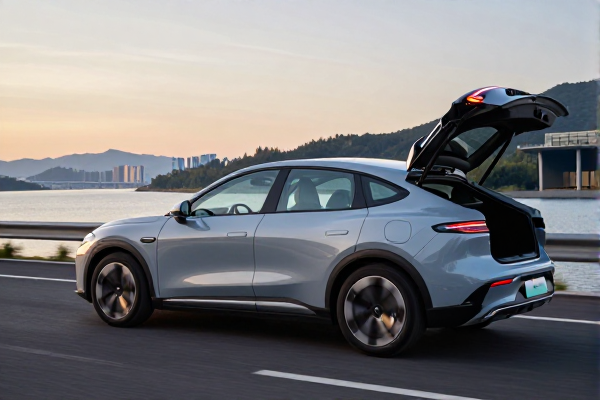
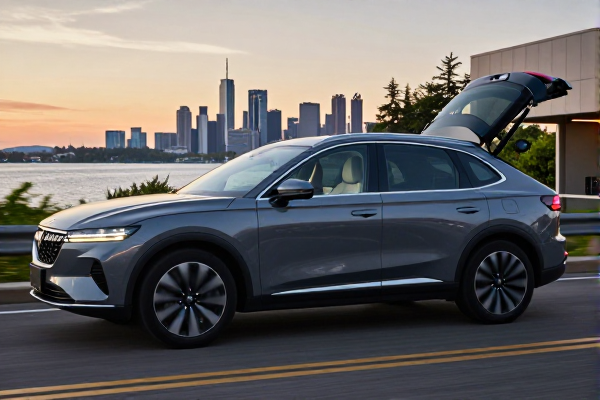
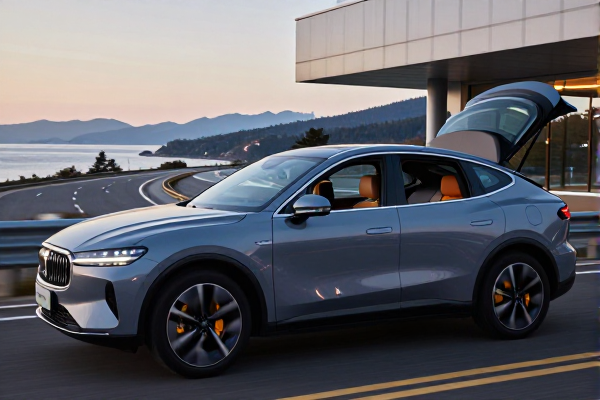
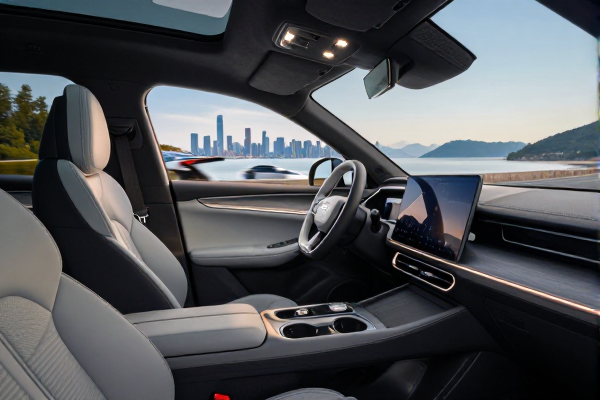
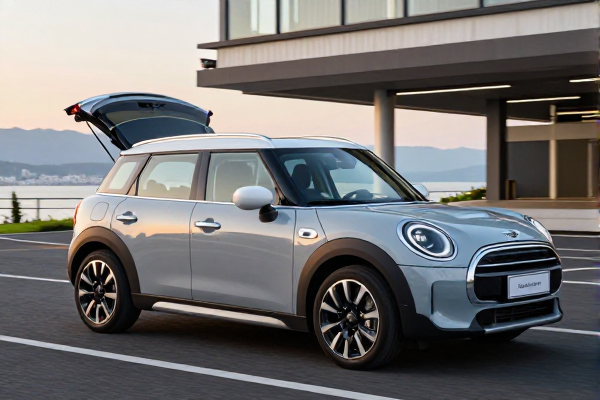
European automakers are attacking the compact electric crossover segment with very different tools. On one side, MINI's Aceman tries to turn green motoring into a style statement. On the other, Renault's Mégane E-Tech Electric is a tech-heavy hatchback-SUV aimed at range and practicality. Neither car is currently available on U.S. dealer lots, but for early adopters and import enthusiasts, the comparison is still worth a deep dive.
The Aceman only arrived in late 2024, slotting between the Cooper hatchback and the Countryman SUV. It's officially classified as a small car, but its SUV-like stance gives it a chunky, urban-friendly presence. Production is handled by Spotlight Automotive, BMW's joint venture with China's Great Wall Motor, which helps keep costs down. The Mégane E-Tech, by contrast, has been around since March 2022. Renault calls it a lower-medium-class model, and it shares the CMF-EV platform with the Nissan Ariya. That platform relationship gives it a bit more maturity—and access to a larger battery pack.
Under the floor, the Aceman's "E" motor produces 135 kW—about 181 horsepower—while the Mégane E-Tech in the "220 Comfort Range" spec pushes 160 kW, roughly 215 hp. Both drive the front wheels only, and both are capped at 160 km/h (99 mph). On paper, the Mégane should dust the Aceman off the line, but the gap is smaller than the horsepower numbers suggest. The Aceman hits 100 km/h in 7.9 seconds, while the Mégane takes 7.4 seconds. In everyday traffic, those five tenths are barely noticeable, but the extra punch from the Renault can make highway merging a little less stressful.
This is where the two cars truly diverge. The Aceman uses a 42 kWh gross battery with 38 kWh usable, enough for a WLTP range of 309 km (about 192 miles). The Mégane E-Tech packs a far larger 60 kWh pack—the carmaker doesn't list net capacity, but the battery weighs 394 kg—and returns a WLTP range of 452 km (about 281 miles). That's a huge difference for cross-country trips or long commutes.
Interestingly, the MINI is the more efficient car in a strict sense. Its combined consumption is rated at 14.1 kWh/100 km, against 15.0 for the Mégane. Despite being smaller and lighter (1720 kg vs 1719 kg curb weight—basically a tie), the MINI wins the efficiency round. That's a credit to its smaller frontal area, lower output, and lighter footprint. But efficiency alone doesn't erase the Renault's 143 km range lead.
Charging speed is often the deciding factor for EV buyers, and here the Mégane has a clear advantage. The Aceman supports 11 kW AC charging and a maximum of 75 kW DC. The Renault doubles AC to 22 kW and DC to 130 kW. In practice, that means the Mégane can recover its larger battery faster at highway charging stations, even if charging curves and station availability still matter. Both cars use Type 2 AC and CCS DC connectors, but their charge ports are on opposite sides—the Aceman on the rear right, the Mégane on the front right.
Renault also adds vehicle-to-load (V2L) capability, letting you power camping gear, laptops, or small appliances straight from the high-voltage battery. The Aceman does not offer V2L. Both come with a heat pump, which helps preserve range in cold weather.
The Aceman is a small car at heart. It runs 4,079 mm long, 1,754 mm wide, and 1,514 mm tall, with a 2,606 mm wheelbase. Its boot holds 300 liters. The Mégane is slightly larger: 4,200 mm long, 1,783 mm wide, and 1,505 mm tall, on a 2,685 mm wheelbase, with 389 liters of cargo space. If you're hauling strollers or weekly grocery hauls, the Renault is the more rational choice.
But city maneuverability? That's more nuanced. The Mégane has a smaller turning circle, 10 meters versus 11 meters, making it better at negotiating tight parking garages. The Aceman counters with a bit more ground clearance, 143 mm against 135 mm, which could help on rough driveway lips or shallow snow. Roof loads are close: 75 kg for the MINI, 80 kg for the Renault.
Towing reveals another difference. Both can pull 750 kg unbraked, but with a braked trailer the Mégane is rated at 900 kg while the Aceman stays at 750 kg. So the Renault can tow a small trailer or jet ski legally; the Aceman is strictly for lighter loads.
European list prices illustrate the positioning. The Aceman starts at roughly £26,185, or about $33,000 at current exchange rates. The Mégane E-Tech's "220 Comfort Range" starts at about £33,571, roughly $43,000. That puts the MINI in contention with a top-level Cooper SE and the Renault in the territory of mainstream mid-size EVs.
None of that is official U.S. pricing. Neither the Aceman nor the Mégane E-Tech is sold in the United States. Renault left the U.S. passenger-car market years ago and has not announced a return, while MINI's American lineup is focused on the Cooper Electric and Countryman SE All4. For U.S. buyers, the closest comparisons are the Countryman SE All4 (if you want a MINI badge) or the Nissan Ariya and the Hyundai Ioniq 5 if you want a Renault-style blend of cargo space and quick charging. If you're fixated on V2L, the Ioniq 5 and Kia EV6 both offer it here.
There isn't a single answer. The MINI Aceman is the cheaper, more efficient, and more character-driven crossover. It will appeal to buyers who value design, compact proportions, and low running costs. The Renault Mégane E-Tech is the more serious EV. It delivers a much longer range, far faster DC charging, standard AC charging at 22 kW, V2L, more cargo space, better turning radius, and stronger braked towing capacity. The price premium is real, but so is the capability.
For now, both cars exist only in Europe and other selective markets. If you're buying overseas, choose the Aceman for urban flair and the Mégane for road-trip readiness. If you're waiting for something similar in the U.S., keep an eye on MINI's expanding EV family and on Renault's future plans—though no one should hold their breath.