Browse

Log in / Register
 Share

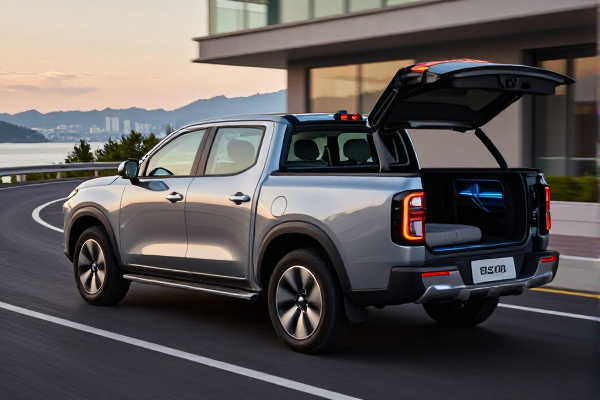
As of Feb. 17, 2026, MG Australia has confirmed it is planning a wider U9 pickup family. Days after launching the flagship U9 EV, product chief Meng Chen said cheaper versions, a plug-in hybrid, and a body-on-frame 4WD SUV are under study. An SUV of that kind could take on Mitsubishi’s new Pajero and BYD’s Shark 6. MG isn’t sold in the U.S., but the strategy says a lot about how SAIC is building real truck and off-road credibility.
MG’s first pickup is the ladder-framed U9, and the new U9 EV is the electric sibling of the existing diesel model. In Australia, it launches with a single flagship grade priced at A$78,990 before on-road costs. That’s roughly US$51,000 at current exchange rates, which puts it in serious company. The carmaker is betting on the kit: a 102kWh battery, air suspension, and a premium cabin with high-end tech.
But that high price tag isn’t meant to be the whole story. Chen said MG is already looking at lower entry points. Retail buyers who want a basic electric workhorse, and fleet customers who care more about cost per kilometre, are both part of the plan.
That would mirror Toyota’s approach with the electric HiLux, which is sold as a three-tier lineup in Australia. Toyota offers a pared-down fleet version alongside more fully equipped grades. If MG follows the same path, it can chase government and business orders while keeping the flagship as the halo product.
The U9 EV’s flagship has all the tech you’d want, but not every buyer needs air suspension and a polished interior. A stripped-out version could make a meaningful difference in price and widen the U9 EV’s appeal.
The battery is also a potential lever. A lower-spec model could use the same 102kWh pack, but with fewer features and a simpler suspension layout, the cost would drop. Or MG could offer a smaller battery option later, although Chen didn’t confirm that. What he did confirm is that more accessible versions are “under study” and that the brand sees clear demand from both private and commercial buyers.
That’s important because Australia’s electric pickup market is still young. Early adopters are willing to pay a premium, but mainstream buyers aren’t. A cheaper U9 EV could be exactly what pushes the segment beyond its current niche status.
While full-electric pickups are still a hard sell for many tradies, plug-in hybrids have crossed into the mainstream. In Australia, BYD’s Shark 6 is the sales leader in that space, and it’s not alone. Ford’s Ranger Hybrid, GWM’s Cannon and Cannon Alpha, and the upcoming Chery Stockman diesel PHEV are all targeting the same buyers.
MG clearly wants in.
Chen said a plug-in hybrid U9 is “on the horizon.” He described PHEV as the natural stepping stone for customers moving from combustion engines toward electrification, while EV suits buyers who have already made the switch. MG, he added, wants a car for every kind of customer need — and right now, that includes a PHEV pickup.
That makes commercial sense. A PHEV gives buyers an electric motor for short trips and a combustion engine for hauling and towing. It’s a simpler transition than fully electric, and it doesn’t require the same charging infrastructure. In a country where many truck buyers drive long distances in regional areas, that’s a big advantage.
The most intriguing detail from MG’s product chief wasn’t about the ute itself — it was about what the U9 platform could become.
Because the U9 is built on a ladder frame, the same underpinnings could easily support a traditional 4WD wagon. That’s a proven playbook:
Chen said an MG U9-based SUV is a possibility and is being studied. He also noted there is customer appetite for that kind of vehicle.
If MG builds it, the result would be a serious, boxy 4WD that could compete with the Prado, the Pajero, and other body-on-frame SUVs. It would also give MG a platform used across two high-volume body styles, which spreads development cost and makes the whole U9 family more profitable.
MG is currently absent from the U.S. showroom, so none of this is arriving in America tomorrow. But the news still matters beyond Australia.
The U9 family is one of the clearest signs yet that SAIC, MG’s parent company, is serious about competing in traditional truck and off-road territory. The Australian market is a demanding proving ground. Buyers there know utes and 4WDs better than almost anyone, and brands like Ford, Toyota and Mitsubishi have deep loyalty.
If MG can establish the U9 in that environment — with strong EV, PHEV and SUV variants — it would have a credible, hardened platform. That platform could be adapted for other regions where body-on-frame pickups and SUVs are in high demand. It also shows that Chinese automakers are moving beyond cheap city cars and into the most profitable, difficult vehicle categories.
MG is positioning the U9 as more than a one-off electric pickup. The brand is mapping out a family: cheaper EVs, a plug-in hybrid, and very likely a large 4WD SUV. That’s a strategic answer to the shift happening across the global pickup market.
Right now, the U9 EV is the statement piece. But the real volume will come from the models that follow. A more affordable U9 EV would bring new buyers into the electric ute market. A PHEV version would give traditional truck owners a reason to look at MG. And a U9-based SUV would put the brand directly in contention with some of the biggest names in off-road.
Meng Chen didn’t put a timeline on any of it, and “under study” still leaves room for change. But the direction is clear: MG wants a place in every part of the pickup and 4WD market, not just the niche slice that is full EV sales today.
The takeaway is straightforward. The U9 isn’t just a truck — it’s a platform MG plans to milk across segments, prices and powertrains. If those plans become reality, Ford, Toyota, BYD and Mitsubishi will have another serious rival to watch.