Browse

Log in / Register
 Share
Share
MG Introduces Versatile ADAPT Platform in India, Signaling a Flexible Future
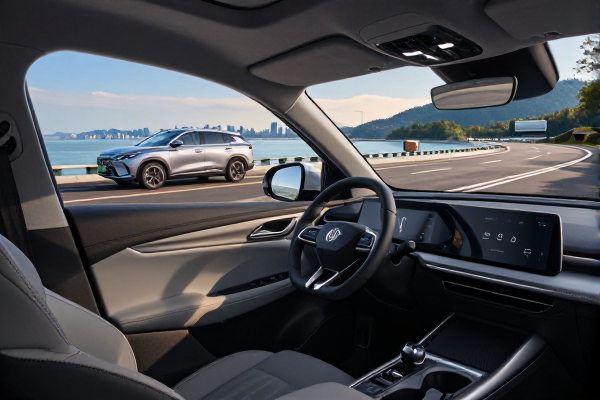
JSW MG Motor India has unveiled a significant strategic move with the introduction of its new ADAPT vehicle architecture. Announced on January 2024, this platform represents a foundational shift, engineered to support a spectrum of new-energy vehicles—from pure electric to various hybrid configurations—on a single, modular base. This development underscores MG's commitment to offering diverse propulsion technologies tailored to evolving market demands without the cost and complexity of developing multiple unique platforms.
The Core Advantage: Unprecedented Modularity
The primary innovation of the Advanced Drive Architecture Platform Technology (ADAPT) is its inherent flexibility. Instead of engineering separate, dedicated chassis for battery-electric vehicles (BEVs), strong hybrids (HEVs), plug-in hybrids (PHEVs), and range-extender electric vehicles (REEVs), MG has consolidated these capabilities into one adaptable structure. This approach grants the automaker remarkable agility to respond to regional consumer preferences, regulatory pressures, and infrastructure development with speed and cost efficiency. The company confirms the first production vehicles utilizing ADAPT are slated for launch by the end of the 2026-2027 fiscal year.
One Foundation, Four Propulsion Pathways
The ADAPT platform is fundamentally designed as a multi-powertrain matrix. Its architecture can accommodate the distinct packaging and component requirements of four primary drivetrain types:
This multi-faceted capability allows MG to deploy the most appropriate technology for specific market segments and use cases from a shared engineering investment.
A New Hybrid Heart: Engine and Transmission Tech
Central to the hybrid applications of the ADAPT platform is a newly developed, naturally aspirated gasoline engine specifically optimized for hybrid duty. While full displacement and output figures remain undisclosed, MG highlights several key engineering achievements:
Intelligent Drive Unit and Adaptive Driving Modes
Further enhancing efficiency is a new, highly integrated "10-in-1" Intelligent Electric Drive Unit. By consolidating functions such as the motor, inverter, and gearbox into a single compact module, MG improves power delivery efficiency and frees up valuable vehicle space. This system intelligently manages four distinct driving modes that switch automatically based on speed, load, and battery state:
This dynamic system continuously seeks the optimal balance between performance and energy conservation.
Engineered for the Electric Future
Recognizing that pure electric vehicles represent the long-term horizon, the ADAPT platform is future-proofed with support for both 400V and 800V electrical architectures. This ensures compatibility with current charging infrastructure while paving the way for faster 800V ultra-rapid charging in next-generation models. Future MG EVs on this platform will utilize the company's proprietary MAGIC battery technology, which promises advancements in energy density, power delivery, long-term durability, and safety through rigorous multi-condition testing.
Exclusive Perspective: A Strategic Play in a Fragmented Market
From an industry analyst's viewpoint, the ADAPT platform is less about a single technological breakthrough and more about a shrewd strategic simplification. In a global auto market where regulatory pathways and consumer adoption rates for electrification vary wildly by region, committing to a single powertrain type is risky. MG's "portfolio-in-a-platform" strategy mitigates this risk. It allows the company to build vehicles in India—a key manufacturing hub—for diverse global markets without retooling entire factories. If successful, this could give MG a competitive edge in cost and speed-to-market against rivals locked into more rigid, single-powertrain platforms, particularly when entering markets like the United States where a mix of technologies is likely to coexist for years.
The First Models on the Horizon
Industry reports indicate that the first vehicle to utilize the ADAPT architecture could be an upcoming iteration of the MG Hector, potentially dubbed the "Hector Hawk," expected with a plug-in hybrid powertrain. MG has officially confirmed that at least one battery-electric vehicle and one plug-in hybrid model derived from the ADAPT platform will be introduced to the Indian market within the stated FY2026-27 timeline. This rollout will serve as the first real-world test of the platform's promised versatility and efficiency.