Browse

Log in / Register
 Share


MG isn't a familiar name at US dealerships today, but in India it's a major automotive player—and its latest model, the Hector Tomahawk EV, might be its most important electric vehicle yet. With seating for five or seven, a 69.2 kWh battery, and local pricing starting near $23,000, this is MG's boldest bid to accelerate EV adoption outside China. We drove the five-seat version on crowded city streets and open highways to find out what it delivers. Here's our first-drive report, updated June 26, 2026.
MG, owned by China's SAIC Motor, has been selling the gasoline-powered Hector SUV in India since 2019. The new Tomahawk EV is a fully electric derivative built on MG's freshly developed ADAPT platform at its Halol factory in Gujarat. It joins a rapidly growing EV range that already includes the compact Comet, the Windsor, the ZS EV, the M9 van, and the Cyberster roadster.
In the Indian market, the seven-seat Hector Tomahawk starts at Rs 19.50 lakh—roughly $23,400—while the top-spec five-seat Essence trim is tagged at about Rs 23 lakh ($27,700). For comparison, three-row electric SUVs in the United States typically start in the mid-$50,000 range and often climb far higher. This sharp pricing gap explains much of the car's appeal in its home market, and it also points to the competitive pressure Chinese-owned automakers are beginning to apply globally.
MG is also offering a Battery-as-a-Service (BaaS) option that separates the battery from the purchase price. Buyers can take the car for Rs 13.99 lakh to Rs 17.49 lakh ($16,800–$21,000) and lease the pack separately at Rs 4.90 per km (roughly 9 cents per mile). It's a genuinely innovative financing model that lowers the entry barrier for cost-conscious families, and one that could easily be adapted for other markets—including North America—if range anxiety and battery-replacement concerns ever become mainstream purchasing barriers.
On the battery itself, MG provides a lifetime warranty for the first owner. That coverage changes to 8 years or 160,000 km (approximately 100,000 miles) if the vehicle is resold or registered commercially—an unusually strong assurance in this segment and a sign of growing confidence in LFP chemistry.
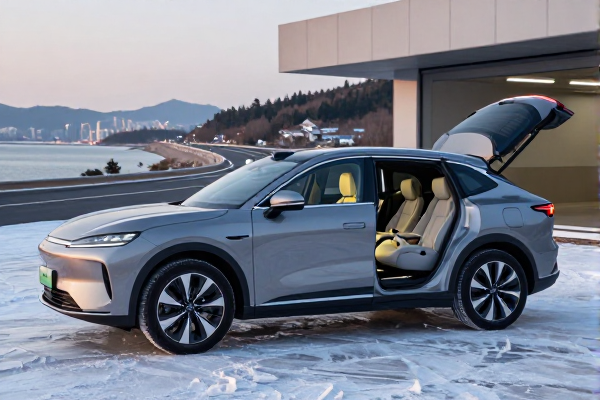
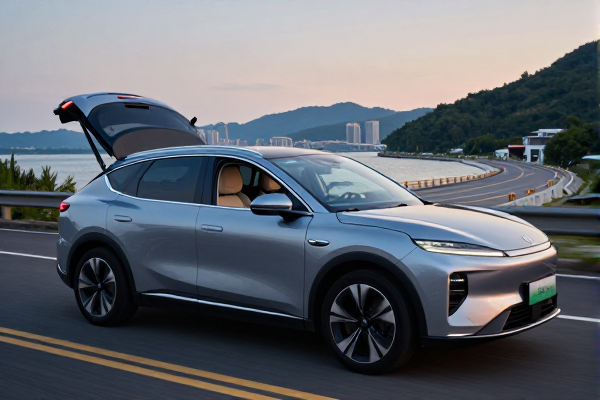
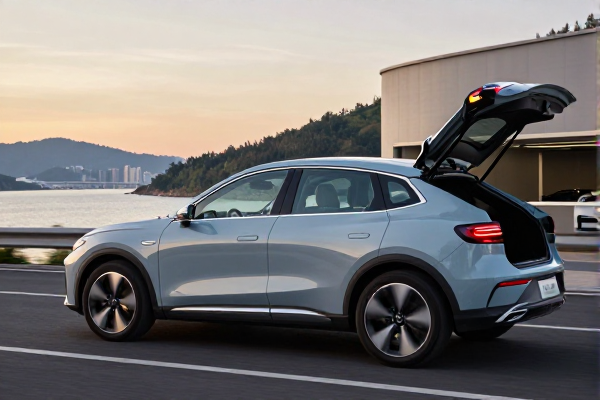
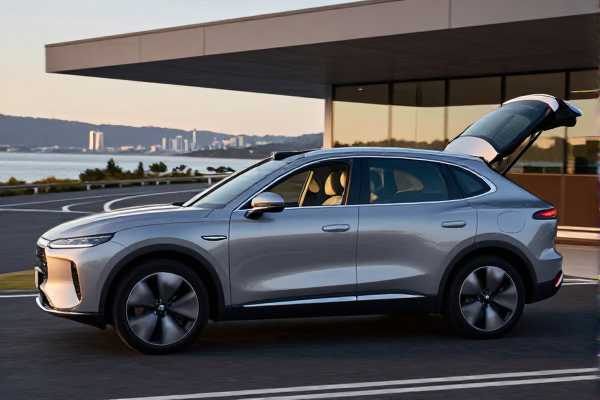
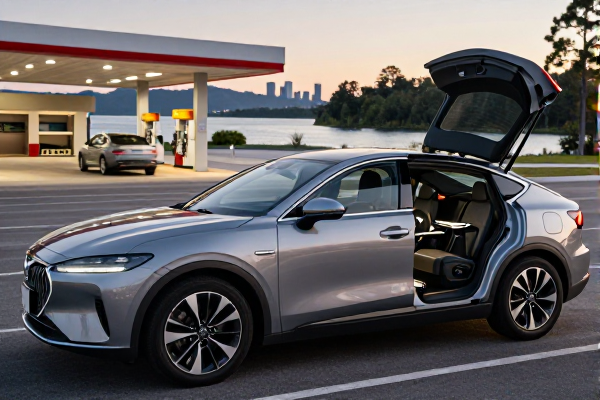
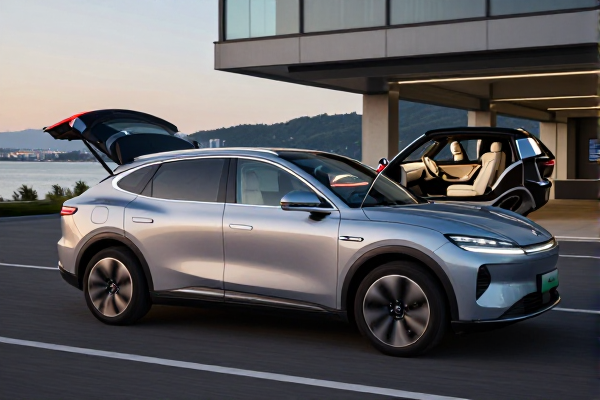
The Hector Tomahawk EV doesn't try to look like a spaceship. Its design is clean and understated: LED projector headlamps, a slim daytime-running-light signature, an illuminated MG badge at the front, and wraparound LED tail lamps at the rear. Red brake calipers, black cladding around the wheel arches, roof rails, and a panoramic sunroof add a touch of character without compromising the family-SUV brief.
What stood out more than the styling was the build quality. The bonnet, doors, and tailgate carry reassuring heft, body panels line up neatly, and the structure feels rigid even on uneven roads. All variants ride on 18-inch alloy wheels shod with 225/55-section tyres—a pragmatic choice that balances ride comfort, grip, and durability.
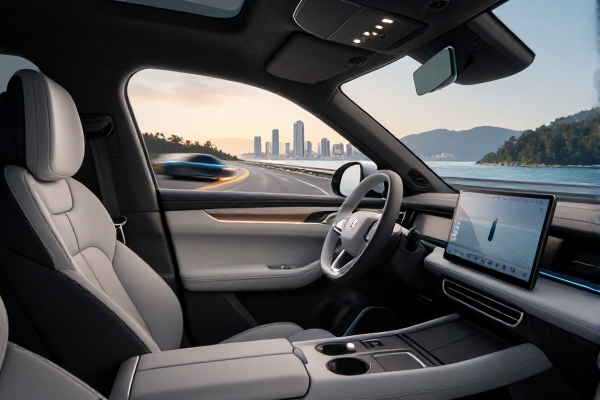
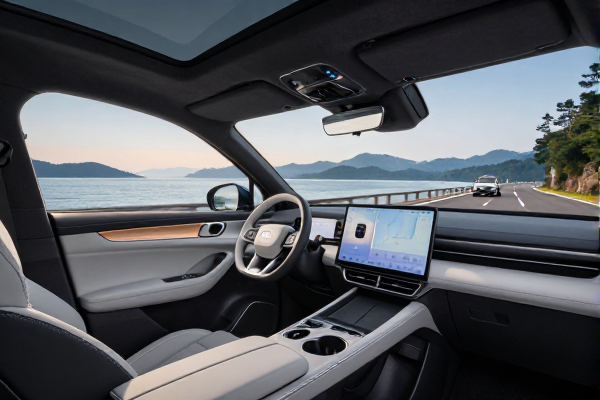
Step inside and the impression is more premium than the price suggests. Soft-touch materials cover the dashboard and door tops, with synthetic leather wrapping the flat-bottom steering wheel and prominent center armrest. Brushed aluminum and gloss-black inserts provide visual contrast, while the floating center console houses the main controls and storage.
The equipment list is genuinely extensive for this class. An 8.8-inch digital instrument cluster sits ahead of the driver, complemented by a large 15.6-inch central touchscreen. The car includes an AI-powered voice assistant, gesture control, and even a karaoke mode. Wireless Android Auto and Apple CarPlay come standard, along with a 10-speaker Infinity audio system with a woofer, a cooled wireless charging pad, and 256-color ambient lighting.
Comfort-focused features include ventilated front seats, a six-way electrically adjustable driver's seat with memory and auto-retract for easy entry and exit, reclining rear seats, auto-dimming rearview mirror, and climate control with a PM2.5 air filter. Boot space measures 610 liters—about 21.5 cubic feet—which is ample for a family's luggage and groceries.
Safety equipment is solid, too. The top Essence variant adds a Level 2 ADAS suite with adaptive cruise control, lane-keeping assistance, and automatic emergency braking. There's no independent crash-test rating yet, but the standard kit—six airbags, electronic stability control, disc brakes on all four wheels, and ISOFIX child-seat anchors—is respectable for the segment.
The Hector Tomahawk EV pairs its 69.2 kWh lithium-iron-phosphate battery pack with a single electric motor on the front axle, producing 204 horsepower and 310 Nm (approximately 229 lb-ft) of torque. MG quotes a 0–100 km/h (0–62 mph) time of 8.2 seconds—not sports-car fast, but more than adequate for everyday duty.
In city traffic, the car is genuinely easy to live with. It creeps forward at about 7 km/h with no throttle input, just like an automatic-transmission car at idle. Acceleration is seamless and silent: no gear shifts, no engine noise, only a smooth, steady surge of power. Brake modulation is intuitive, which makes stop-and-go driving notably less fatiguing than in most combustion SUVs.
On the open highway, the Tomahawk cruises effortlessly at 65–75 mph, and there's enough mid-range punch to execute quick overtakes without drama. The cabin remains hushed thanks to acoustic glazing on the windshield and front windows. As with all EVs, though, aggressive throttle use drains the range noticeably; a gentle right foot pays real dividends.
Four drive modes—Standard, Eco, Sport, and Custom—alter throttle response, braking feel, and steering weight. Standard is the well-rounded default and suits most driving conditions. Sport firms everything up and sharpens responses, useful for faster highway runs but arguably too eager for stop-and-go city driving. Eco mode is the smoothest, ideal for dense traffic when priority shifts to efficiency.
MG claims a range of 517 km (about 321 miles) under India's MIDC test cycle. Real-world results will vary with driving style, speed, and load, but the figure is competitive for a battery of this size.
Charging flexibility is reasonable. A portable charger that plugs into a standard 15-amp socket comes with the car for occasional top-ups. For homes, MG will install a 7.4 kW AC wallbox; the company says a full 10–100 percent charge takes approximately 12.5 hours on that unit. Public fast charging via a 90 kW DC charger takes the battery from 30 to 80 percent in a claimed 35 minutes—enough for a quick roadside break on a long journey.
The MG Hector Tomahawk EV isn't headed to US showrooms; MG currently sells in China, India, the UK, Australia, and Europe, with no North American distribution. But its significance goes beyond geography. This is a spacious, well-equipped, and genuinely pleasant-to-drive seven-seat electric SUV priced at levels that would be unthinkable for a comparable American offering.
For US observers, the Tomahawk is a reminder that the global EV race now runs through more than just North America. SAIC Motor has demonstrated that it can produce family-sized electric vehicles with compelling value, strong build quality, and innovative ownership models. If those capabilities ever reach American shores—through MG or another brand under the same umbrella—the competitive pressure on established manufacturers will be real. For now, the Hector Tomahawk stands as one of the most convincing arguments yet that affordable, practical EVs are no longer a contradiction in terms.