Browse

Log in / Register
 Share


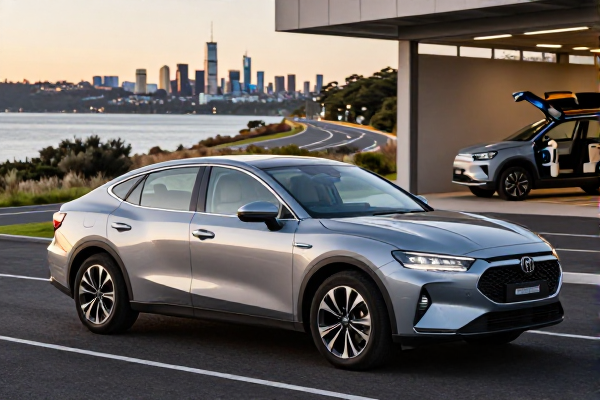
JSW MG Motor India has officially unveiled its new MG ADAPT platform, a scalable architecture engineered to support vehicles powered by multiple energy sources. Announced on July 15, 2024, this move signals a strategic pivot for the joint venture between India's JSW Group and China's SAIC Motor, aiming to address diverse market demands and regulatory landscapes with a single, flexible technological base. The platform is positioned as a cornerstone for the company's future product portfolio, potentially reducing development complexity and costs while accelerating time-to-market for various powertrain types.
The core innovation of the MG ADAPT platform lies in its inherent modularity. Unlike dedicated platforms built solely for battery electric vehicles (BEVs), ADAPT is designed from the ground up to accommodate internal combustion engines (ICE), hybrid systems, and pure electric drivetrains. This "multi-energy" capability allows engineers to utilize a common underbody, chassis, and core electronic architecture, onto which different powertrain modules can be integrated. For automakers, this approach mitigates the financial and engineering risks associated with betting on a single propulsion technology, especially in transitional markets like India where charging infrastructure and consumer adoption rates for EVs are still evolving.
From a market strategy perspective, the launch of ADAPT is a calculated response to fragmented global regulations and consumer preferences. In regions with aggressive electrification mandates, the platform can readily produce BEVs. In areas where hybrids or even efficient ICE vehicles remain dominant due to economic or infrastructural constraints, the same assembly line can produce those variants. This flexibility grants JSW MG significant agility, allowing it to tailor its offerings to specific countries without requiring entirely separate vehicle programs. It is a hedge against the uncertainty of the energy transition timeline.
Technical details suggest the platform will emphasize connectivity and software-defined features. Early briefings indicate that the electronic architecture will support over-the-air (OTA) updates, advanced driver-assistance systems (ADAS), and a high degree of personalization. By centralizing software and hardware integration, MG ADAPT could allow for future upgrades, such as enhanced battery management or autonomous driving features, to be deployed across the vehicle fleet, extending the product lifecycle and enhancing residual values—a key concern for consumers in competitive markets.
The introduction of this platform also reflects the evolving ambitions of the JSW Group within the automotive sector. Having entered the passenger vehicle space through this joint venture, JSW is leveraging its industrial and manufacturing expertise to foster a vertically integrated approach. The ADAPT platform could become a valuable asset, not only for MG-branded vehicles in India but potentially for other brands or markets under the JSW umbrella in the future. It represents a move from market participation to technology creation and IP ownership.
Analyzing the competitive landscape, MG ADAPT enters a field with established players like Volkswagen's MEB platform and General Motors' Ultium. However, its specific focus on cost-effective multi-energy solutions, rather than pure EV optimization, may carve out a distinct niche. Its success will likely depend on execution: achieving promised cost savings, ensuring vehicle performance and quality across all powertrains, and scaling production efficiently. The true test will be the reception of the first production vehicles built on this architecture, expected in the coming years.
For the global automotive industry, the development underscores a pragmatic, albeit complex, path forward. While the industry narrative is dominated by a full-electric future, the reality on the ground requires solutions that bridge the present with that vision. Platforms like MG ADAPT acknowledge that the transition will be non-linear and geographically uneven. They offer a blueprint for automakers, particularly those in high-growth, price-sensitive markets, to participate in electrification without abandoning the sizable current market for conventional and hybrid vehicles.
In conclusion, the MG ADAPT platform is more than a technical specification sheet; it is a strategic tool for navigating a period of profound industry change. Its launch by JSW MG Motor India highlights a focus on flexibility, market adaptability, and long-term portfolio planning. As the platform moves from concept to production, it will serve as a key indicator of whether multi-energy architectures can deliver on their promise of reducing complexity and cost while meeting diverse global demands. Its progress will be closely watched by investors, competitors, and policymakers alike.