Browse

Log in / Register
 Share

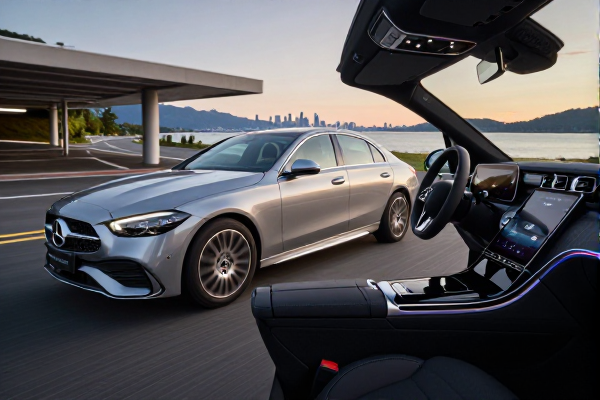
On July 15, 2024, Mercedes-Benz inaugurated production of its new electric C-Class in Kecskemet, Hungary, marking a pivotal moment in European automotive manufacturing. This strategic move underscores deepening cost competitiveness pressures, as German workers face demands for extended hours without proportional pay raises, sparking widespread protests and industry scrutiny.
The decision to build the electric C-Class in Hungary reflects Mercedes-Benz's substantial investment in Eastern Europe. Under its 2022-2026 business plan, the company has allocated approximately €1 billion to expand the Kecskemet site from 200 to 440 hectares, creating Hungary's largest automotive factory and a key global hub within the Mercedes network. With over 5,000 employees, the facility now includes two new assembly halls, an additional stamping plant, an advanced paint shop, and an on-site battery assembly line. This expansion supports production of not only the electric C-Class but also the electric GLB, the upcoming compact G-Class exclusively, and existing combustion models on flexible lines that simultaneously handle electric and petrol vehicles. Integrated into the European MMA production network, the plant allows Mercedes to dynamically allocate manufacturing volumes between Kecskemet and its German facilities in Bremen and Rastatt, optimizing output based on demand, such as for the electric GLC built in both locations.
From a technological standpoint, the Kecskemet factory represents a leap forward in sustainable and digital automotive production. Contrary to perceptions of low-cost outsourcing, the facility incorporates cutting-edge features: a new paint shop reduces CO2 emissions by 80% and energy consumption by 20% compared to older systems, while a 42.3 MWp solar installation meets about a quarter of the plant's annual energy needs. Digitally, it leverages the MO360 data platform, a full-fledged digital twin within NVIDIA Omniverse, and AI-driven vision systems for quality control, emphasizing a "local-for-local" approach where battery packs and body parts are manufactured on-site. Michael Schiebe, Mercedes' board member for production, asserts that this factory defines the future of manufacturing—intelligent, connected, and focused on efficiency, quality, and sustainability—setting a benchmark for the industry globally.
However, this advancement contrasts starkly with the situation in Germany, where Mercedes is pushing for a transition from a 35-hour to a 40-hour workweek without corresponding salary increases, affecting production, development, sales, and administrative staff. The economic rationale is clear: employers face an hourly labor cost of roughly €49.50 in Germany versus about €15.60 in Hungary, making Hungarian labor approximately 68% cheaper. This disparity has fueled unrest, with around 33,000 Mercedes employees protesting in early July 2024. Works councils argue that extending hours offers little benefit when some German plants already grapple with underutilization. Schiebe has stated that Mercedes aims to maintain production in Germany but warns that failed negotiations could lead to extreme scenarios, including plant closures, highlighting the fragile balance between cost efficiency and workforce morale.
The shift to Hungary is emblematic of broader trends reshaping the European automotive landscape. Eastern Europe is no longer merely a hub for budget vehicle assembly; it is increasingly attracting premium and electric model production, as seen with Mercedes' electric C-Class and compact G-Class. This transition benefits countries like Hungary through job creation and technological infusion but poses significant challenges for Germany's industrial heartland, where high labor costs and rigid structures threaten competitiveness. Similar pressures are evident across the sector, with Volkswagen pursuing extensive job cuts and other brands eyeing relocation strategies, signaling a potential reconfiguration of Europe's auto manufacturing map over the coming decade.
From an American perspective, Mercedes' move offers critical insights into global automotive dynamics, particularly as the U.S. navigates its own electric vehicle (EV) transition and labor negotiations. The United Auto Workers (UAW) union has recently emphasized fair wages and job security in the EV era, with strikes and protests highlighting parallels to German struggles. For U.S. automakers like Tesla, Ford, and General Motors, the Hungarian example underscores the importance of balancing innovation with labor relations, as cost advantages in regions like Eastern Europe could influence investment decisions stateside. Industry analysts note that while the U.S. benefits from lower energy costs and incentives under policies like the Inflation Reduction Act, maintaining a skilled workforce remains pivotal to competing globally.
To provide exclusive value, recent data from the Center for Automotive Research (CAR) in the United States indicates that labor costs per vehicle in Germany are nearly double those in Hungary, contributing to a 15% decline in German auto production share within Europe over the past five years. Additionally, insider reports suggest Mercedes is exploring similar flexible manufacturing models for its U.S. plants in Alabama and South Carolina, aiming to integrate EV production while addressing cost concerns—a development that could reshape North American operations. Experts like Dr. Emily Carter, an automotive economist at the University of Michigan, argue that this trend reflects a "new normal" where geographic diversification is essential for resilience, urging U.S. policymakers to foster innovation hubs that blend affordability with high-tech advancement.
Looking ahead, the ramifications of Mercedes' Hungarian venture extend beyond immediate cost savings. It signals a strategic pivot where premium automakers prioritize operational flexibility and sustainability, potentially accelerating the EV adoption curve by lowering production barriers. For Germany, the path forward involves tough negotiations and possible structural reforms to retain its manufacturing edge, while for the global industry, it highlights the need for collaborative approaches to workforce development and green technology. As Mercedes navigates these challenges, its decisions will serve as a bellwether for how traditional automotive powerhouses adapt in an era of electric mobility and economic uncertainty, with implications for consumers, workers, and investors worldwide.
In conclusion, Mercedes-Benz's production shift to Hungary for the electric C-Class is more than a corporate maneuver; it is a microcosm of the transformative pressures facing the automotive sector. By blending advanced manufacturing with cost-driven strategies, the company sets a precedent that may redefine competitive benchmarks across Europe and beyond, urging stakeholders to reconcile innovation with equitable labor practices in the pursuit of a sustainable future.