Browse

Log in / Register
 Share
Share

August 10, 2025 – Mazda has officially confirmed that the next-generation CX-30 will not reach showrooms until fiscal year 2030, which runs through March 2031. That pushes the compact SUV’s full redesign to a 12-year lifecycle, an unusually long stretch even for a brand known for conservative product cycles. CEO Masahiro Moro blamed the delay on punishing global headwinds, including sharp increases in US import tariffs, rising raw material costs, and economic instability in key markets.
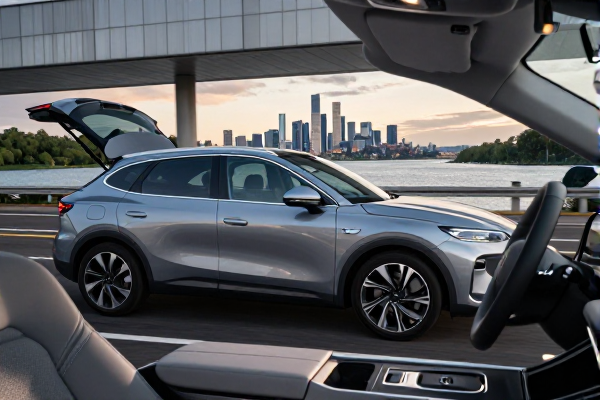
The CX-30 is no niche player. With 208,869 units sold globally in 2025, it ranks as Mazda’s second-best-selling vehicle, behind only the CX-5. Delaying its overhaul means the company will rely on a decade-old platform to carry a huge chunk of its volume for years to come. While Mazda plans to keep the current model fresh with periodic updates, analysts warn that the strategy could leave the brand exposed in a fiercely competitive segment.
Moro’s comments to Japan’s Chugoku Shimbun were blunt: “Changes are crucial as Mazda is facing global headwinds including economic instability in key markets, rising raw material costs, and a sharp increase in US import tariffs.” The US tariff threat is particularly acute for Mazda, which imports the CX-30 from Japan (and to a lesser extent from Mexico). A potential 25% tariff on Japanese-built vehicles would dramatically raise the cost of a car that starts at around $25,000, eating into margins that are already thin in the compact SUV segment.
The CEO’s remarks underscore a broader pressure on Japanese automakers. Unlike Toyota and Honda, Mazda has a smaller global footprint and fewer manufacturing bases outside Japan, making it more vulnerable to trade policy shifts. By deferring the CX-30’s major investment, Mazda can conserve capital for other priorities, such as electrification and the upcoming CX-5 replacement.
Mazda is not leaving the current CX-30 untouched. In Japan, the automaker has already rolled out a product update that includes minor styling tweaks, revised suspension tuning, and upgraded infotainment with a larger center display. Stateside, Mazda has confirmed pricing moves for the 2026 model year, with a modest increase across the lineup. These changes—new wheel designs, additional standard safety features, and refined interior materials—are designed to keep the CX-30 competitive without a full platform overhaul.
This pattern of “refresh and extend” mirrors what Mazda has done with the aging Mazda6 (which was discontinued in the US) and the CX-5, which received a major update in 2022 but still rides on a platform introduced in 2017. For the CX-30, the strategy buys time, but it also risks falling behind rivals that debut new models every 5–6 years.
The compact SUV segment is one of the most crowded in the US market. The Honda HR-V and Toyota Corolla Cross both received full redesigns in 2023, while the Hyundai Kona and Kia Seltos were updated in 2024. The Subaru Crosstrek, a perennial top seller, was redesigned for 2024. By 2031, most of these competitors will have moved to second or third generations, potentially leaving the CX-30 with outdated technology, fuel economy, and safety features.
Mazda’s strength lies in driving dynamics and upscale interiors, but those advantages erode over time. The current CX-30’s platform debuted in 2019, and while its Skyactiv-G and Skyactiv-X engines are still competitive, the lack of a hybrid or plug-in variant (aside from the mild-hybrid Mazda M Hybrid system) could hurt sales as fuel economy regulations tighten and consumer interest in electr