Browse

Log in / Register
 Share

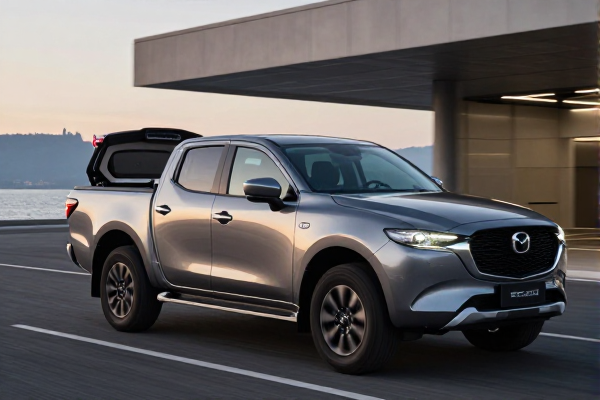
May 9, 2026 — Mazda has finally ended the speculation about its next pickup. The brand confirmed a new BT-50 is on the way, with the replacement for the diesel-bodied ute expected to reach Australian showrooms around 2028. The confirmation came from Mazda Australia managing director Vinesh Bhindi during a media briefing, first reported by CarsGuide.
When Bhindi was asked whether Mazda still needs the BT-50 as the Australian utility segment contracts and competition sharpens, his answer was an unqualified “yes.” When asked whether that meant a new model is coming, likely around 2028, he said “yes” again.
That blunt response matters. It removes doubt that Mazda was ready to walk away from body-on-frame pickups after the current generation, which shares its fundamentals with the Isuzu D-Max. The next BT-50 will go to war in a segment that now includes Nissan Navara, Ford Ranger, Toyota HiLux and Isuzu D-Max, plus electric and hybrid newcomers like the BYD Shark 6 and Chery Stockman.
The designer behind the current BT-50, Eiji Kimoto, is also involved in the replacement. Kimoto, who now leads design for Mazda’s new CX-6e, was cagey when questioned about the truck. “I am not allowed to speak much about the future product,” he said, “but I can tell you, please look forward to it.”
That leaves plenty of room for interpretation. It may signal a bigger visual departure than the current model, which closely mirrors the D-Max in silhouette and cabin layout. It could also mean Mazda is keeping the next BT-50 closer to its own brand identity, rather than letting the Isuzu relationship shape every styling line.
The mechanical direction is the bigger question. Mazda essentially has two paths.
The first is to continue its Isuzu partnership. That would give the next BT-50 the same platform and powertrain family as the next D-Max, almost certainly with diesel still at the core. Isuzu has confirmed it is working on electrified powertrains through its Earth Lab development program, but no final architecture has been locked in. If Mazda stays with Isuzu, a fully electrified BT-50 might not arrive until later in the decade, and diesel would remain the volume engine for a while longer.
The second option is a shift toward Mazda’s Chinese partner, Changan. Mazda already sources the electric 6e and CX-6e from Changan, and that relationship could be expanded to cover a pickup. If so, the next BT-50 could borrow the Changan Hunter K50, a petrol-electric ute that uses a range-extended electric powertrain rather than a conventional plug-in hybrid system.
The Hunter K50’s setup is worth explaining. It has a 43.47kWh lithium-ion battery pack and a 2.0-litre turbocharged petrol engine, but that engine doesn’t drive the wheels. Instead, it acts as a generator to recharge the battery and feed the electric motor. Changan says the truck can travel about 192km on electricity alone under the NEDC test cycle, which works out to roughly 150km in WLTP terms. Total range, with the petrol generator included, is claimed to exceed 1000km.
A range-extended BT-50 would give Mazda something none of its traditional rivals offer in the mid-size class: an electric-style driving experience without the towing range anxiety that still limits pure EVs. It would also complicate the brand’s relationship with Isuzu, which currently supplies the platform and technology for the pickup. Mazda has not said which direction it will take, but the fact that both options remain open suggests executives are still weighing cost, timing and market demand.
For American readers, this news is easy to overlook. Mazda does not sell the BT-50 in the United States, and there is no indication that will change. The brand’s U.S. lineup is built around crossovers like the CX-5, CX-50 and CX-90, and it has consistently avoided the full-size truck market.
Still, the next BT-50 offers a useful window into Mazda’s global electrification strategy. If the company chooses a REEV pickup, it would be a major departure from the industry’s usual diesel-first approach in the segment. Ford, Toyota, Chevrolet and GMC are all adding hybrids and electric options to their trucks, but none currently offers a range-extender layout as the primary powertrain in this class.
That’s why the BT-50 decision matters beyond Australia. A Changan-sourced REEV would prove that Mazda is willing to use its Chinese partnership for models that don’t target China specifically. It would also put Mazda in a strong position in markets where diesel is being taxed or phased out, while preserving the kind of range that pickup owners expect.
The timeline also fits Mazda’s next phase of product launches. The current BT-50 arrived in 2020, so a 2028 replacement would give the model an eight-year lifecycle. That’s typical for a ladder-frame pickup, but it also means the new truck will have to be right the first time. Segment sales are no longer booming, and buyers have more choices than ever, including Chinese brands that are aggressively pricing their first truck entries.
Bhindi’s “yes” might have been short, but it was also strategic. Mazda knows that the BT-50, even in a shrinking segment, gives it a showroom presence that crossovers cannot replicate. It brings in buyers who need genuine towing ability and off-road credibility. Killing it would have made long-term sense on paper, perhaps, but it would have left a hole in Mazda’s lineup in Australia and other markets.
The next question is no longer whether Mazda will build a new BT-50. The questions are when it will show, what it will be made of, and whether it will finally let Mazda stop apologizing for a pickup that feels too close to its Isuzu twin. With Kimoto hinting that the design will be worth waiting for, and with the Changan REEV option alive, the next BT-50 could end up being the most important Mazda truck ever unveiled.