Browse

Log in / Register
 Share
Share

April 7, 2025 – Mazda has finally entered the long-range electric game with the 6e, a sedan derived from the Chinese-market Changan Deepal SL03 platform. While the brand’s iconic MX-5 and Mazda3 remain the darlings of enthusiasts, the 6e represents a pragmatic pivot: a quiet, spacious, and well-equipped EV that doesn’t try to be a sports car. I spent 450km behind the wheel to see if it upholds Mazda’s engineering integrity—or if it’s merely a competent compromise.
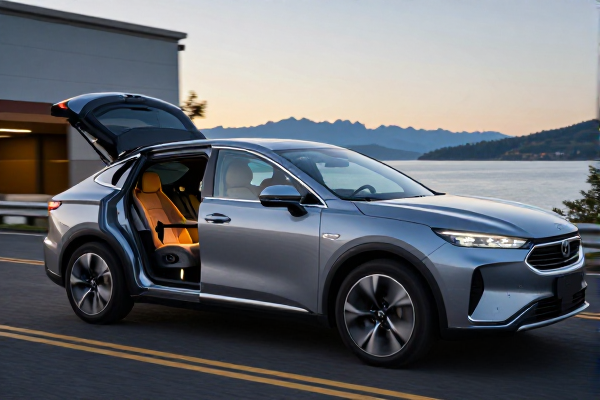
Mazda’s design language—Kodo—has always emphasized motion and elegance. The 6e continues that lineage, though with a split personality. The front end is sharp, with slim LED headlights and a bold grille-closed panel that reads unmistakably Mazda. The rear, however, feels less cohesive: a sloping roofline and a wide taillight bar that looks more generic than the rest of the car. Nevertheless, during my test drive, it drew multiple glances and questions from onlookers—proof that even an imperfect Mazda still commands attention.
Open the door and the first thing you notice is the suede-like material (nobuck? Alcantara?) covering the seats and dashboard. It’s a tactile, upmarket touch that few competitors at this price point offer. The 12.3-inch central screen runs software developed by Changan, but that’s mostly invisible if you plug in Apple CarPlay (which worked flawlessly). Physical buttons for climate control are absent, but the haptic feedback on the steering wheel is decent. The cabin feels spacious, especially in the rear, where legroom rivals a BMW 3 Series.
Mazda is not a volume giant, so partnering with Changan for the 6e’s platform (the same one used in the Deepal SL03) was a necessary move. The upside: a 80 kWh battery, 552 km WLTP range, and a 245 hp rear motor that charges 10–80% in 47 minutes. The downside: the chassis tuning doesn’t have the same finesse as a Mazda-built car. The steering is overly light, and the suspension prioritizes comfort over cornering verve. It’s a quiet, relaxed highway cruiser, but don’t expect MX-5-like engagement. Mazda knows this—inside the company, they joke that the 6e is the “family car” while the MX-5 remains the weekend toy.
Over my 450 km mixed drive (highway, country roads, city traffic), I averaged 15.5 kWh/100 km—almost exactly matching the WLTP rating. The 6e is one of the few EVs where the displayed range doesn’t lie. I’d confidently say 500 km on a single charge is achievable in real-world conditions. That’s important for a car aimed at daily drivers who want to avoid range anxiety.
In Portugal, both Standard (68 kWh, 480 km) and Long-Range (80 kWh, 552 km) are priced identically at €38,830 for Takumi trim and €41,330 for Takumi Plus (the one I drove). That makes the Long-Range a no-brainer. For context, that’s undercutting a Tesla Model 3 Long Range by about €5,000 and a Hyundai Ioniq 6 by €3,000. The interior quality and standard equipment (360-degree camera, heated seats, Bose sound system) are competitive.
Here’s the twist for American readers: Mazda has no plans to sell the 6e in North America. The company’s US electric strategy currently revolves around the small MX-30 (with a very limited range) and a future SUV platform due in 2027. The 6e was developed specifically for Europe and China, where the midsize sedan segment is still viable. US buyers will have to wait for the upcoming CX-6e (crossover) or the rumored rotary-hybrid sports car. But if you’re in Europe, this is a compelling alternative to the Tesla Model 3—especially if you value build quality over tech gimmicks.
The 6e won’t make you forget the MX-5 or the Mazda3. It’s not a driver’s car; it’s a comfortable, efficient, well-built electric sedan that happens to wear a Mazda badge. And that’s fine. Mazda needed a credible EV to meet regulations, and the 6e delivers on range, comfort, and value. It’s not a breakthrough, but it’s a solid foundation. If you can live without the last ounce of driving pleasure, this is a car you can happily live with every day.
Read more from Guilherme Marques: BMW iX3 – Clean sheet