Browse

Log in / Register
 Share

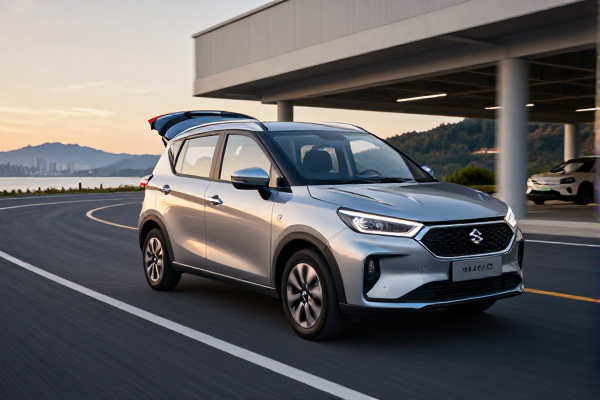
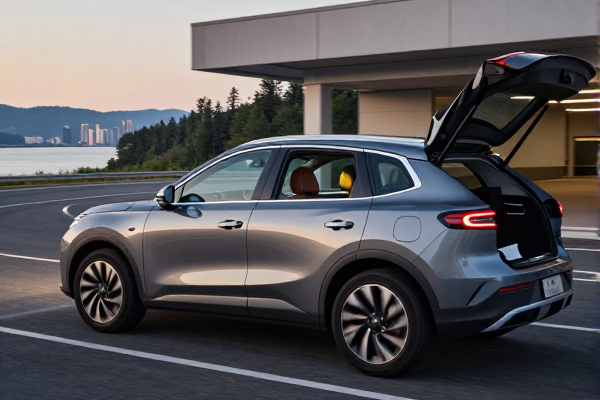
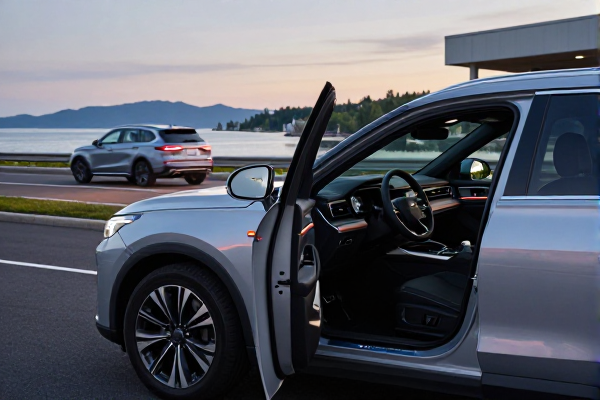
As of March 2025, India's fuel-economy conversation has a fresh focal point: the Maruti Suzuki Victoris. This compact SUV arrives in two very different high-mileage flavors — a 1.5-liter S-CNG engine and a 1.5-liter strong-hybrid system. With E20 (20 percent ethanol-blended) gasoline rolling out at Indian pumps and stricter emissions rules taking effect, buyers are weighing rock-bottom running costs against everyday refinement. A cost breakdown shows the CNG version undercuts the hybrid by about ₹1 per kilometer. The hybrid counters with automatic convenience, a larger trunk, and a quieter cabin. Here's how the financial picture plays out.
The Victoris is Maruti Suzuki's latest entry in India's crowded compact-SUV segment, and its engine options reveal just how far apart buyer priorities can be. The S-CNG variant uses the proven 1,462 cc K15C four-cylinder engine, recalibrated to run on compressed natural gas. It's mated exclusively to a five-speed manual transmission. The Strong Hybrid, meanwhile, pairs a 1,490 cc three-cylinder engine with an electric motor and an e-CVT automatic gearbox, allowing the car to creep through gridlock in pure EV mode.
Maruti claims 27.02 km per kilogram for the CNG version and 28.65 km per liter for the hybrid. Solid numbers on paper, though real-world results will almost certainly come in lower — as they do with every car.
Here's where the two versions diverge most sharply — on the price tag.
| Specification | Victoris S-CNG (Manual) | Victoris Strong Hybrid (e-CVT) |
|---|---|---|
| Engine | 1,462 cc, 4-cylinder K15C | 1,490 cc, 3-cylinder + electric motor |
| Transmission | 5-speed manual | e-CVT automatic |
| Claimed efficiency | 27.02 km/kg | 28.65 km/l |
| Ex-showroom price | ₹11.55–14.67 lakh | ₹16.38–19.99 lakh |
| On-road price (comparable trim) | ~₹13.3–14.8 lakh | ~₹18.5–18.8 lakh |
| On-road premium | Baseline | +₹4.0–4.5 lakh |
In US-dollar terms, the CNG version comes to roughly $13,500–$17,200 at ex-showroom pricing; the hybrid runs about $19,200–$23,400. The on-road premium for the hybrid — around $4,700 to $5,300 — is not loose change. It's enough to cover three or four years of CNG fuel for an average commuter.
Cost basis: gasoline at ₹96 per liter, CNG at ₹76 per kilogram.
To get realistic numbers, dial back the claimed figures slightly. Assume the CNG Victoris returns about 24 km per kilogram in daily use, and the hybrid manages around 23 km per liter. That's a typical real-world result for both technologies.
The arithmetic:
So the CNG variant saves roughly ₹1 per kilometer. Over a 10,000-km year, that's about ₹10,000 saved; at 20,000 km, around ₹20,000. For high-mileage drivers, the gap adds up fast.
Here's the number that matters most to cost-conscious buyers. The strong hybrid costs about ₹4.2 lakh more on-road than a comparable CNG Victoris. Divide that premium by the ₹1-per-km running-cost advantage:
₹4,20,000 ÷ ₹1/km = 4,20,000 km
That's roughly 261,000 miles — far beyond what even the most dedicated commuter will cover in a car's lifetime. At 20,000 km per year, it would take more than two decades to break even. For owners keeping a car five to seven years, the hybrid premium will never be recovered through fuel savings.
Plainly put: the hybrid's financial case doesn't rest on efficiency. It rests on refinement, features, and the absence of a clutch pedal.
CNG cars have historically sacrificed trunk space to bulky cylinders. Maruti sidestepped that problem in the Victoris by mounting the CNG tank under the body, leaving a usable trunk of about 320 liters. The Strong Hybrid positions its compact battery pack in the trunk area but still manages around 373 liters. The hybrid offers more luggage room, though the difference is modest in everyday use.
Around town, the two variants behave like different vehicles. The CNG engine produces only about 87 bhp in CNG mode — noticeably down from its gasoline output — and the five-speed manual keeps the driver busy in stop-and-go traffic. It's a sensible, economical tool, but it asks for constant input.
The Strong Hybrid is far more relaxed. The electric motor delivers instant torque from standstill, the e-CVT eliminates shift shocks, and at low speeds the SUV runs silently in EV mode. In congested Indian cities, the hybrid is the significantly more comfortable companion.
Fuel isn't the only cost. CNG is a mature technology in India, with deep service networks and inexpensive parts; the manual gearbox is simple to repair and replace. The hybrid's regenerative braking reduces brake-pad wear, though its powertrain complexity is newer territory for Maruti.
Resale values tell a similar story. Popular CNG models in India hold their value well because used-car buyers hunt for low running costs. Hybrid resale is still maturing, though early demand for fuel-efficient used cars looks strong. Neither variant is a bad bet; the CNG's ownership economics are simply more predictable.
Choose the Victoris CNG for the lowest purchase price and the lowest running cost per kilometer. It's ideal for city commuters who are fine with a manual gearbox and want their car to save money from day one.
Choose the Victoris Strong Hybrid for automatic convenience, a silent cabin, smooth low-speed performance, and a slightly bigger trunk — and be willing to pay a premium that fuel savings alone won't recover. The hybrid premium is a lifestyle choice, not a financial investment.
Maruti Suzuki doesn't sell cars in the United States, and CNG passenger vehicles are unlikely to catch on there — the refueling infrastructure just isn't there. But the Victoris comparison maps neatly onto the familiar American hybrid-versus-gasoline debate. A Toyota RAV4 Hybrid or Honda CR-V Hybrid in the US carries a several-thousand-dollar premium over its gas-only counterpart; depending on gas prices and annual mileage, the break-even can stretch out for years. The honest takeaway is the same in both markets: hybrids are about refinement, reduced fuel use, and fewer stops at the pump — not a guaranteed financial payoff.
India also offers a glimpse of where global efficiency is heading. With E20 ethanol fuel becoming standard and emissions rules tightening, automakers are hedging across CNG, hybrids, and EVs instead of betting on a single technology. The cheapest powertrain on paper isn't always the smartest one for the driver — and the right choice depends on where, how, and how much you drive.