Browse

Log in / Register
 Share

October 5, 2026
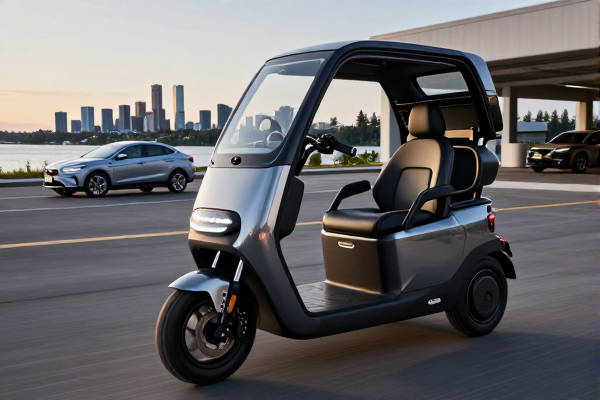
Manitoba is officially setting new boundaries for e-scooters, electric skateboards, hoverboards and self-balancing scooters, with a package of Highway Traffic Act amendments that will take effect in 2027. The province outlined the changes on its website, confirming that riders will have to be at least 16 years old, wear a properly fitted helmet, and keep their devices at or below 25 km/h (15.5 mph).
The rules apply to what Manitoba classifies as personal electric vehicles — motorized kick scooters, e-skateboards, e-unicycles and two-wheeled self-balancing boards. Enforcement will rest with police and peace officers, who will be authorized to stop riders who fail to comply.
Here's what changes in 2027:
E-bikes are carved out of the rules. Because they are treated differently under the Highway Traffic Act, e-bikes will still be allowed on roads with speed limits above 50 km/h.
Transportation Minister Lisa Naylor said the province is responding to a visible trend: more Manitobans are using personal electric vehicles, and more of the people arriving in emergency rooms after crashes are minors. She pointed to a teenage e-scooter rider who was critically injured in a collision last month on Waverley Street in Winnipeg — exactly the kind of outcome the government wants to reduce. The legislation, Naylor said, is about preventing injuries, protecting kids, and making shared roads safer for everyone.
The move places Manitoba alongside a growing number of jurisdictions that treat personal electric vehicles as street-legal machines with clear limits rather than unsupervised gadgets.
Morden, a southern Manitoba city, introduced its own e-scooter bylaws earlier this year. The local rules require helmets, allow only one rider per device, and keep scooters off sidewalks. Mayor Nancy Penner said the ordinance has functioned mostly as an "educational tool" — compliance has improved, helmet use is up, and only a handful of tickets have been issued since spring.
Morden's current rules lack an age floor and a speed cap, but Penner said that will be resolved when the provincial rules arrive. She predicted other municipalities will be relieved to have a consistent baseline rather than a patchwork of local laws.
"I think a lot of municipalities are finally saying thank you to the provincial government for finally stepping forward with some concrete guidelines," Penner said.
Winnipeg riders are reading the fine print with a mix of relief and frustration.
Rob Kristjansson, who moderates the E-Scooter Winnipeg Facebook group, said the province deserves credit for officially recognizing these vehicles as legitimate road users. But he questions why the speed cap is 25 km/h when he and many others typically ride at 32 km/h — the limit Manitoba already gives e-bikes. He called the 16-year-old minimum "arbitrary," noting that age limits don't always align with riding skill.
His bigger worry is the sidewalk ban. Winnipeg's cycling network is still patchy, he said, and some neighborhoods have few safe alternatives for a scooter rider. "It's not so much rules, but infrastructure that I think will really save the day," he said. Without better connected bike lanes and trails, he argued, the rules may discourage people from using low-carbon transport.
Eric Wilson, a Winnipeg father who has ridden e-scooters for three years, sees the package as overbearing. Wilson uses his scooter mainly for grocery runs and trail rides alongside his 13-year-old son, who received a new e-scooter in August. Under the incoming age limit, the boy won't be able to ride for several more years, and the family is weighing whether to keep the scooter or sell it.
Wilson worries the rules will punish the majority of considerate riders for the actions of a reckless few. He says sidewalk sharing already works when riders are aware of their surroundings — he slows down near pedestrians and rings a bell to announce himself, the same courtesy cyclists extend. "I feel like everybody that's riding an e-scooter is getting punished for the worst people that are out there," he said. If the rules make scooters impractical, he added, they may end up as e-waste in closets and garages.
For American readers tracking the micromobility debate, Manitoba's framework mirrors rules already common in many U.S. cities.
Most U.S. shared e-scooter systems cap speeds at about 15 mph — nearly identical to Manitoba's 25 km/h limit. Age minimums of 16 or 18 are standard. Sidewalk bans are widespread in downtown districts. Helmet laws are the biggest difference: some U.S. states require helmets only for minors, while Canadian provinces generally apply all-ages helmet rules for bicycles and increasingly for e-scooters.
The injury data explains the trend. The U.S. Consumer Product Safety Commission has estimated tens of thousands of e-scooter-related emergency room visits per year, with a sharp increase since 2017. The National Transportation Safety Board has also pressed local governments to treat micromobility as a genuine safety issue rather than a passing novelty. Manitoba's combination of an age floor, speed cap and helmet mandate follows the same logic: simple, enforceable rules that riders can learn quickly.
Because U.S. rules are fragmented — varying by state and even by city — Manitoba's provincewide approach offers a useful case study for American legislators weighing similar bills, particularly those in colder climates where micromobility seasonality is a factor.
The province has not yet published fine amounts or detailed enforcement guidance, so it remains unclear whether officers will start with warnings or move directly to tickets. Municipalities can still layer their own restrictions on top of the provincial rules, as Morden has shown.
For riders, the message is clear: 2027 is the deadline to adapt. That means checking whether the family scooter is compliant, buying a properly fitted helmet, and mapping routes that avoid sidewalks. For Wilson's son, it means a few more years of waiting before joining the traffic mix — and a decision about whether his new scooter stays or goes.