Browse

Log in / Register
 Share

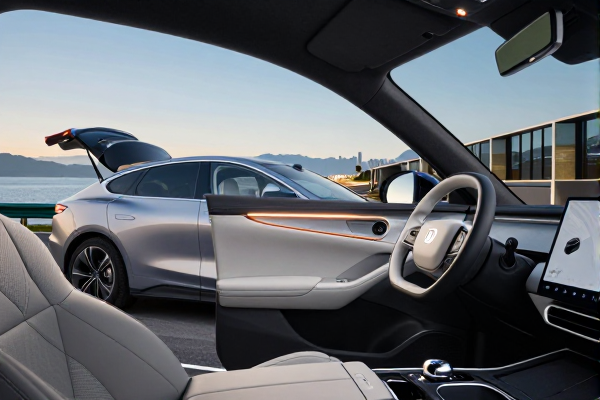
August 1, 2025 — Luxury automobile brands in the United States are rethinking their distribution playbook. The era of “more stores, more sales” is ending, replaced by a strategic pivot toward lean, high-quality networks. Tesla, Mercedes-Benz, BMW, and Lexus have all reduced their physical footprints in 2024–2025, prioritizing profit per store over total store count. This shift marks a fundamental change in how luxury automakers view retail—trading volume for value, and expansion for efficiency.
The trigger? A confluence of market forces: rising interest rates, shifting consumer behavior toward online purchasing, and the crushing cost of carrying oversized inventory. In the first half of 2025, U.S. new-vehicle sales grew only 1.2% year-over-year, while luxury brands saw a 3.5% decline, according to the National Automobile Dealers Association (NADA). Meanwhile, the average profit per new vehicle dropped to $2,100, down 18% from 2023. For dealers, the math is simple: too many rooftops dilute margins.
Tesla blazed this trail years ago. In 2021, it began closing its high-rent mall showrooms in cities like Los Angeles, New York, and Chicago, redirecting resources to service centers and online sales. By 2025, Tesla’s U.S. physical store count had fallen by 30% from its 2020 peak, yet its delivery efficiency and per‑store revenue climbed. The company now operates just 140 stores nationwide, down from over 200. CEO Elon Musk told investors in April 2025: “We don’t need a store on every corner. We need a store that delivers the best experience and the lowest cost.”
Mercedes-Benz is following suit. In late 2024, the German automaker announced a “retail premiumization” plan, aiming to reduce its 380 U.S. dealerships by 15% by 2027. The company is converting underperforming locations into pop-up lounges or service-only hubs, while channeling more sales through its direct-to-consumer platform, MB Drive. “We are moving from a quantity-driven network to a quality-driven network,” said Dimitris Psillakis, CEO of Mercedes-Benz USA, in a May 2025 interview. “Having 400 dealers does not automatically mean 400 satisfied customers. We want 300 dealers that are highly profitable and highly focused.”
BMW’s U.S. arm has taken a different but equally aggressive approach. Instead of shuttering stores outright, BMW is consolidating underperforming franchises into larger, “regional flagship” centers. In 2024, it merged 12 smaller dealerships in the Northeast into four mega-stores, each equipped with customer lounges, EV charging hubs, and dedicated service bays. The result: a 20% increase in customer satisfaction scores and a 12% rise in service revenue per store. “The old model of one dealer per zip code is dead,” said Sebastian Mackensen, president of BMW of North America, in a June 2025 press briefing. “The new model is about concentration, not dispersion.”
Lexus, the perennial leader in customer loyalty, is taking a hybrid path. It has cut its U.S. dealer count by 8% since 2023, but it has also invested heavily in renovating remaining stores to meet a new “Lexus Hospitality” standard. The brand now mandates that each store have a dedicated concierge, a complimentary coffee bar, and a loaner-vehicle fleet size at least 30% of its monthly sales volume. “We’d rather have 200 stores that are unforgettable than 300 that are forgettable,” said Lexus USA general manager Mike Tripp.
The shift is not limited to legacy brands. New entrants like Rivian and Lucid are learning from Tesla’s playbook. Rivian opened its first U.S. “service center” in 2022, but quickly realized that a few large, centralized hubs could serve more customers than dozens of small showrooms. By June 2025, Rivian had only 35 physical locations in the U.S., yet it delivered 28,000 vehicles in the second quarter—a record. “We don’t need a storefront on every Main Street,” a Rivian spokesperson told Automotive News. “We need a service center that can turn around a repair in 24 hours.”
The data supports the new direction. NADA’s 2025 mid-year report found that luxury dealers who reduced their store count in the past two years reported an average net profit margin of 3.8%, compared to 2.1% for those who maintained or expanded their network. “The leaner dealers are the healthier ones,” said NADA’s chief economist, Patrick Manzi. “They’re not chasing volume for volume’s sake. They’re chasing profitability, and that requires a different kind of store.”
This pivot is not a retreat—it is a recalibration. Luxury brands are recognizing that a smaller, more focused network can deliver better customer experiences, lower inventory carrying costs, and higher margins. They are also responding to a structural shift: 48% of luxury car buyers now research online and only visit a dealer after narrowing choices to two or three models, according to a 2025 J.D. Power study. In that environment, a vast network of identical stores becomes a liability, not an asset.
Critics warn that store closures might reduce access for rural or suburban buyers. But luxury brands are countering with mobile service vans, pop-up test‑drive events, and enhanced online trade‑in tools. “The goal is not to be everywhere physically,” said analyst Rebecca Lindland of Cars.com. “It’s to be everywhere digitally, and to have a physical presence where it truly matters—in high‑traffic, high‑affluence areas.”
The transformation is still in its early innings. By 2027, analysts expect the total number of luxury dealerships in the U.S. to drop by 10–15%, from roughly 3,200 today to 2,700–2,800. But the survivors will be stronger. They will be larger, more profitable, and more customer‑centric. As BMW’s Mackensen put it: “We are not shrinking. We are concentrating. And concentration is the only path to sustainable luxury.”
In the end, the new rule for luxury distribution is simple: better stores, not more stores. And for the first time in decades, the industry is finally following it.