Browse

Log in / Register
 Share

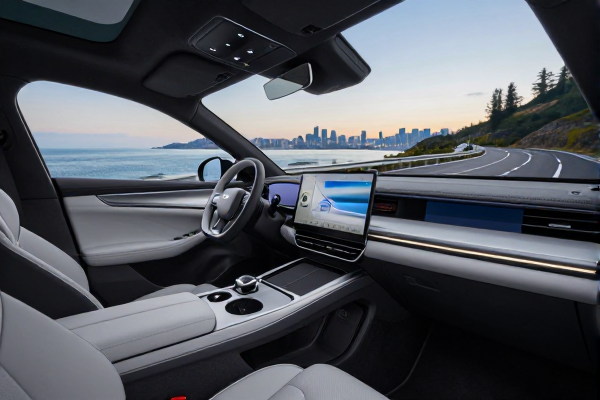
April 26, 2026 – Lucid Group today began rolling out Air UX 3.0 to the Lucid Air lineup, a major software overhaul that brings the interface design first introduced in the Gravity SUV to the sedan. The update is one of the largest over-the-air releases for the Air since the car launched, and it touches everything from the home screen to the driver-assistance menus.
Lucid has been quiet about the exact timing of UX 3.0 for the Air, but owners in North America started seeing the download appear in their vehicles this morning. The company says the rollout will continue in phases over the next several weeks, with European and Middle Eastern markets expected to follow after North American validation data comes back clean.
Net: this isn't a cosmetic refresh wrapped in a version number. Lucid built the Air's new software on the same framework as the Gravity's, which means the sedan now shares the same look, feel, and interaction logic as its bigger sibling.
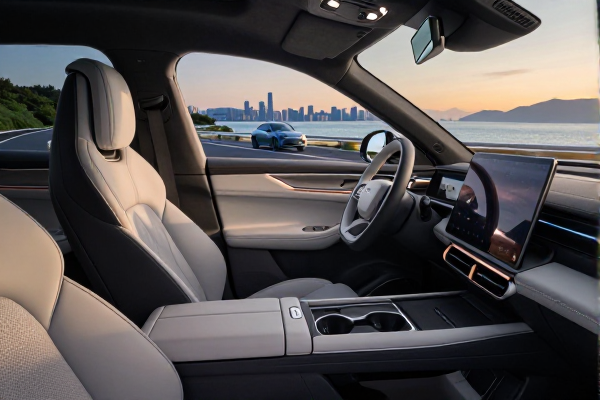
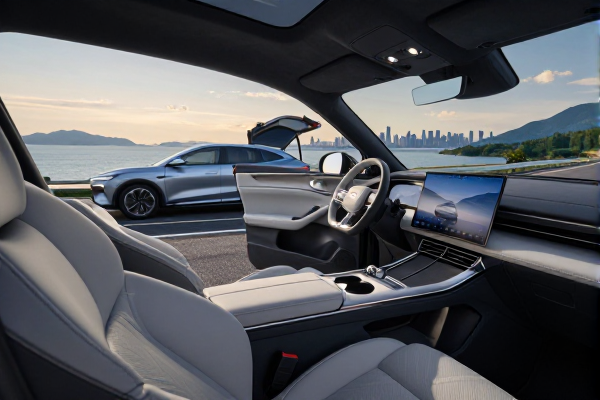
The most visible change is on the main touchscreen. The old "tile-and-card" layout is gone, replaced by the Gravity-style design that treats the entire display as a single surface. Widgets can now be grouped, resized, and moved around more freely, and the "glass" layer that sits beneath icons has been flattened to reduce visual noise.
Lucid also reworked the instrument cluster in UX 3.0. The driver's display now uses a cleaner typeface and a reorganized layout that puts speed, range, and turn-by-turn guidance closer together. That might sound minor, but long-haul drivers will notice that glance time is shorter — the text is bigger and the contrast is better in direct sunlight.
Navigation got a significant upgrade too. The maps engine now pulls in live traffic data more aggressively, and the route planner has been retuned to account for charging curves when picking stops. On a road trip in a Grand Touring model, the software will choose a slower charger if the battery state makes a faster one pointless — a nuance Lucid says is part of the new "range-aware routing" system.
Apple CarPlay and Android Auto also behave differently. The phone projection window no longer takes over the full center screen by default; instead, it stays contained in a floating panel that can be moved to one side. People who prefer a split view with the native controls will find that much easier to set up now.
Lucid's Dream Drive system also receives improvements in UX 3.0. The lane-centering logic has been retuned for highway curves, and the software now describes what the car is doing in plain language — "moving away from a slow vehicle" instead of "changing lanes." It sounds like a small detail, but for anyone still uneasy about hands-off driving, that clarity matters.
The parking assist interface is clearer as well. When the car is parallel parking, the screen shows a top-down drone view alongside a confidence indicator, so the driver can see where the system is struggling before it aborts.
No new hardware is required. All 2022-2026 Air models on Lucid's current electrical architecture are eligible, which means the company is leaning on the processing headroom built into the existing infotainment system.
Early owner reports on forums and social media are mostly positive, though the inevitable glitches have appeared. One recurring complaint: the update resets some personalization settings, including seat position and home-screen shortcuts. Lucid says the reset is a one-time migration behavior and that settings will persist in future updates.
Install time seems to be around 40 to 50 minutes, with most people leaving the car plugged in overnight to let it finish quietly. Unlike some manufacturers that force a reboot immediately, Lucid lets the driver schedule the install, so a commute isn't disrupted by an unwelcome software interruption.
That scheduling feature is another quiet signal of how Lucid thinks about OTA updates. The company has been conservative with push timelines, and it's deliberately rolling out UX 3.0 in tranches to catch issues before the update reaches the entire fleet.
The release of UX 3.0 closes a short but noticeable product gap. When the Gravity launched late last year with its redesigned interface, Air owners wondered when the older car would get the same software. Now that gap is gone, and Lucid's entire lineup is on a single software platform.
That consistency makes the company's engineering life simpler and less expensive. Instead of maintaining two separate interface codebases, Lucid can push new features once and have them land on both vehicles. That's exactly what rivals like Rivian and Tesla have done by keeping a uniform infotainment stack across their portfolios, and Lucid was under pressure to follow suit before the Air became a software orphan.
It also sets up the next phase of Lucid's product plan. The Gravity interface was designed to support larger screens and more complex in-car tasks, like routing to a trailer-capable charger or managing a three-row seating config. Porting that to the Air means the same code base will later plug into the forthcoming smaller SUV and the delayed Gravity variants.
There's a risk in treating a software update as if it were a new car, but UX 3.0 is genuinely transformative for the Air's daily driving experience. The cabin feels quieter, the interface feels faster, and the assistance systems are more communicative. It is, in a way, the strongest possible argument for buying an EV from a company that keeps improving its older cars.
Lucid hasn't said when the update will reach every Air, but the company's pattern suggests it'll be within a month or two. Until then, owners can watch for the notification in the vehicle's connectivity menu or in the Lucid app, where the update status now shows detailed progress information.
With UX 3.0, Lucid has done something many legacy automakers still struggle with: making an existing car feel new without demanding a trip to the dealer. The Air was already a strong luxury EV on dynamics and range. Now its digital brain catches up to the hardware, and that's a dangerous combination for every other sedan in this segment.