Browse

Log in / Register
 Share


Published: April 2, 2025
SHD Composites delivers seven innovative bio‑based, recycled, and repurposed material formats for Shell’s Triple 10 Challenge concept car, redefining what mass‑market electric vehicles can achieve without oversized batteries.
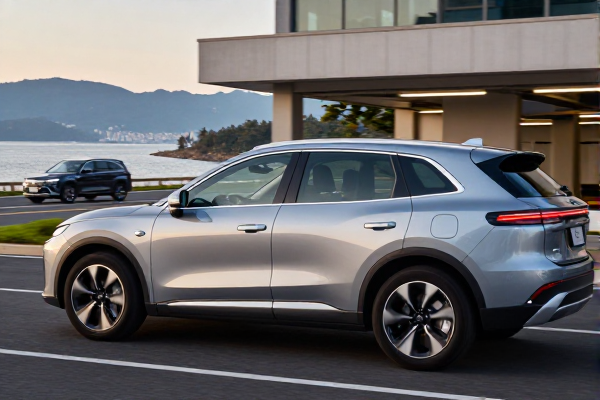
The U.K.-based specialist materials company SHD Composites (Sleaford, Lincolnshire, part of the Cambium group) has announced its role in the Shell Triple 10 Challenge—a proof‑of‑concept compact EV that targets three ambitious performance metrics: a sub‑10‑minute charge time, a 10 km/kWh energy economy, and a lifecycle carbon footprint of just 10 tonnes CO₂e.
Unlike many concept cars that rely on exotic, high‑cost materials, the Triple 10 Challenge vehicle is designed for mass production. SHD’s contribution focuses on lightweighting through advanced composite prepregs that incorporate significant shares of bio‑based, renewable, recycled, or repurposed raw materials. The result is a holistic reduction in embodied carbon—not just in the use phase, but from raw material extraction through manufacturing and end‑of‑life.
SHD reports that the vehicle uses seven distinct composite material formats developed specifically for this collaboration. These include:
Each material formulation was engineered to meet Shell’s demanding performance targets while minimising the cradle‑to‑gate carbon footprint. SHD’s novel resin chemistry also eliminates the need for refrigerated storage, cutting energy use in supply chains—a breakthrough that accelerates adoption for high‑volume production.
Shell’s Triple 10 concept centres on a paradigm shift: instead of fitting ever‑larger batteries to achieve range, the vehicle relies on aggressive lightweighting and advanced thermal management. Every kilogram saved directly reduces battery size requirements, enabling faster charging and lower total emissions.
SHD’s composites play a direct role in this equation. “The Triple 10 Challenge proves that material choice is not just about cost or weight—it’s about enabling a fundamentally different vehicle architecture,” said Nigel Blatherwick, Commercial Director of SHD Composites. “By supplying materials with high bio‑content and recycled content, we help Shell demonstrate that sustainable mass‑market EVs are possible today, not decades away.”
The company’s global manufacturing sites are already equipped to scale these solutions, Blatherwick noted, meaning the same low‑CO₂ prepregs could find their way into production vehicles within the next cycle.
Industry analysts have long pointed to the need for lighter vehicles to offset the weight of lithium‑ion battery packs. According to a 2024 report by the International Council on Clean Transportation, every 10% reduction in vehicle weight yields about 6–8% improvement in energy consumption for battery‑electric vehicles.
“The Triple 10 Challenge is one of the first public demonstrations where lightweight composites are not just a premium feature but a core enabler of sustainability targets,” commented Dr. Emily Park, a materials scientist at the University of Birmingham who was not involved in the project. “SHD’s approach—using multiple material formats with different bio‑based and recycled inputs—shows that the industry can move beyond ‘one‑size‑fits‑all’ carbon fibre.”
The Shell vehicle’s lifecycle target of 10 tonnes CO₂e includes raw material extraction, manufacturing, use for 200,000 km, and end‑of‑life. In contrast, a typical mid‑size internal combustion car emits around 24 tonnes over its lifetime; even many current EVs exceed 15 tonnes when battery production is included.
SHD and Shell have not disclosed a specific timeline for production, but both companies frame the Triple 10 as a “philosophy car”—one that inspires design rules for the next generation of affordable EVs. SHD’s material solutions are immediately applicable to other automotive platforms, including interior panels, seat structures, and closure panels.
“The tight development timeline forced us to advance our material formulations faster than usual,” Blatherwick added. “We now have a validated library of low‑CO₂ prepregs that can be offered to any OEM aiming to reduce carbon footprint without compromising performance.”
The Triple 10 Challenge concept car will be shown at select industry events in 2025, with Shell planning to release more technical details on thermal management and battery integration later this year.
About SHD Composites
SHD Composites, a Cambium company, specialises in developing and manufacturing advanced composite materials for automotive, aerospace, and industrial applications. Headquartered in Sleaford, U.K., the company operates global manufacturing sites and is known for its fast‑track development of novel resin systems and sustainable prepregs.
About Shell’s Triple 10 Challenge
The Triple 10 Challenge is a Shell initiative to prove that a compact, mass‑market EV can charge in under 10 minutes, achieve 10 km/kWh energy economy, and maintain a lifecycle carbon footprint of 10 tonnes CO₂e. The project combines lightweight composites, novel thermal management fluids, and high‑power charging infrastructure.