Browse

Log in / Register
 Share

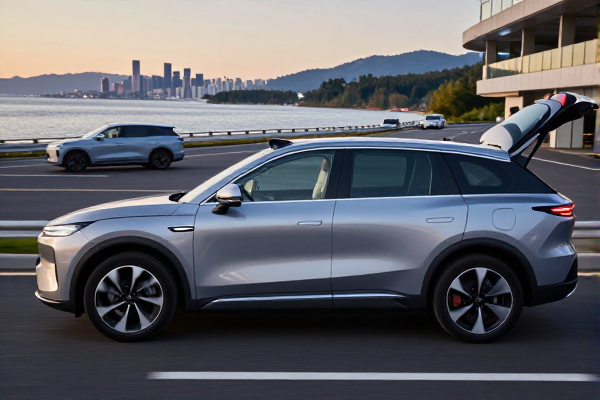
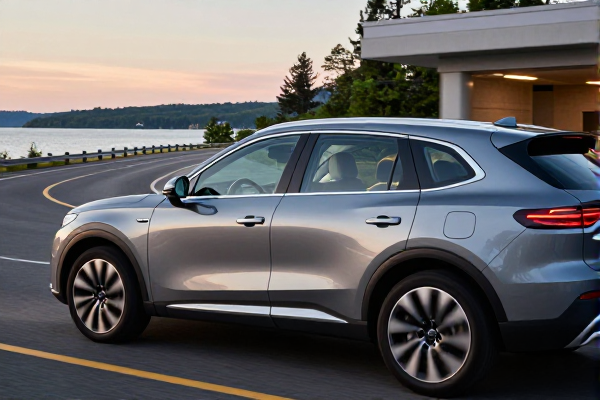
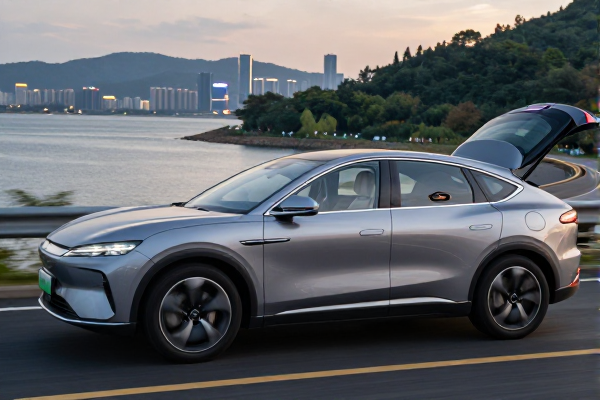
May 7, 2026 — Li Auto’s 2026 i6 is the first annual refresh of a model that has quietly become the company’s main revenue engine. Priced at ¥249,800 nationwide, with a limited-time launch price of ¥239,800, the five-seat EV now puts the automaker’s own Lianshan 5C battery and M100 chip into every configuration. That is the clearest signal yet that Li Auto is prepared to absorb short-term R&D costs in exchange for long-term scale.
Li Xiang, Li Auto’s chairman and CEO, framed the upgrade in unusually direct terms. A hit product, he said, is not something a company plans in advance; it is the market’s response after a company creates real value for users. He also acknowledged that even the most successful models need improvement, describing the 2026 i6 as the team’s answer to owner feedback.
The numbers help explain why Li Auto is putting so much weight on this car. The i6 has only been on sale for a little over a year, but cumulative deliveries are close to 200,000 units. Its net promoter score stands at 80.2, a strong figure for a mass-market electric SUV.
Group deliveries, however, tell a more complicated story. For the first three quarters of 2026, Li Auto delivered 293,400 vehicles, a 1.25% year-on-year decline. The i6 contributed roughly 160,000 of those units—more than half of the total. In short, the i6 is doing the heavy lifting while the rest of the lineup works through its own transition.
The most significant mechanical change is under the body. The 2026 i6 comes standard with Li Auto’s self-developed Lianshan 5C battery, now rated at 96 kWh. That lifts CLTC range from 720 km to 780 km on the rear-wheel-drive version, and from 660 km to 710 km on the all-wheel-drive version.
Charging performance remains a core selling point. Li Auto says i6 owners have used its supercharging network more than 2.8 million times over the past year, drawing more than 120 million kWh in total. The average single 5C charging session ends in less than 14 minutes—a useful number for shoppers comparing urban EV convenience.
The intelligence package also gets a generational step. The M100 chip, developed in-house, is now standard on every i6 trim. Li Auto’s driver-assist system is set to receive VLA 2.5 through OTA 9.2, which uses a self-developed 3D ViT visual perception architecture. The company says this improves how the vehicle reads road conditions and anticipates the behavior of other road users, with parking behavior updated as well.
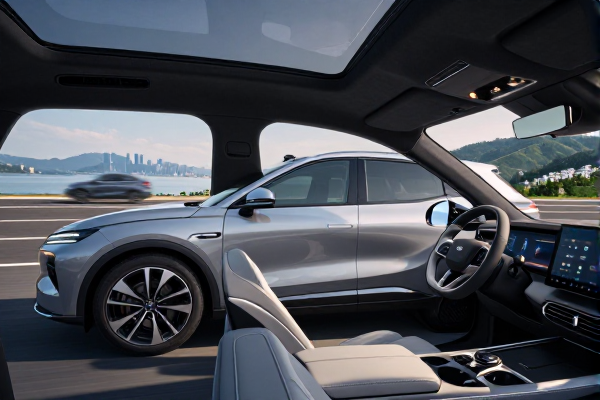
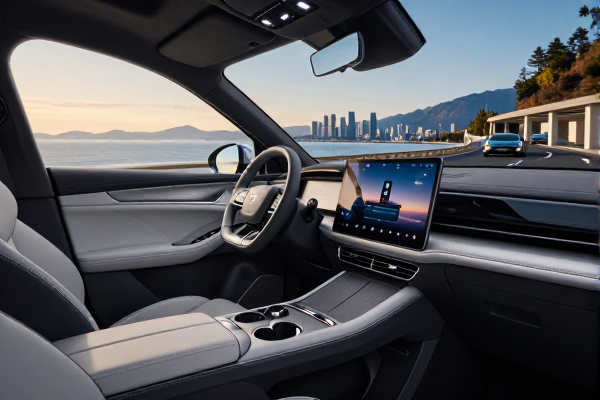
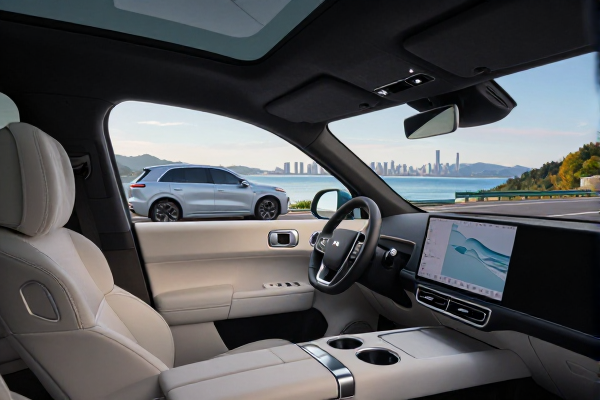
Inside the cabin, the standard equipment list includes the Qualcomm Snapdragon 8797 cockpit chip and a 29-inch 6K panoramic front screen. Buyers can add a 21-inch 4K second-row entertainment display. With the launch, cockpits running the 8797 chip gain support for CarPlay, Huawei HiCar, and Carlink phone-to-car connectivity.
Li Auto has also focused on ride quality and occupant protection. The 2026 i6 comes standard with dual-chamber magic-carpet air suspension and a fully aluminum front double-wishbone and rear five-link suspension setup, paired with continuously variable damping shock absorbers.
The body is built with high-strength steel and aluminum alloy accounting for 85% of the body-in-white, and torsional stiffness exceeds 52,000 N·m/°. The front row gets a three-chamber far-side airbag system that protects the head, chest, and arms separately.
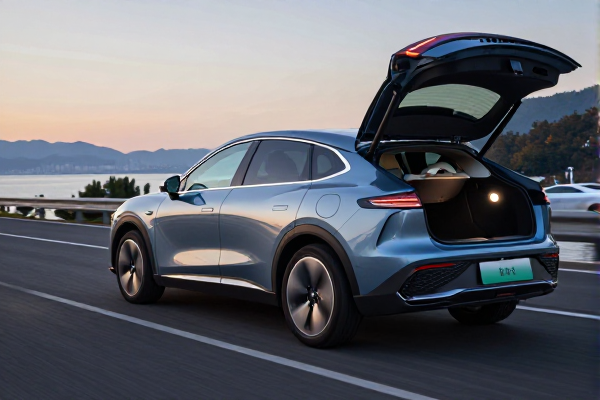
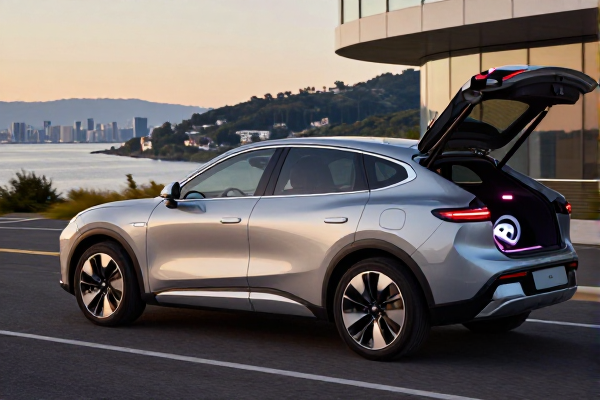
The comfort list has been expanded too. Front-row occupants now get two full-size zero-gravity seats with a 150-degree recline angle and 16-way power adjustment. The second-row “queen seat” can now recline up to 140 degrees, up from 125 degrees. The center armrest in the back gains a 67W Type-C fast-charging port, while the in-car refrigerator now has an electric door and can freeze down to -6 degrees Celsius. The electric front trunk responds to voice commands and a double-tap opening gesture.
Two new exterior colors—Magnetic Blue and Windbell Purple—bring the total palette to six.
The decision to make a self-developed battery and self-developed chip standard across the lineup is unusual in the EV industry. Most automakers reserve their newest in-house technology for top trims or premium derivatives. Li Auto is effectively using the i6 to spread the cost of its most expensive new components over the largest possible volume base.
Li Auto President Ma Donghui has explained the change in R&D logic. In the past, development costs were hidden inside supplier quotes. Now Li Auto carries those costs directly on its own balance sheet. The M100 chip has already moved from the L8 and L6 to the i6, covering both extended-range and pure-electric product lines. That means multiple models share the same technology foundation, and the R&D burden is distributed across much higher volumes.
The chip business has also drawn outside capital. In mid-October, Li Auto announced that its affiliate Shanghai Maho Xin Technology, focused on chips and domain controllers, signed an equity financing agreement worth 1.625 billion yuan, roughly $243.8 million. The Li Auto system contributed 1 billion yuan, while external investors—including Hangzhou Jingtao, BlueRun Ventures, Huaye Tiancheng, and MiraclePlus—put in a combined 625 million yuan. If all related subscription rights are exercised, the post-investment valuation would reach 17.1 billion yuan, or about $2.6 billion.
The battery side is paired with a new customer guarantee. Li Auto now says that if a self-developed battery catches fire because of a quality defect and the vehicle reaches the scrapping standard, the company will compensate owners with a new car of equivalent configuration. If the fire results from a collision or underbody scrape and the car is scrapped, Li Auto will cover the difference between the vehicle damage insurance payout and the actual insurance coverage.
The i6’s success has not fully solved Li Auto’s broader financial pressure. In 2025, the company delivered 406,300 vehicles, down 18.81% year on year. Revenue fell 22.3% to 112.3 billion yuan, and net profit dropped 85.8% to 1.1 billion yuan.
The trend continued into the first half of 2026, when revenue slipped 13.4% year on year to 48.65 billion yuan. The company recorded a net loss of 3.981 billion yuan, compared with a profit of 1.744 billion yuan in the same period a year earlier. Vehicle gross margin fell to 7.8% from 19.6%, while overall gross margin dropped to 9.5% from 20.3%.
Part of the margin pressure comes from product mix. According to data from Jielanlu, Li Auto’s average price per vehicle in the first half of 2026 was 269,000 yuan, down 37,000 yuan year on year. Lower-priced models now carry a larger share of total volume.
There are early signs of stabilization, though. Li Auto delivered 100,000 vehicles in the third quarter of 2026, up 7.24% year on year and above the 98,300 units delivered in the second quarter. That marked the first meaningful reversal of the earlier downward trend.
The i6’s next growth opportunity is overseas. At the Paris auto show, Li Auto announced that the European version, called the Li 6, will begin sales and deliveries in the Netherlands and Norway in the first quarter of 2027. That is later than the earlier target of the fourth quarter of 2026.
The European model gets a retuned chassis, software integrated with local navigation and CarPlay, and a dedicated parts distribution center in the Netherlands that is scheduled to open in December 2026. Li Xiang has said he sees real demand in Europe for vehicles suited to narrow old-city streets, limited parking space, and long cross-border travel. In his view, the i6’s size, interior space, and intelligence make it a better fit than some larger SUVs.
On delivery timing, Li Auto has prepared a limited batch of ready-to-deliver launch vehicles, with delivery possible in as little as one to two weeks. Custom-ordered cars will enter production after orders are locked, with deliveries starting three weeks later.
The 2026 i6 launch price is limited by time and quantity, which means shoppers deciding early benefit from the discount. For Li Auto, the car is the centerpiece of its effort to prove that self-developed hardware can be a growth engine rather than a