Browse

Log in / Register
 Share
Share

Kia’s second PBV model, the PV7, is targeting the heart of the U.S. electric commercial van market — the Ford E-Transit and Mercedes eSprinter — with a modular design that promises flexibility and aggressive pricing.
Updated April 8, 2025 — Kia has released the first official teaser images of the 2027 Kia PV7, a large electric van that will slot above the recently launched PV5 in the company’s “Platform Beyond Vehicle” (PBV) lineup. The PV7 is scheduled for a full unveiling at the IAA Transportation show in Hannover, Germany, on September 14, 2025, with U.S. availability expected in late 2026 or early 2027 as a 2027 model.
The PV7 is the second model in Kia’s PBV family, which is built on a dedicated commercial EV platform called E-GMP.S — a modified version of Hyundai and Kia’s passenger-car electric architecture. While the PV5 competes with the Volkswagen ID. Buzz, Toyota Hiace, and Renault Trafic in global markets, the larger PV7 will directly challenge the Ford E-Transit, Mercedes eSprinter, and Ram ProMaster EV in the U.S., where electric cargo vans are gaining traction among fleet operators and delivery services.
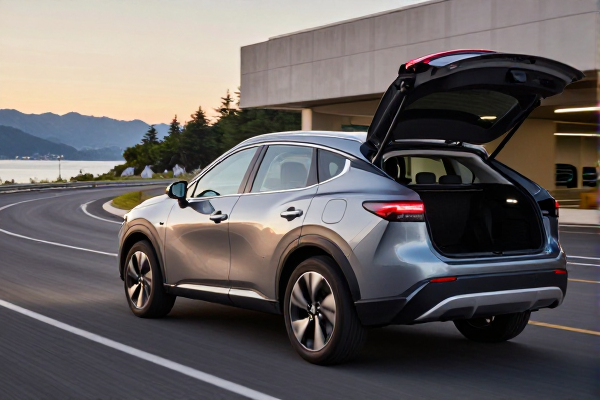
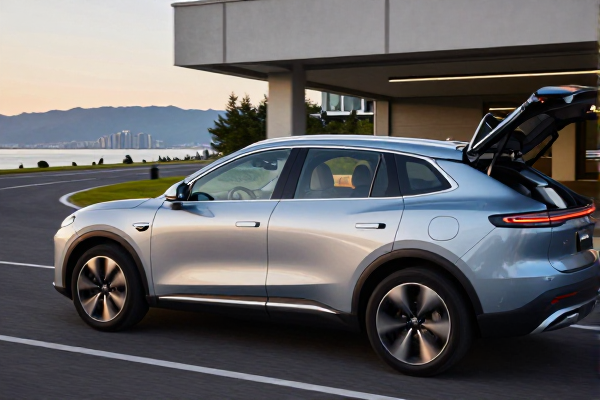
Kia’s PBV strategy revolves around a shared front section — including the motor, battery, and cockpit — paired with a modular rear that can be configured for cargo, passenger, or specialty uses. The PV7 teaser images show two distinct versions: a white cargo van with blanked side windows and a blue passenger van with windows and a car-like upward-opening tailgate. The design language is robotic and rounded, echoing the PV5 but with a longer wheelbase and larger proportions.
“The PBV concept allows Kia to efficiently produce a wide range of body styles from a single platform,” said a Kia spokesperson in a recent investor briefing. “The PV7 will be the largest and most capable van in our lineup, designed to handle the most demanding commercial workloads.”
In Australia, where the PV5 launched in Long Range trim with a 71kWh battery, a 120kW (161 hp) front motor, and a WLTP range of 416 km (258 miles), the PV7 is expected to borrow the same powertrain but with critical upgrades. A larger battery pack — possibly 80-100 kWh — is anticipated to maintain competitive range in a heavier vehicle. Kia’s recent patents also suggest an all-wheel-drive (AWD) variant could be offered, using a second motor on the rear axle to improve traction and towing capacity.
For context, the current Ford E-Transit offers a 68kWh usable battery and a 126-mile EPA range (2025 model), while the Mercedes eSprinter delivers up to 113 kWh and an EPA range of about 273 miles. To compete, Kia will likely target an EPA range of 250+ miles for the PV7, with a base price below $50,000 — undercutting the E-Transit’s starting MSRP of $51,095 (before incentives). The PV5’s pricing in Australia ($55,990 AUD) is already significantly lower than the Renault Kangoo ($61,990 AUD), suggesting Kia will repeat that aggressive strategy in the U.S.
The official images, shared by Kia’s global media site, show only the front and rear of the PV7, but they confirm the van’s boxy, upright silhouette with a short hood and large windshield. The cargo version features a blanked rear door with a high-mounted stoplight, while the passenger van gets a liftgate that opens upward — a departure from the traditional barn doors found on many commercial vans.
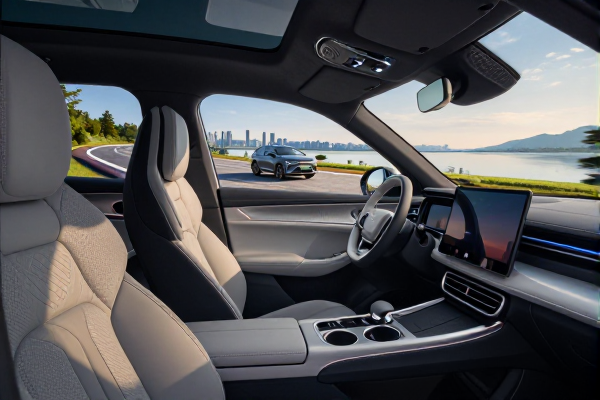
Inside, Kia hasn’t provided details, but the PV5’s interior — with a wide dashboard, digital instrument cluster, and a large central touchscreen — is likely to be carried over, possibly with a third seat in the front row. The PBV platform also enables “drive-through” access between the cabin and cargo area, a feature fleet operators value for quick loading.
The U.S. commercial electric van market is heating up. Ford’s E-Transit received a range boost for 2025, and Mercedes is expanding eSprinter availability. Ram’s ProMaster EV, based on the eSprinter, is also arriving. Kia’s PV7 enters a crowded field, but its modular architecture and anticipated lower price could give it a distinct advantage.
Industry analysts at Cox Automotive note that medium-duty electric vans are the fastest-growing segment in commercial EV sales, with 2024 U.S. registrations up 47% year-over-year. “Kia’s timing is good,” said analyst Rebecca Lindland. “The PV7 offers a fresh approach with its modular design, which can reduce total cost of ownership for fle