Browse

Log in / Register
 Share

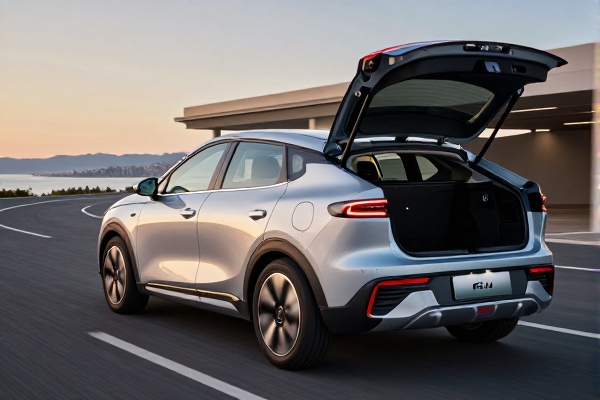
As of May 24, 2025, Kia's EV4 hatchback — now rolling out across European markets — arrives with a deliberately simple recipe under the skin. Just two versions are offered, and both share the same front-mounted 150 kW (204 hp) electric motor. The headline numbers: up to 625 km (388 miles) of WLTP range, 128 kW DC fast charging on the range-topping Earth trim, and a 0-100 km/h (0-62 mph) sprint in the mid-seven-second range.
US buyers won't see the EV4 in showrooms until roughly 2026, but the powertrain details are already worth studying. Below is the full breakdown, plus what is likely to change for North American specification.
Kia has kept the initial EV4 hatchback offering simple — no all-wheel-drive option, no rear-drive variant and no dual-motor performance version in the first batch of trims. Every EV4 hatchback uses a permanent-magnet electric motor driving the front wheels through a single-speed gearbox. The only real choice is the battery, and even that is close:
Both versions are effectively the same powertrain, which keeps the EV4's spec sheet easy to digest. The trade-off is that the base trim's disclosure is thinner: Kia has published charging specs, heat-pump availability, curb weight and towing capacity for the Earth trim only.
For US buyers, the more significant story is the absence of an all-wheel-drive option. Rivals such as the Tesla Model 3 and Hyundai Ioniq 6 offer dual-motor versions; the EV4 goes the opposite direction, betting on efficiency and price over traction and straight-line drama. Kia's larger EV6 remains the AWD choice in the lineup.
The EV4 is not a performance EV, and Kia is not pretending otherwise. The acceleration figures trail the quickest cars in the segment:
The base version is the quicker of the two on paper, while the Earth counters with better consumption: 14.0 kWh/100 km versus 14.6 kWh/100 km. In US terms, that translates to roughly 150 MPGe and 144 MPGe, respectively — respectable numbers for a compact EV.
Kia caps the top speed at 106 mph, a familiar move across its EV lineup; the priority is range stability at highway speeds rather than unlimited performance.
Both versions share the same WLTP range certificate: 625 km, or about 388 miles. That is a strong showing on the European test cycle and enough to rank near the top of the compact EV class. US EPA numbers will land lower; Kia's WLTP-to-EPA conversion typically reduces range by 15-20 percent, pointing to an EPA rating in the 310-330 mile band once certification is complete.
For the Earth trim, the official data sheet lists:
A 128 kW peak looks modest next to the 350 kW chargers in North America, but the charging curve matters more than the peak. With an 81 kWh pack, a 10-80% top-up should take roughly 30 minutes, which is workable for road trips. The standard heat pump on the Earth trim is a genuine plus for winter range. The base version's charging figures were not published in the initial data.
Curb weight on the Earth trim is 1,896 kg (4,180 lb) — right around average for its class. Power-to-weight works out to 79.1 kW per metric ton, which is unremarkable but fits a car designed around efficiency, not acceleration.
The more interesting number is towing: the EV4 hatchback is rated for a braked trailer up to 1,000 kg (2,205 lb). Towing remains rare among compact EVs, so the EV4 gains practical points over rivals such as the Model 3 and Ioniq 6, which offer no comparable rating.
The base trim's weight and towing specifications have not been released yet.
Segment data from Autohled's database — covering 98 comparable lower-medium-class EVs — shows the EV4 running slightly behind the field in power and power-to-weight:
| Parameter | Kia EV4 (Earth) | Segment average |
|---|---|---|
| Power | 150 kW (204 hp) | 163.5 kW (219 hp) |
| Curb weight | 1,896 kg (4,180 lb) | 1,887 kg (4,160 lb) |
| Power-to-weight | 79.1 kW/t | 85.4 kW/t |
The pattern is consistent: the EV4 trades horsepower for range and efficiency. It will not out-drag a Model 3 or an Ioniq 6, but its consumption is competitive, and a 388-mile WLTP range paired with a half-hour fast-charge window covers most real-world use cases.
European buyers get a data point US shoppers do not: Germany's TÜV inspection service publishes annual breakdown statistics based on millions of real-world vehicle inspections. The latest TÜV report ranks Kia 13th out of 14 brands, with a 28.3% defect rate across its tested sample.
Two caveats put that figure in perspective. TÜV rates European-market vehicles, which can differ from US-built or Mexico-built examples such as the EV4. And the brand-level score blends gasoline, diesel and electric models, so it does not isolate EV-specific reliability. Kia's US warranty package — 10 years or 100,000 miles on the powertrain and the battery — remains one of the strongest in the industry and carries over to the EV4.
As of late May 2025, Kia has confirmed the EV4 for the US market, with assembly planned at its Pesquería plant near Monterrey, Mexico. The plant location matters for two reasons.
First, the $7,500 federal tax credit. Final assembly in North America is one of the IRS eligibility checkpoints, and a Mexican-built EV clears that hurdle; whether the EV4 qualifies in full will also depend on battery component and critical-mineral sourcing rules, which Kia has not detailed for this model.
Second, pricing. Mexico-built EVs generally carry lower transaction prices than their Korean-built counterparts. Expect the EV4 hatchback to start in the mid-$30,000 range, undercutting the EV6 and creating clear separation in Kia's EV portfolio.
Charging hardware could also be revised for North America. The 128 kW peak is serviceable but conservative for 2026, and Kia may recalibrate the battery or charging curve during EPA certification. The heat pump, standard on the Earth trim, will be welcome in cold-weather states.
The Kia EV4 hatchback makes a deliberate powertrain bet: one motor, two nearly identical battery packs, front-drive only, and a heavy emphasis on range and efficiency. It will not win acceleration comparisons, and the 128 kW charging peak is conservative, but the combination of 388 miles of WLTP range, real towing capability and a standard heat pump is a practical pitch for a compact EV. The US version — Mexican-built, potentially tax-credit-eligible and priced below the EV6 — could make the wait until 2026 worthwhile.