Browse

Log in / Register
 Share


Two distinctly different electrified vehicles are heading to India in the closing months of 2026. JSW Motors will show its hand first, with the Combat plug-in hybrid SUV making its official debut on December 4. By contrast, BYD's premium brand DENZA is slated to arrive in November 2026, with the luxury D9 MPV widely expected to lead the charge.
As of Dec. 24, 2025, neither company has locked down India-specific pricing, variant details, or final specifications. Official teasers and early reports, however, point to two products with almost nothing in common beyond their electrified powertrains.
JSW Motors is launching its passenger-vehicle business with a product borrowed from Chery's international lineup. The Combat is essentially the Jetour T2, re-engineered and rebadged for the Indian market, with local touches added by JSW.
The company has confirmed that the Combat will be assembled at its Chhatrapati Sambhajinagar plant in Maharashtra. That local-assembly decision matters for pricing, localization, and the brand's long-term manufacturing plans in India.
The Combat deliberately avoids the smooth, urban-crossover look that dominates Indian showrooms. Its body follows the Jetour T2's blocky, off-road-inspired design: upright nose, flat roofline, pronounced roof rails, high ground clearance, and a rear-mounted spare wheel.
It reads as an adventure vehicle rather than a commuter. Buyers who prefer their SUVs to look capable may find the styling refreshing. JSW has hinted at its own design adjustments, though the extent of those changes has not been revealed.
Where many competitors push full-electric powertrains, JSW is choosing a middle path. The Combat pairs a 1.5-litre turbo-petrol engine with two electric motors and an 18.4kWh battery pack, using a 3-speed dedicated hybrid transmission to manage the power delivery.
| Parameter | Reported spec |
|---|---|
| Engine | 1.5L turbo-petrol |
| Battery | 18.4kWh |
| Combined power | 360hp |
| Combined torque | 610Nm |
| Electric-only range | Up to 90km (NEDC) |
| Combined range | Up to 1,100km (claimed) |
The logic is simple: short city trips can run on battery power alone, while the petrol engine handles longer highway stretches or recharges the battery when needed. That flexibility could convince buyers who want an electric driving experience without relying on charging infrastructure. The 1,100km combined figure is based on international test cycles, though, so Indian-spec numbers will likely differ. Official ARAI-certified figures are still pending.
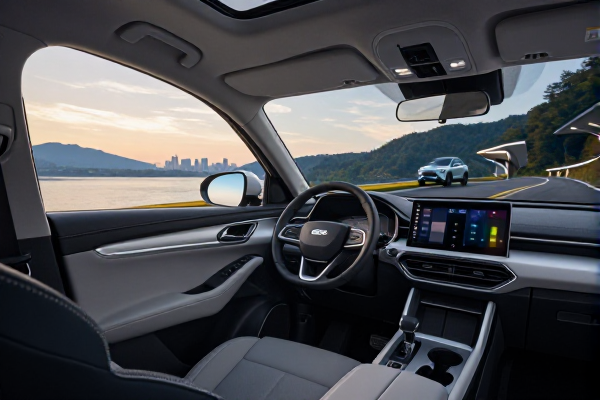
Inside, the Combat is expected to feature a 15.6-inch touchscreen infotainment system, supported by a 540-degree surround-view camera that includes a view underneath the vehicle. Level 2 ADAS is also anticipated, putting the SUV on par with current segment rivals regarding driver-assistance features.
JSW has yet to specify which features will be standard and which will be tiered across variants. That distinction will matter when buyers start comparing equipment against similarly priced rivals.
Available reports put the Combat's ex-showroom price in the ₹40 lakh to ₹50 lakh range. It is a demanding bracket, filled with established hybrid and premium offerings. As a newcomer, the Combat will need to justify its price through powertrain flexibility and equipment rather than heritage. JSW's final pricing will ultimately determine whether the SUV becomes a niche option or a serious contender.
DENZA occupies a distinct position within BYD's brand portfolio. It does not chase volume; it targets affluent buyers looking for a battery-electric vehicle with a genuinely upscale cabin.
The D9 is the most likely first model for India. Globally, it is offered in both full-electric and plug-in hybrid forms, but India is expected to receive only the electric version.
The international-spec D9 EV uses a 103.36kWh BYD Blade battery. The single-motor, front-wheel-drive model claims up to 520km of WLTP range, while the dual-motor all-wheel-drive version manages around 480km. DC fast charging supports up to 200kW, limiting recharge time on long journeys.
It remains unclear whether the India-bound version will retain the same battery and charging capabilities. Homologation requirements, import strategy, and local market positioning could all influence the final specifications.
The D9's strongest appeal is its second row. International models include captain-style seats with powered adjustment, heating, ventilation, and massage, plus rear entertainment displays and multi-zone climate control. If these features are carried over, the D9 will challenge the Toyota Vellfire, Lexus LM, and MG M9 in the luxury MPV segment.
The tall, upright body provides generous space across all three rows. For chauffeured buyers, that combination of comfort and space can be the deciding factor.
According to reports, the D9 will likely be priced between ₹80 lakh and ₹1 crore ex-showroom. That puts it in direct competition with the MG M9 and traditional luxury MPVs, with one distinction: the D9 is the only pure EV in that group, at least for now.
Final pricing, warranty coverage, charging support, and dealership reach will all influence its success. A luxury electric MPV without solid after-sales infrastructure will struggle, no matter how polished the cabin is.
The Combat and the D9 approach India's EV transition from opposite directions. JSW is betting on a hybrid stepping stone that offers daily EV driving without demanding a full commitment to charging infrastructure. DENZA is betting that premium EV buyers will prioritize comfort and status over range concerns.
These are small segments in India today. The plug-in hybrid category is barely developed, and luxury electric MPVs are even rarer. Still, both vehicles fill gaps that currently have few credible alternatives.
This pair of launches is significant for global auto industry watchers as well. DENZA's India entry is a notable data point in BYD's worldwide expansion strategy. India remains one of the few large auto markets where Chinese EV makers face significant friction, partly due to stricter investment scrutiny. By launching its premium brand first rather than leading with budget models, BYD is signaling that it sees an opening at the high end of the market, where brand image matters more than low price.
There is also a fascinating competitive wrinkle. The D9 will square off against the MG M9, another Chinese-origin MPV already sold in India. The result is two Chinese-owned brands fighting over the same small but wealthy customer segment—and their success or failure could influence how future Chinese investments in the Indian auto sector are perceived.
The JSW Combat, meanwhile, is a test of India's appetite for hybrids. If the price is right and local assembly builds confidence, the SUV could encourage more manufacturers to treat plug-in hybrids as a viable bridge to full electrification instead of skipping straight to EVs.
Neither launch is a certain success, but both bring something genuinely new. The Combat offers a rugged plug-in hybrid SUV with a distinct design at a mainstream-premium price point. The D9 delivers a battery-electric luxury MPV with an exceptional second row, aimed squarely at chauffeured buyers.
More concrete answers will arrive over the coming months. JSW's December 4 event will clarify the Combat's final specifications and pricing, and DENZA's timeline will determine whether the D9 indeed arrives by November next year. Until then, the potential is clear—but the final call belongs to buyers who will weigh real-world efficiency, after-sales support, charging access, and resale value.