Browse

Log in / Register
 Share

April 10, 2025
A Chinese SUV brand that most American drivers have never heard of just cleared a key hurdle on the road to Western showrooms. Jetour—Chery Automobile's value-oriented sub-brand—has received approval in Australia for two new models, the T1 and T2. That doesn't mean Jetour is coming to U.S. dealerships anytime soon. But it is another reminder that China's export wave keeps moving closer to every major market.
In the world of global automotive expansion, right-hand-drive markets like Australia are often test beds for brands looking to prove themselves. Australian government type-approval records show the T1 and T2 are now cleared for local sale, which is normally one of the last checks before a manufacturer can begin marketing vehicles to dealers and buyers.
The approval also reveals key powertrain and dimension details for two models that will attempt to take on some of the most crowded SUV segments in the world. If the brand can make headway in Australia, it gains a stronger base for future exports to other right-hand-drive countries—and experience that might later feed into a possible U.S. strategy.
For now, Jetour has not signed on to American distribution, and the homologation process would be entirely different in the United States. But the global pattern is clear: Chery is methodically building a multinational presence, one market at a time.
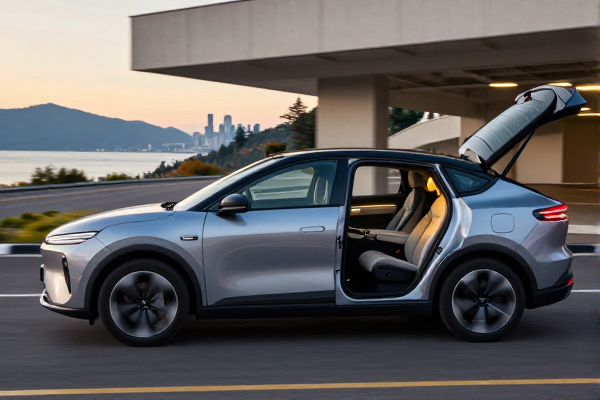
Jetour's first entry is the T1, a midsize SUV that sits a little larger than the Toyota RAV4. It measures 4,700 mm (about 185 inches) long, 1,967 mm (77 inches) wide and 1,840 mm (72 inches) tall, with a 2,800-mm (110-inch) wheelbase. Those dimensions leave a slightly bigger cabin and cargo area than the RAV4, positioning the T1 as a family-minded alternative.
Two powertrains appear in the Australian approval documents. The base engine is a 2.0-liter turbocharged four-cylinder gasoline unit making 180 kW, or approximately 241 horsepower, connected to a seven-speed automatic transmission. Jetour is reportedly leaving the 1.5-liter turbo gasoline engine behind in China—at least for the non-hybrid T1—choosing instead to launch with stronger standard power.
The more interesting option is a plug-in hybrid setup that pairs a 1.5-liter turbo gas engine with electric motors. In front-wheel-drive form, total output comes to 255 kW (341 hp). Go with the all-wheel-drive version, and the number jumps to a substantial 430 kW (576 hp). That combination of power and an expected low starting price could make the T1 a genuinely disruptive product.
Jetour hasn't yet detailed the T1's battery capacity, standard equipment list or exact local trim lineup. Those specifics are expected closer to launch, which remains on track for 2027.
The second approved model is the T2, a larger, boxy SUV aimed squarely at buyers who want off-road capability without moving to a ladder-frame 4x4. At 4,827 mm (190 inches) long, the T2 is roughly the same size as a Kia Sorento or a BYD Sealion 6, though its styling leans more toward the rugged look popularized by GWM's Tank line and the upcoming BYD Ti7. The Ti7 name is already trademarked in Australia, according to local records.
Mechanically, the T2 uses a 1.5-liter turbo-four with just 105 kW (141 hp) from its gas engine. The real muscle comes from three electric motors, lifting combined system output to an eye-catching 445 kW (597 hp). The T2 also gets an electric four-wheel-drive system, which helps distribute torque precisely to each wheel. Even though it sits on a monocoque, car-derived chassis, that powertrain layout gives it serious off-road potential in slippery or uneven terrain.
The T2 has just been refreshed in China with two new battery options: 27 kWh and 45 kWh. Official Chinese CLTC ratings put electric-only range at 140 km (87 miles) and 251 km (156 miles), respectively. The previous generation used 18 kWh, 27 kWh and 43 kWh packs, with a maximum WLTP-rated range of 161 km (100 miles).
Those figures are not directly comparable to U.S. EPA numbers. China's CLTC cycle tends to be more generous than WLTP, and EPA tests are even stricter. If the T2 ever reached American roads, real-world electric range would almost certainly fall short of those official numbers. But for an adventure-oriented SUV, even 100 miles of EV range might be enough to cover daily commutes without burning fuel.
The Australian approval paperwork does not show which battery pack the T2 will use in right-hand-drive form. That detail is likely to be clarified before its 2027 arrival.
Jetour's pricing strategy is one of the biggest reasons to keep an eye on the brand. In China, the T1 starts at around 110,000 yuan, which works out to roughly $15,000 at current exchange rates. The T2 begins at approximately 140,000 yuan, or about $20,000. Even with taxes, shipping and other costs, that kind of pricing makes many Western SUVs look expensive.
According to earlier market details, Australian importers expect to add around 20 to 30 percent to the domestic Chinese price to cover compliance and freight. That would place the T1 in the $18,000 to $20,000 range and the T2 in the $24,000 to $26,000 range, depending on how exchange rates move and what equipment is included.
For context, the average new vehicle in the United States sells for close to $50,000. A compact SUV like the Toyota RAV4 starts roughly $30,000. The arrival of a 576-hp plug-in SUV from China at a much lower price would almost certainly reset buyer expectations—if it ever arrives.
Jetour's Australian push doesn't exist in a vacuum. China exported about 5.9 million vehicles in 2024, according to official customs figures, making it the world's largest car exporter. Brands like Chery, BYD and Geely are no longer content to sell only within their home market. They are carefully choosing countries where regulatory scrutiny is manageable, right-hand-drive conversion is feasible, and consumer demand for affordable electrified vehicles is growing.
Australia has become a favorite entry point for Chinese brands. The market is large enough to matter, yet not as politically complicated as the European Union or the United States. The fact that Jetour is willing to go through the costly process of homologating two distinct SUVs there suggests the brand is serious about selling in developed markets.
No, Jetour hasn't announced a U.S. launch. The Australian approval is not a secret back door to America. But the T1 and T2 are a preview of what's coming from an expanding Chinese car industry: value-packed electrified SUVs that challenge long-established brands on price and equipment.
For American consumers, the immediate takeaway is simple. Global competition is pushing automakers to make better, cheaper products. Jetour's next move won't decide that larger trend, but it's one more sign that the old rules of the auto market are changing.