Browse

Log in / Register
 Share


Published August 20, 2025
An American-built Jeep could soon be crossing into one of the world's most competitive auto markets. Stellantis has announced a ₹4,000 crore investment in India—roughly $480 million—along with a 12-model revival strategy called FaSTLAne 2030. Buried in the announcement: a teaser for a "premium D-segment pickup." Jeep's global lineup currently fields exactly one pickup, the Gladiator. If the clue fits, India will be getting a Toledo-built, Wrangler-based truck unlike anything sold there today.
The Stellantis group owns two brands in India, Jeep and Citroën, and neither has set the market on fire. Jeep sells the Compass, Meridian, Wrangler, and Grand Cherokee locally, but combined volume remains a tiny slice of India's passenger-vehicle pie. Citroën's small cars and SUVs have struggled to find buyers beyond a few metro markets. Together, the two brands account for barely a single percentage point of national sales.
The FaSTLAne 2030 plan is meant to fix that. The fresh capital injection covers new product development, localization of manufacturing, and a realigned dealer network. Stellantis India leadership has framed the program as a complete reset for local operations, combining Citroën's mass-market EVs at the bottom with premium, lifestyle-oriented Jeeps at the top.
Stellantis hasn't named the pickup outright in its India presentation. Instead, it described the model as a "premium D-segment pickup." Cross-reference that against the company's global portfolio, and one name jumps out: Jeep Gladiator.
The Gladiator shares its body-on-frame architecture with the Wrangler, seats five, and carries a five-foot cargo bed. It's a niche player even in the U.S., where midsize truck buyers mostly choose Toyota Tacoma or Ford Ranger. In India, where pickup sales are dominated by utilitarian workhorses, the Gladiator would be a category of one: a premium adventure machine with genuine American off-road credentials.
How it gets there matters. Import the truck as a fully built unit, and India's steep CBU tariffs—up to 100 percent—would inflate the price to absurd levels. Assemble it locally from knocked-down kits, and Jeep could fit the more affordable 2.0-liter turbo-petrol engine, giving dealers a fighting chance at a reasonable sticker.
The Gladiator wears its heritage openly. Seven-slot grille, round headlamps, exposed hinges, removable doors—none of it is trying to be subtle. The roof panels come off too, turning the truck into an open-air cruiser in minutes.
The front bumper is a chunky plastic piece that sticks out like a cowcatcher, with LED fog lamps embedded at the corners. It looks unapologetically utilitarian, and owners can swap it for an aftermarket steel bumper without a second thought.
At the rear, a bold Jeep logo sits on the tailgate, flanked by LED tail lamps. The bumper houses rear fog lights, reflectors, and parking sensors. One quirk that will be new to Indian buyers: there's no recessed step to climb into the bed. It's a five-foot box, small by local standards but plenty for a weekend's worth of camping gear.
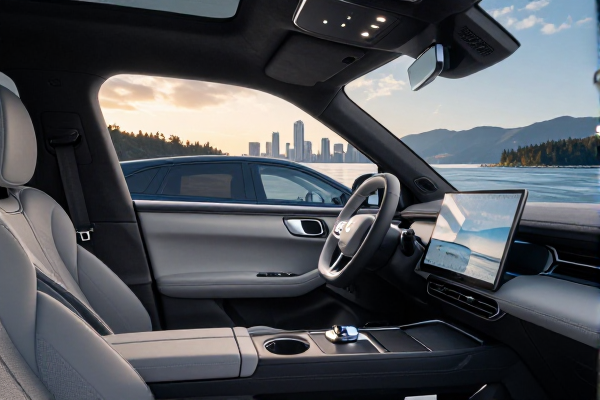
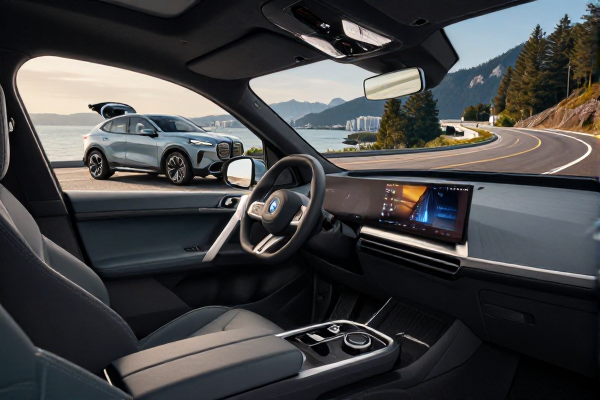
Inside, the Gladiator stays true to its workhorse ethos. Physical switches dominate the dashboard, a welcome change in an era when rivals bury every function inside a touchscreen. The center console does host a 12.3-inch infotainment display with wireless Android Auto and Apple CarPlay, so modern convenience isn't ignored.
Leatherette trim spreads across the dashboard and door panels, softening the Wrangler-derived cabin without making it luxurious. Space is fine for four adults, though the rear bench is upright and the floor is flat. This is a vehicle built for the trail, not the hotel valet.
Standard equipment is generous by any market's standards. Highlights include connected-car tech, a portable Bluetooth speaker that docks in the dash, heated front seats, heated steering wheel, powered front seats, dual-zone climate control, selectable drive modes, and an eight-speaker audio system.
Safety gear runs to ABS with EBD, electronic stability control, hill-descent control, multiple airbags, ADAS, and a roll-over mitigation system. That's a more complete package than most vehicles in India at any price point.
If Stellantis brings the Gladiator as a fully built import, Indian buyers get the same setup as Americans:
North American versions of the 3.6-liter Pentastar make 285 hp and 260 lb-ft, so there's no downgrade for export. The CKD route would likely substitute the 2.0-liter turbo-petrol used in global-market Wranglers, trimming both cost and import duty.
Payload is rated at 465 kg—call it 1,025 pounds. Towing capacity sits around 2 tonnes, or roughly 4,400 pounds, well short of the 7,000-pound maximum U.S. buyers can get with the optional tow package. The hardware underneath is the same strong frame; it's just certified differently depending on market.
India's tax structure will dictate the Gladiator's fate. Expected pricing starts around ₹75 lakh ex-showroom. Convert that and you're staring at roughly $90,000—more than double the base price of the same truck in America, where a Gladiator Sport starts around $42,000 and a loaded Rubicon or Mojave rarely crosses $70,000.
At that level, the Gladiator is a halo product, not a volume seller. The closest benchmark in India is the Toyota Hilux, which retails for significantly less and currently owns the premium-pickup space by default. The Gladiator will have to win on attitude, and that's exactly the game Jeep plays best.
Analysts tracking the Indian auto industry note that the lifestyle-pickup segment is microscopic—a few thousand units a year at best. That reinforces the idea that Stellantis isn't expecting the Gladiator to carry sales charts. Instead, it acts as a billboard for the Jeep brand while Citroën's electric models chase the volume.
The bigger picture: India is one of the few large auto markets still growing, and Stellantis has shown it can revive brands elsewhere once the right product mix is in place. Ford and GM both exited India entirely; Stellantis is betting that a clear split between lifestyle Jeeps and affordable Citroëns will keep it in the game long-term.
For American enthusiasts, the India news is a quiet validation. The Gladiator sitting in your local Jeep dealer's lot is about to become a flagship export in one of the toughest auto markets on the planet. It's also a reminder that the midsize pickup segment, increasingly squeezed by electric rivals at home, still has global legs.
If the Gladiator does land in India as a CBU with the V6, it will be the most characterful pickup that market has ever seen. If it arrives as a CKD with the 2.0-liter turbo, it'll be more accessible but no less distinctive. Either way, Indian buyers finally get a taste of what U.S. truck owners have known for years: nothing else on four wheels feels quite like a Jeep.
Would a Gladiator tempt you over a Hilux if you were shopping in India? Drop a comment and tell us.