Browse

Log in / Register
 Share

Tonight, June 18, 2026, Jaguar will finally pull the covers off the Type 01 in New York. The production version of its all-electric four-door GT has completed development, and the reveal event will end a prolonged wait that included camouflaged prototypes, official teaser images, and a full interior preview.
evo is at the event, and ahead of the first official photos, here’s a detailed rundown of everything that’s been confirmed so far—from the cabin’s layout and powertrain numbers to the strategy behind the car.
Jaguar didn’t just reskin an old interior. The Type 01’s cabin is entirely new and is arguably the most radical interior of any production car today.
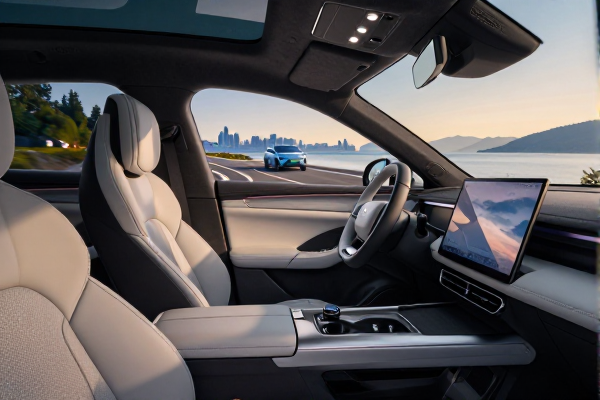
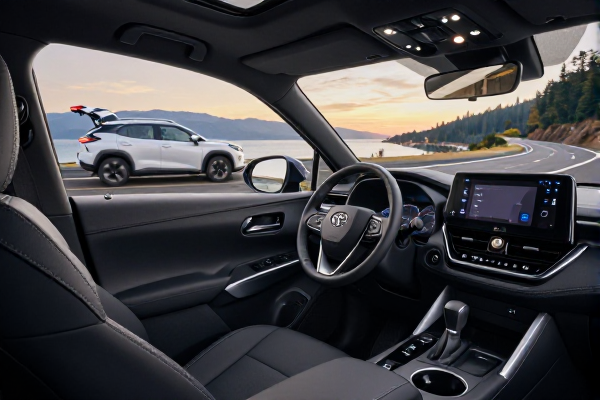
The dashboard is dominated by an unusually wide driver display and a vertical center touchscreen for climate and media. A slim virtual rear-view mirror sits at the base of the windshield, and the twin-spoke steering wheel is equipped with bespoke controls. Crucially, there are almost no physical buttons. Jaguar says the design takes a “reductive” approach, but it stops well short of the stark minimalism found in a Tesla: surfaces are broken up by distinctive accenting, and a prominent central spine runs through the cabin, dividing each occupant into their own “space.”
The seats are equally distinct. They’re slim yet heavily padded, with contemporary premium materials and a driving position tuned for long-distance comfort. Overhead, a panoramic glass roof extends the full length of the cabin. From the driver’s seat, the view rearward runs down the center tunnel, through the rear seats and into the trunk. The overall effect is closer to a modern luxury lounge than a traditional car cockpit, and it makes the cabin of a Rolls-Royce Spectre feel a generation old.
The “0” in Type 01 stands for zero tailpipe emissions. The “1” marks the first car of Jaguar’s new era. The “Type” connects the car to a heritage that began with the C-type in 1951. That mix of old and new is exactly what Jaguar is trying to deliver: a car that respects its history while taking a very different technological path.
It is also, by definition, a high-stakes product. The Type 01 isn’t one new model in a wider range; it is the foundation stone for an entire reinvention. Jaguar has already said a coupe-style SUV will follow, and a two-door coupe remains possible if the brand’s electric push gains traction. That expansion is not a given—premium EV sales have cooled in major markets, and Jaguar is walking a much narrower tightrope than most rivals.
The Type 01 rides on a brand-new 800-volt architecture called JEA, which will eventually underpin a family of electric Jaguars. The platform is designed around fast charging and high output, and the Type 01 uses it to deliver some of the most extreme figures ever attached to a production Jaguar.
Jaguar has confirmed output “in excess of 986 bhp” and 959 lb-ft of torque. That places it squarely in the company of the Porsche Taycan Turbo GT, Lucid Air Sapphire, and the latest high-performance EVs from China. But the character, according to evo’s early drives, is very different.
The battery pack is expected to be between 100 and 150 kWh, depending on the version, with a claimed range of around 500 miles on the WLTP cycle. EPA-rated range will almost certainly be lower, but the headline number is still enough to put the Type 01 near the top of its class. All that energy has a cost: the car is expected to weigh close to 2,500 kg. That’s heavy, but Jaguar isn’t hiding it—and it doesn’t see a high curb weight as a liability.
evo already rode in a development Type 01 at JLR’s Gaydon engineering center and drove another prototype during cold-weather testing in Sweden. The consistent takeaway? This is not a Taycan clone.
Where Porsche has tuned its sedan for razor-sharp dynamics and countless Chinese rivals chase launch numbers, the Type 01 is engineered around isolation, silence, and body control. The ride is remarkably calm over broken surfaces, the steering is stable and reassuring rather than hyperactive, and the driving position has been designed to make the driver feel protected without being isolated from the road. Jaguar says it wants the car to feel “cosseting and confidence-inspiring,” and the early prototypes back that up.
That doesn’t mean the Type 01 is lazy. The development team spent months fine-tuning the adaptive suspension and torque delivery to ensure the huge power can be used smoothly. Virtual gearshifts and a broad menu of driver modes are included, but the default character of the car is closer to a grand tourer than a track tool. The focus on refinement is a deliberate contrast with rivals, and it tracks Jaguar’s history of making fast cars that are comfortable on a long shift.
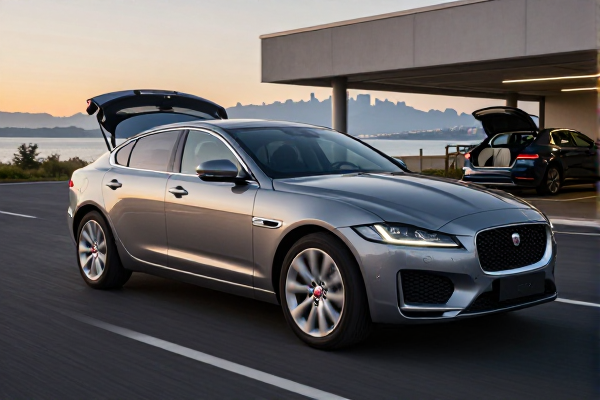
A lightly camouflaged Type 01 was recently spotted on a road in Warwickshire, and the final shape is now clear enough to analyze. The car is long—believed to measure more than five meters—yet it doesn’t look unwieldy in person. The low, sweeping roofline gives it a distinctly modern profile, while the sculpted wheel arches and body sides are more elegant than the brutalist Type 00 concept that previewed the brand’s design language.
At the rear, the windowless hatchback is a standout detail. Jaguar has kept the concept’s tapered tail, with a retractable spoiler hidden beneath cover panels on test cars. The overall silhouette is familiar from the dozens of prototype sightings over the past year, but seeing the production body almost undisguised adds a much greater sense of precision and polish.
One interesting detail from evo’s observations: the Type 01 appears to share a very similar steering wheel with the upcoming Range Rover GT, though the center stack and cabin layout are completely different. The near-zero physical controls and the driver-focused display setup remain unique to the Jaguar, reinforcing that this is a bespoke interior rather than a shared JLR part-bin exercise.
Jaguar has not issued final pricing, but the Type 01 is expected to start at around £120,000 in the UK—roughly $150,000 in the US. First customer deliveries are planned for 2027, meaning the production ramp-up and dealer network expansion will be tested quickly.
There will be no hybrid version. Rumors that Jaguar was hastily re-engineering the Type 01 to accept an internal combustion engine were firmly off the mark. The platform is too far along in its development, and the company’s whole strategy depends on an all-electric lineup. The Type 01 is the first proof of that commitment.
Tonight’s reveal will finally put the full technical specification, interior material choices, and official range and performance data on the table. Until then, everything points to the most consequential car Jaguar has ever built: a luxury-first electric GT that has chosen comfort and character over outright speed. The risk is real, but so is the ambition. If the Type 01 delivers on its promises, it won’t just launch a car—it will relaunch an entire brand.