Browse

Log in / Register
 Share


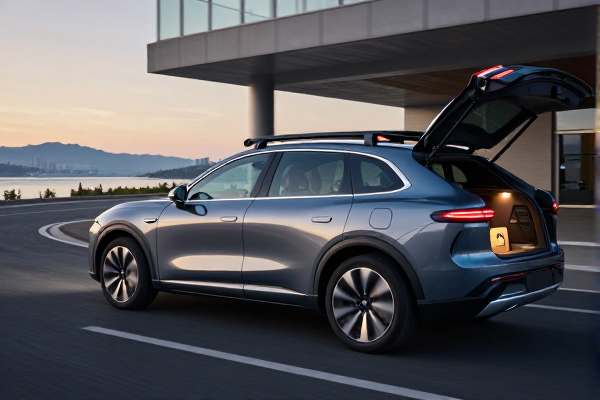
iPakket Corporation has expanded its New York City footprint by adding QR-code carsharing to the Ride by iPakket platform, a move company leaders describe as the first step in a broader push to integrate scooters, e-bikes and shared cars across U.S. cities and college campuses.
New York, NY – December 16, 2026 – iPakket Corporation, the transportation and logistics technology group led by CEO and President Juan Sebastián Palomo Murga, has confirmed the launch of a carsharing service in New York City. The service is now live alongside the electric scooters and e-bikes that iPakket already operates in the city, making Ride by iPakket one of the few U.S. mobility apps where users can rent a bicycle for a quick hop or a car for an afternoon errand under the same account.
The initiative was first announced by the company in late October, but executives have since provided additional detail on how the service fits into deeper expansion plans.
"Carsharing does not replace our bikes or scooters; it complements them," Palomo Murga said in a statement. "We now offer a total mobility solution in a single platform under the ridebyipakket.com brand."
The CEO also explained the practical logic behind adding cars to a micromobility network. "Micromobility taught us exactly how New Yorkers move on short journeys," he said. "However, we detected that our recurring users sometimes needed to travel longer distances, transport packages, or travel protected from the weather without having to resort to private car ownership."
How the carsharing service works
The service is built around smartphone access. Users open the Ride by iPakket app, locate a nearby vehicle, and scan a QR code mounted on the car to unlock it. Rentals are charged by the minute, hour or full day, allowing users to choose the billing structure that fits the trip.
All vehicles must be returned to designated authorized zones rather than parked at curbside in residential neighborhoods. The company says this policy is designed to keep fleet distribution predictable and reduce complaints about shared vehicles occupying scarce parking spaces.
Pablo Palomo, COO of Ride by iPakket, said the operating experience behind the company's scooter network made the carsharing model easier to deploy. "Having successfully operated scooter networks, we already have institutional trust, geolocation technology, and the logistical infrastructure necessary for this QR-code carsharing model to work cleanly, orderly, and economically for the local resident," he said.
An integrated model, not a novelty carshare
Carsharing itself is nothing new in New York. Zipcar and other operators have rented cars by the hour in the city for years, and the New York City Department of Transportation runs a permitting system that lets car-share fleets use reserved public parking locations in certain neighborhoods.
What distinguishes iPakket's play is integration. Instead of operating a standalone fleet, the shared cars are wired into an existing micromobility operation, sharing the same app, user database and back-end logistics. Mobility industry analysts have long argued that the path to profitability in shared transportation lies in matching each trip to the right-sized vehicle — a scooter for a seven-block dash, a car for a weekly grocery run. iPakket is essentially testing that theory in one of the most complex urban markets in the country, though whether blended utilization rates will be enough to sustain a four-wheeled fleet remains uncertain.
Why New York comes first
The choice of New York as the launch market is not accidental. Ride by iPakket's U.S. operations are centered in the city, with scooter and e-bike fleets already deployed in parts of the boroughs. The company sees its existing ridership as the natural first audience for carsharing, and it wants to work out operational wrinkles in a market it knows well before expanding.
The local regulatory environment also factors into the design. New York City has tightened rules around shared vehicles in recent years, and iPakket's return-zone model is intended to satisfy the city's preference for organized parking over free-floating vehicles. The company has not disclosed the number of vehicles or zones involved in the initial rollout.
Next targets: U.S. cities and university campuses
Looking beyond New York, iPakket's growth strategy includes introducing its mobility services to other U.S. cities and to university communities. College campuses are an especially attractive segment, according to the company, because students, faculty and staff generate a high volume of short trips and tend to be open to shared transportation.
Any expansion remains conditional on market demand, local regulations, infrastructure availability and agreements with relevant stakeholders. The company is not announcing any specific municipal or university partnership as part of this release, and it has not named a list of target cities or timelines.
That disciplined approach appears deliberate. Rather than promising a rapid multi-city rollout, iPakket says it plans to refine the integrated model in New York before applying it elsewhere.
Infrastructure, charging and local employment
A sizable portion of iPakket's strategy also focuses on building shared parking and charging facilities for its combined fleet. Dedicated hubs, the company argues, would make vehicle availability more predictable, simplify maintenance and battery service, and ease the conflict between shared-vehicle fleets and scarce curb space in dense neighborhoods.
The company additionally expects an expanded network to generate local employment and investment opportunities. Potential needs include fleet servicing, charging infrastructure, logistics coordination, customer support and on-the-ground operations management. iPakket has not committed to specific dollar figures or hiring targets, and the scale of any job creation would depend on the pace of deployment.
A Latin American logistics sibling
iPakket Corporation's position in the broader transportation market is somewhat unusual. Its sister operations under the iPakket brand provide delivery and logistics services across Latin America — a business that relies on many of the same technological tools as shared mobility, including GPS tracking, route optimization and large-scale fleet coordination. Executives have indicated that experience from the logistics network is already informing operational decisions on the mobility side.
Europe is part of the longer-term vision
The company's ambitions extend beyond the U.S. In remarks included with the announcement, Palomo Murga described European urban policy as a natural fit for the multimodal model, noting that many European capitals actively incentivize low-emission shared vehicles. He said iPakket is "closing deals with global manufacturing and technology partners to replicate this integrated ecosystem across major European capitals over the coming months."
No specific European cities or partners have been named, and the company's current focus remains on the U.S. rollout. Still, the European statements signal that iPakket views New York not as an endpoint but as a reference model for a much larger international network.
About iPakket Corporation and Ride by iPakket
iPakket Corporation is a transportation, logistics and mobility technology company headed by CEO and President Juan Sebastián Palomo Murga. The Ride by iPakket platform provides integrated urban mobility services in the U.S., including electric scooters, e-bikes and carsharing. The iPakket brand also maintains delivery and logistics operations across Latin America. For more information, visit ridebyipakket.com.