Browse

Log in / Register
 Share

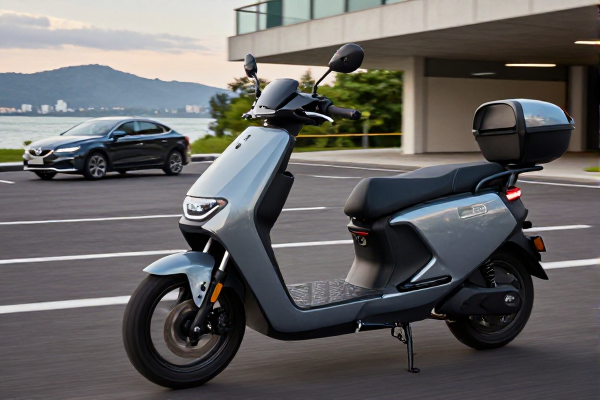
Industry players in Indonesia are pressing the government for concrete details as the nation's long-awaited national electric motorcycle brand nears its launch date. The initiative, spearheaded by President Prabowo Subianto, aims to create a homegrown two-wheeler EV brand engineered by Indonesian talent. However, with the official announcement set for August 13, 2025, stakeholders are scrambling to understand how the program will work, especially after the government redirected previously allocated purchase subsidies to this new project.
The new brand, to be produced by a yet-unnamed company, was unveiled during a press conference by Sigit Puji Santosa, chief technology officer of state asset fund Danantara. Sigit confirmed that the state-owned defense manufacturer PT Pindad will not be the production partner, despite earlier speculation. "Pindad has already been tasked with developing a domestic car brand," he said, adding that the electric motorcycle project is a separate venture.
This announcement follows years of sluggish EV adoption in Indonesia. Currently, only 229,000 electric motorcycles are on the road—far below the government's target of 2 million units. The delay in distributing purchase incentives, initially promised in 2023, has been a major obstacle. Now, with the government pivoting those funds to the national brand, many industry observers worry that the move could further stymie private-sector investment.
"The government needs to be transparent about the incentive structure, the target price point, and the role of existing manufacturers," said a senior analyst at the Jakarta-based Center for Strategic and International Studies. "Without clarity, we risk creating a monopoly that discourages competition and innovation."
The plan also raises questions about compatibility with Indonesia's existing EV ecosystem. Local manufacturers like Imoto, which produces the Vision.EV maxi-scooter, have already invested heavily in R&D and distribution. Imoto's CEO declined to comment on the national brand, but sources within the company expressed concern that the government's new initiative could undermine market-driven growth.
On the regulatory front, the Ministry of Industry has yet to release a detailed roadmap. The National Energy Council, meanwhile, has proposed a tiered subsidy system that would prioritize local content and battery-swapping infrastructure. However, no final decision has been made.
Adding to the uncertainty, the August 13 announcement date has raised eyebrows. That same week, the Indonesian parliament is scheduled to debate the 2026 state budget, which includes provisions for EV subsidies. Some lawmakers have called for a postponement until the fiscal framework is finalized.
For international investors, the stakes are high. Indonesia is the largest motorcycle market in Southeast Asia, with over 7 million units sold annually. A successful national EV brand could accelerate the country's transition to zero-carbon transport, reduce oil imports, and position Indonesia as a regional EV hub. Conversely, a poorly managed rollout could deter foreign capital and delay the country's climate goals.
As of August 2025, no official documentation has been released regarding the brand name, design specifications, or production timeline. Industry insiders suggest that the chosen manufacturer may be a consortium of local firms, including several automotive component suppliers, rather than a single entity.
The government's silence on key details has led to speculation that the project may be rushed for political reasons. President Prabowo, who took office in October 2024, has made energy independence a cornerstone of his administration. The national motorcycle brand is seen as a quick win to demonstrate progress, even if the underlying policies remain incomplete.
"We support the ambition, but execution matters," said a representative of the Indonesian Automotive Industry Association (Gaikindo). "We need clear rules on homologation, charging infrastructure, and after-sales service. Otherwise, consumers will hesitate to switch to electric."
While the clock ticks toward August 13, the industry is bracing for either a definitive breakthrough or a deepening of the current policy vacuum. Either way, the outcome will shape Indonesia's electric mobility landscape for years to come.