Browse

Log in / Register
 Share

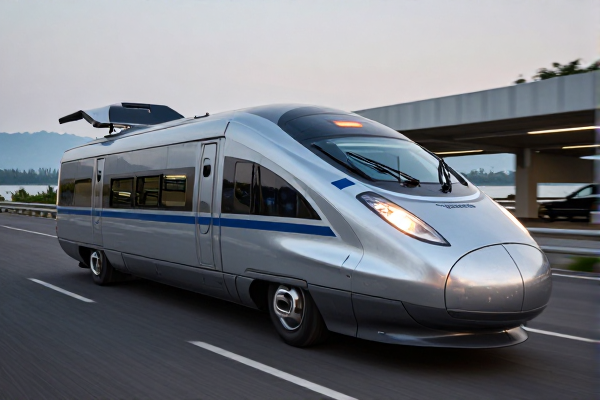
May 9, 2026: India’s first indigenously built bullet train is being assembled at BEML’s Bengaluru plant for the Mumbai–Ahmedabad High-Speed Rail Corridor. Railway Minister Ashwini Vaishnaw has shared a construction-floor video that shows the train entering its final fit-out stage, including sandbag load tests, seat installation and the aerodynamic nose that will help the train handle tunnel pressure. The eight-car trainset is designed for Indian operating conditions, with a maximum speed of 280 kmph and a regular service speed of 249 kmph.
Vaishnaw’s video puts the spotlight on one of India's most closely watched rail projects. The train being built at BEML is the country's first high-speed trainset manufactured on home soil, a major step for the Mumbai–Ahmedabad corridor, the foundation of India’s future high-speed network. The body shell has been designed to keep weight down while maintaining structural strength. That’s why the sandbag test visible in the video matters: engineers load the car body with heavy bags that mimic the combined weight of passengers, luggage and equipment. If the shell holds its shape under that load, it can be trusted at service speeds.
Inside, the train follows a familiar high-speed layout with one major difference: it is tuned for India. Seven of its eight coaches are standard class with 3+2 seating, while the executive-class coach uses a 2+2 configuration. Total seating capacity is 557, spread over a train length of about 202 meters.
Four of the eight cars are motor cars; the other four are trailers. Driver cabs are positioned at both ends, and each cab is fitted with an intelligent onboard control system that communicates with the operations control center. That setup shortens the response time to signals and helps drivers make safer decisions.
Another operational advantage: two eight-coach trains can be coupled later to form a 16-coach train. That gives the railway the flexibility to increase capacity on the Mumbai–Ahmedabad route without ordering an entirely new platform.
Designers have spent as much effort on the interior as on the powertrain. The seats are sized around the average body dimensions of Indian passengers, which means the space feels less cramped for long journeys. Each row gets wide windows for natural light and views. LED lighting, overhead luggage racks and floor-mounted racks give passengers multiple ways to store bags. Power outlets are provided for phones and laptops, and the bio-digester toilets cut both waste and water consumption. A sealed, one-piece gangway connects the coaches, so moving between cars is quiet and weatherproof.
Seats fitted in the current phase include retractable footrests, a small detail that makes a big difference on a 500-plus-km journey.
Comfort extends to climate control. Every coach is equipped with two roof-mounted HVAC units that regulate temperature and humidity in India’s varied weather. The roof installation frees up room under the floor and also contributes to the train’s aerodynamic shape.
Interior noise is being attacked at the source and between the layers. The body and floor structure carry sound insulation, and noise-damping coatings are applied to panels. Side skirts, bogie covers and aerodynamic fairings smooth the airflow that otherwise creates rumbling at speed. The Railway Ministry says the combined effect is a 70% reduction in outside noise inside the passenger cabin.
Accessibility has also been built in from the start. The train floor sits level with the platform, and retractable footsteps close the horizontal gap at doorways. Two dedicated spaces are reserved for passengers with reduced mobility, with separate seats and toilets. Wheelchair-accessible doors and Braille information placards are part of the standard fit-out. Emergency talk-back units in the cabins and vestibules let passengers call train staff directly during a problem.
Passenger information is covered by an LCD display system inside each coach. It will show journey updates in English, Hindi and regional languages, and audio announcements run through the public-address and automatic-announcement system. The train will also use a Wi-Fi-based infotainment system loaded with pre-loaded content, so passengers do not have to rely on mobile network coverage while passing through tunnels or rural areas.
The most visible engineering story is the nose. It was shaped with computational fluid dynamics, a computer-based airflow simulation tool, and it is tuned to prevent the sharp pressure changes that can pop ears when a train enters a tunnel at speed. The nose and car-body profiles also reduce air resistance, which is the main energy cost at high speed. Roof HVAC components are integrated into the aerodynamic envelope, and external wind-guiding profiles help keep the airflow attached to the body. Pressure changes inside the sealed train are controlled so passenger comfort is not compromised during high-speed running.
The electrical system operates on a 25 kV, 50 Hz single-phase AC supply, fed by a heavy compound catenary. The braking system is regenerative: during braking, the electric motors reverse into generators, feeding energy back into the grid. That approach is expected to trim operating costs on the corridor, since frequent station stops will make braking an almost routine event.
The Mumbai–Ahmedabad route is not just a commercial project; it is the testbed for India’s high-speed ambitions. Once the Bengaluru-built trainsets are delivered, they will be run through commissioning trials before entering service. The minister has not announced a firm service date, but the level of finish in the latest video suggests the train is moving from assembly toward testing. For industry observers, the bigger signal is manufacturing capability: India is adding high-speed train assembly to its domestic rail toolkit, a step that could affect procurement decisions for future corridors.
International rail programs will be watching this project closely. High-speed train manufacturing has long been dominated by Japanese, European and Chinese suppliers. An Indian-built trainset, even with foreign technical collaboration, would create new supply-chain capacity in Asia. For passengers, the most important details are ordinary conveniences — comfortable seats, less noise, timely information and doors that work for everyone.