Browse

Log in / Register
 Share
Share

Date: April 12, 2025
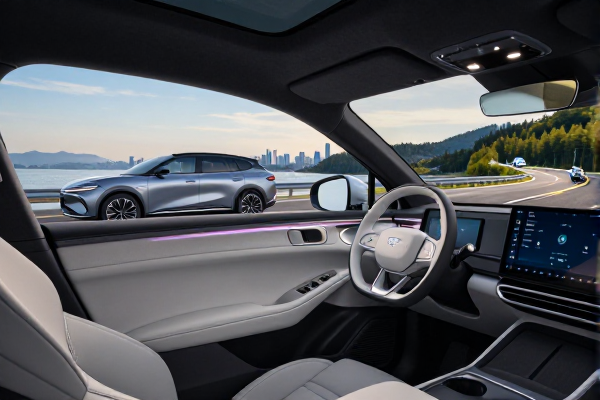
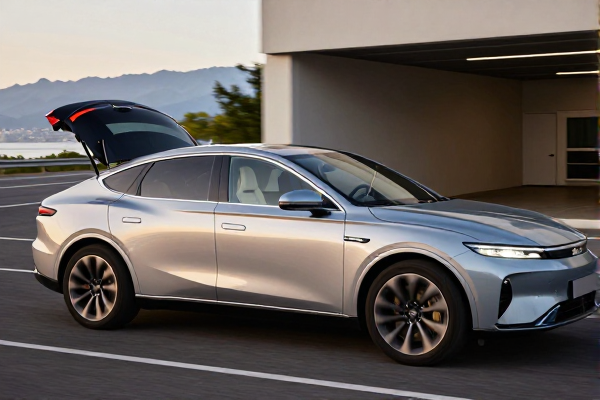
For a few hours last week, the Tamil Nadu State Assembly in southern India turned into a battleground over something that might seem trivial to Americans: a government decision to provide free cars to its 234 legislators. The opposition screamed "waste of public money," social media erupted with memes, and even some MLAs themselves questioned the move. But behind the hullabaloo lies a deeper, more uncomfortable question about political hypocrisy, corruption, and the very cost of democracy.
The scheme, announced by Chief Minister C. Joseph Vijay of the Tamilaga Vettri Kazhagam (TVK) party, promises each MLA a new official vehicle for use during their five-year term. Vijay’s stated justification: to reduce corruption. "If MLAs have reliable transport, they won’t be tempted to take bribes from contractors or local businesses for a ride," he argued in a press conference. Critics, however, saw it differently. With an estimated cost of $15–20 million (₹120–150 crore) for the fleet, many called it an extravagant handout to a group that already enjoys generous salaries, pensions, and housing allowances.
The irony is hard to miss. Some of the loudest critics of the car scheme are themselves beneficiaries of extensive government perks. Tamil Nadu’s MLAs currently earn a base salary of about $2,000 per month (₹1.7 lakh), plus allowances for travel, phone, and staff. They also have access to subsidized housing and free electricity. Yet the car provision — which would cost roughly $80,000 per vehicle over five years (including fuel and maintenance) — set off a firestorm.
A Tale of Two Standards
What makes this debate particularly American-interesting is the double standard. In the U.S., members of Congress receive a $174,000 annual salary, plus franking privileges, free office space, and a generous travel allowance — but they don’t get a personal government car. However, the President, Vice President, cabinet secretaries, and many federal judges do. The equivalent in India: central ministers get luxury cars with drivers, while state-level MLAs often have to rely on public transport or their own vehicles.
The hypocrisy cuts both ways. On one hand, several MLAs who own fleets of luxury cars — including Mercedes, BMWs, and even Range Rovers — are reportedly queuing up for the free car. "They’ll probably sell the brand-new vehicle or give it to a relative," said a former bureaucrat who spoke on condition of anonymity. "The scheme was supposed to help those who don’t have a car, but instead it’s a windfall for the already wealthy."
On the other hand, opposition parties like the DMK (Dravida Munnetra Kazhagam) and the Communist parties have announced they will opt out of the scheme, calling it a "moral burden." Yet their own MLAs enjoy the same perks as everyone else. "It’s easy to virtue-signal when you already have a fleet of cars," remarked a TVK spokesperson.
The Real Cost of Corruption
The most compelling argument for the car scheme is the one Vijay made: corruption prevention. In India, many MLAs in rural constituencies rely on private vehicles for daily travel. Often, they get "sponsored" cars from local businessmen or contractors in exchange for favors. A study by the Association for Democratic Reforms (ADR) in 2023 found that 40% of MLAs in Tamil Nadu had criminal cases, many related to corruption. "If the government provides a car, it removes one entry point for graft," said Dr. Milan Vaishnav, a senior fellow at the Carnegie Endowment for International Peace and author of When Crime Pays: Money and Muscle in Indian Politics.
Vaishnav added, "But the counterargument is that it’s a band-aid solution. The real fix is transparency in campaign finance and stronger anti-corruption enforcement."
What Americans Can Learn
This isn’t just an Indian story. In the U.S., similar debates flare up over congressional perks — from the $1 trillion infrastructure bill's "pork" to the $174,000 salary that many consider too high. A 2024 poll by Pew Research found that 67% of Americans believe "congressional pay and benefits are too generous." Yet the same poll showed that only 12% of Americans trust their representatives to act in the public interest.
The Tamil Nadu car controversy offers a mirror: when politicians give themselves perks, they invite accusations of entitlement. But when they deprive themselves of basic tools, they risk inefficiency and corruption. The middle ground — a transparent, needs-based system — is often lost in the noise.
A History of the Car as Political Symbol
Interestingly, the car has always been a status symbol in Indian politics. In 1967, residents of Orathanadu constituency gifted a brand-new Ambassador car — the same model used by state ministers — to their newly elected DMK MLA, L. Ganesan. The gift was seen as a gesture of pride, not a scandal. Fast-forward to 2025, and the same gesture is now viewed as a "drain on the exchequer."
The shift reflects a change in public expectations. With social media amplifying every government decision, politicians are under greater scrutiny. But as Vijay pointed out, "Democracy is expensive. We spend billions on aircraft carriers, bullet trains, and foreign trips for ministers. Why begrudge an MLA a car to serve his people?"
The Bottom Line
The Tamil Nadu car scheme is likely to proceed, despite the uproar. The Assembly will vote on the budget allocation in the next session. Meanwhile, the debate continues — not just over cars, but over the fundamental question of what citizens owe their representatives, and what representatives owe the public.
For Americans watching from afar, it’s a reminder that even in the world’s largest democracy, the tension between privilege and public service is as old as politics itself.