Browse

Log in / Register
 Share

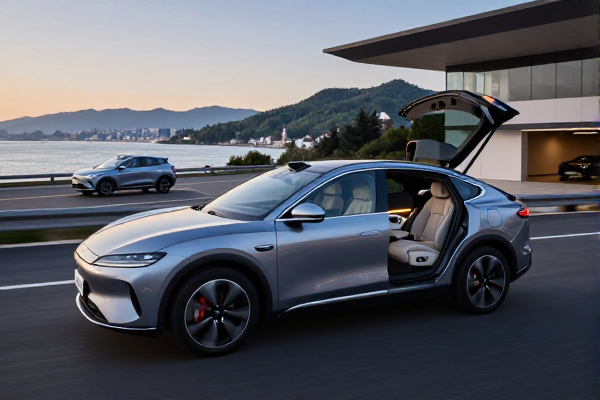
May 7, 2026 – Mumbai | New Delhi — India's newly notified Corporate Average Fuel Economy norms, commonly called CAFE 3, are being read as a strategic reset for automakers, opening the door to hybrids, flex-fuel engines, range extenders and small efficiency upgrades alongside pure battery-electric vehicles (BEVs) for the five-year compliance cycle ending March 2032.
The framework effectively moves India away from a single-technology EV mandate. Instead, carmakers can pick from a menu of clean powertrains and earn compliance credits for each, with a debit-and-trade system for those that fall short.
Under the rules, a battery-electric car or a range-extender EV receives the highest "super-credit" multiplier of 3. In other words, one such vehicle counts as three in the calculation of a manufacturer's fleet average. A plug-in hybrid or a strong hybrid running on flex-fuel ethanol gets a multiplier of 2.5. A regular strong hybrid is worth 1.6, and a flex-fuel ethanol vehicle 1.1.
The weighting is significant. A company that wants to reduce its fleet CO₂ average without going all-in on electric can still improve its calculation by selling hybrid and ethanol-compatible models. This is also a signal to suppliers: components for high-voltage electrification, ethanol-compatible fuelling systems and hybrid transmissions will be in demand for India, even if battery production doesn't scale as fast as some had expected.
Less visible but equally noteworthy are the "efficiency credits" for features that many cars already offer. Start-stop systems, tyre-pressure monitors, regenerative braking, LED lighting and efficient air-conditioning are each recognised as reducing calculated emissions by 1 gram of CO₂ per km. The total benefit is limited to 9 grams per km, but that's enough to help a compact car close what would otherwise be a meaningful gap.
These credits are important for smaller cars and entry-level models, where the economics of full electrification are difficult. They also reward incremental engineering rather than radical powertrain swaps, which could accelerate the use of cost-effective technology across older and popular platforms.
The shift is uncomfortable for automakers that have put most of their chips on pure EVs. Puneet Gupta, director at S&P Global Mobility, says Tata Motors, Mahindra & Mahindra and VinFast's India arm have invested heavily in BEVs and largely stayed away from hybrids. In his view, the flexibility "will derail their pure BEV ambitions." That doesn't mean their EV programmes are unviable; it means the regulatory tailwind behind them has weakened relative to competitors offering hybrids.
European and Korean manufacturers could gain more breathing room. Volkswagen-Skoda, Renault, Stellantis, Hyundai and Kia can use global hybrid and flex-fuel platforms to satisfy Indian fleet targets without immediately investing in large-scale local EV production. For these companies, CAFE 3 looks less like a burden and more like a bridge.
"This will require a lot of exercises on scenario planning," said Rajat Mahajan, partner and automotive sector leader at Deloitte South Asia. "OEMs will have to rethink their product portfolio over the next five years." It's a fair summary: the new rules don't force a single answer, which means companies have to be far sharper about forecasting which technologies will sell.
Public reaction from the industry was largely positive. Maruti Suzuki, India's largest carmaker, said in a statement that the framework recognises "multiple powertrain technologies and fuels." Rahul Bharti, senior executive officer for corporate affairs, called the credit-and-debit mechanism an improvement over the previous CAFE 2 regime.
Tata Motors' passenger vehicle managing director and chief executive, Shailesh Chandra, said continued recognition of zero-emission technologies reinforces "the critical role of electrification." Mahindra's automotive business president, Velusamy R., described the norms as a "pragmatic balance" between environmental targets and what the Indian market can realistically deliver.
For global observers, including US-based investors and auto analysts, India's approach is worth watching for a different reason. It is more technology-neutral than Europe's carbon mandate and less litigation-prone than trying to ban specific fuel types. That could make the Indian market a more stable proving ground for flexible hybrid and ethanol solutions that are difficult to justify in richer countries.
There are risks, too. A credit system that is too easy to satisfy could postpone real emissions cuts. The 9-gram limit on efficiency tech is one safeguard, but the real test lies in enforcement, auditing and the market for debits. If the trading mechanism is opaque, smaller manufacturers may struggle to find buyers; if it's transparent, compliance costs could push up vehicle prices.
At the same time, consumers are likely to see more choices rather than a single inevitable path. Car buyers in India are famously price-sensitive, and many cannot depend on private charging infrastructure. The presence of hybrids, ethanol-ready engines and range extenders gives them lower-emission alternatives without forcing a jump to BEVs. Whether those alternatives are actually sold in sufficient volumes will depend on how automakers price them and where they slot into their Indian lineups.
Two things bear monitoring over the next few quarters. First, whether any company decides to trade debits openly and what price those debits attract. That will tell the market how real the pressure is. Second, how fast the government moves on fuel-quality standards for higher ethanol blends, because flex-fuel credits mean nothing if stations can't supply the fuel.
CAFE 3 is, in essence, an admission that India's mobility transition cannot be reduced to a one-size-fits-all electric push. The new rules reward progress, wherever it happens, and that could produce one of the most diverse powertrain lineups in the world over the next half decade.